Good things – like Belgium’s second city and its colcannon equivalent, stoemp – come to those who wait, but they come a lot quicker when you’re travelling with an EU passport
British passengers landing at Brussels Zaventem airport must have been cursing the day the UK voted for Brexit.
The passport queue for EU citizens was two-dozen people long and they were sailing through, while the non-EU line stretched for more than 100 metres and was barely moving.
In the train station below, an Englishman complained loudly into his phone: “An hour and 40 minutes to get your passport stamped? Bloody disgrace. I just hope Antwerp’s worth it.”
Antwerp is well worth it, if only to listen to the Cathedral of Our Lady’s carillon, which has a historical link to Cobh and the Belgian bell player who reduced Laurel and Hardy to tears when they visited Ireland 71 years ago.
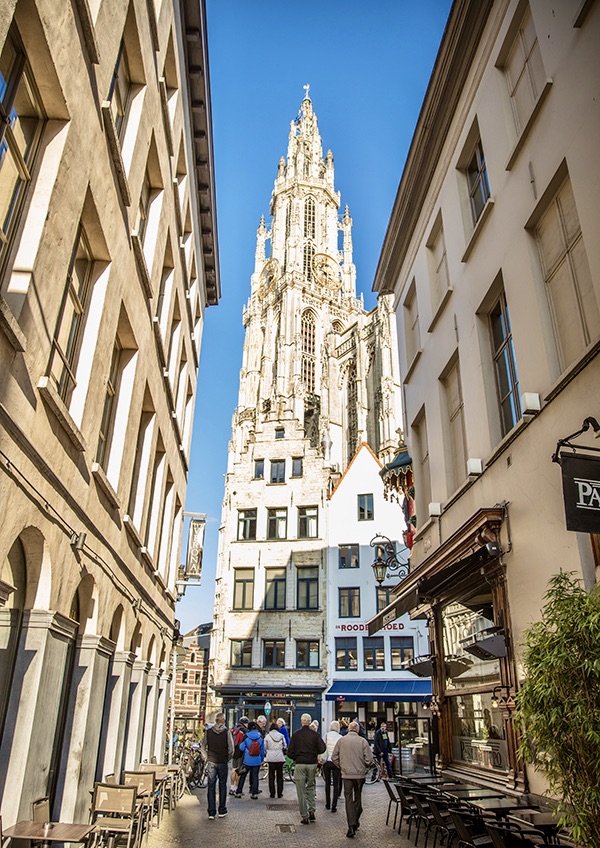
Known as the “highest jukebox in town” because the carillonneurs in the belfry play requests during regular recitals, it rings out a repertoire of popular hits that includes Bohemian Rhapsody, Dancing Queen and Metallica’s Nothing Else Matters.
On January 11, 2016 – the day after David Bowie died – the bells of Our Lady’s paid tribute with a rendition of Space Oddity.
However, on September 9, 1953, long before all those songs were written, it was Stan and Ollie’s instantly recognisable signature tune that sounded from the bells of St Colman’s Cathedral in Cobh to greet them off the SS America from New York.
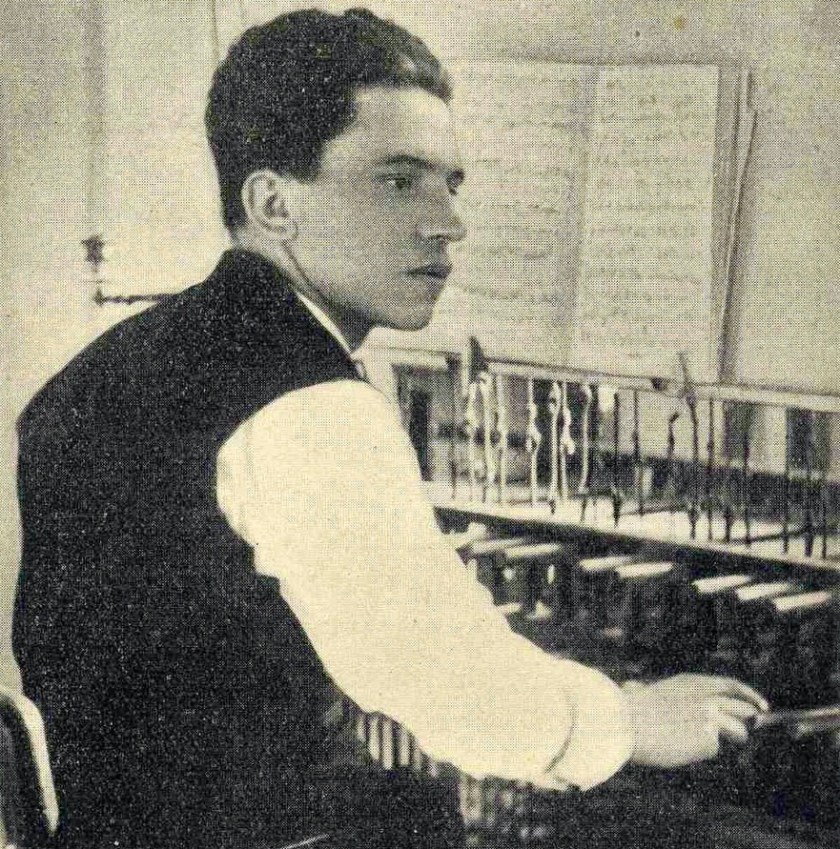
Playing Dance of the Cuckoos that day, 221 steps up in the tower overlooking Cork Harbour, was Antwerp-born Staf Gebruers, who was appointed carillonneur of St Colman’s in 1924 and held the post for 46 years.
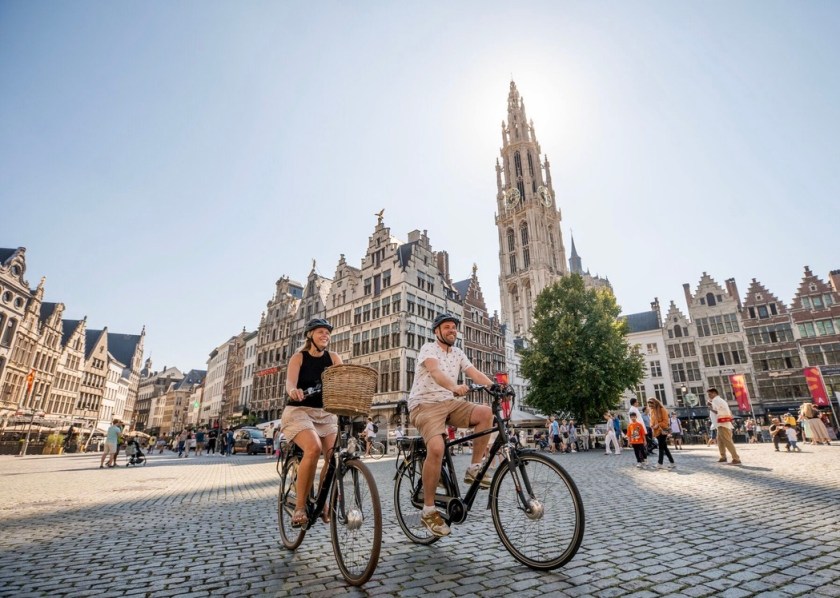
As I sat sipping a beer in the afternoon sunshine outside Den Engel (The Angel) bar in the de facto Flemish capital’s medieval main square, Grote Markt, I googled an article about Gebruers’ son that I remembered having read.
Adrian Gebruers, who’s 81, became carillonneur of St Colman’s on his dad’s death in 1970 and is still there. He was 10 when Laurel and Hardy stepped ashore in Cobh, and recalled their hugging and thanking his father for the warm musical welcome.
Some years later, Stan told an interviewer about the scene that day on the quayside.
“There were hundreds of boats blowing whistles and thousands of people screaming,” he said. “And then the church bells started to ring out our theme tune, and Ollie looked at me and we cried. I’ve never forgotten that day.”
Two messers in Dublin GAA tops had clearly forgotten their manners as they plonked themselves down at a table on the Den Engel terrace and sniggered like Beavis and Butthead when one ordered “a pair of bollocks” from a waiter.
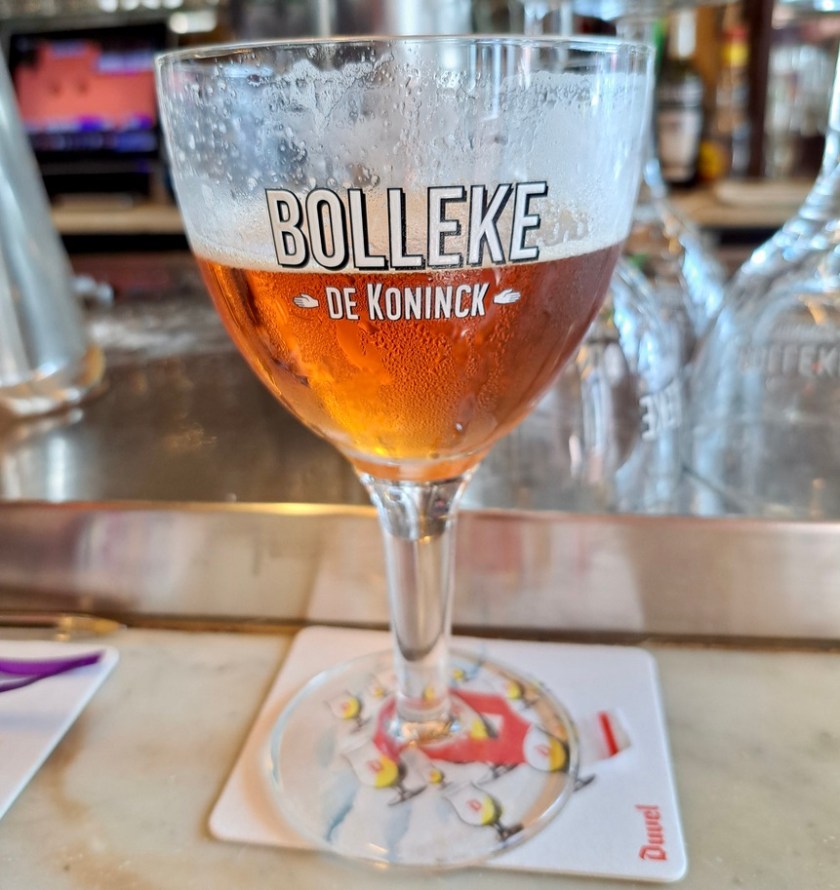
Top-selling local beer Bolleke is known as “the taste of Antwerp”, and very tasty it is too – slightly hoppy, a tad malty and with a hint of the caramel that gives it its amber colour.
Such nuances were lost on the Dubs, who were more interested in taking photos of the name on the chalice-like glasses to share with their pals than in drinking what was in them.
It was time to take my own photos of a city where the lamp-posts should be padded to prevent visitors doing themselves an injury as there’s as much historical architecture to see and admire by looking up as looking around.
What you won’t see, no matter where you look and despite so many people walking about with cartons of chips – the Belgian snack of choice – is squadrons of dive-bombing, thieving gulls. Maybe they don’t like mayonnaise.
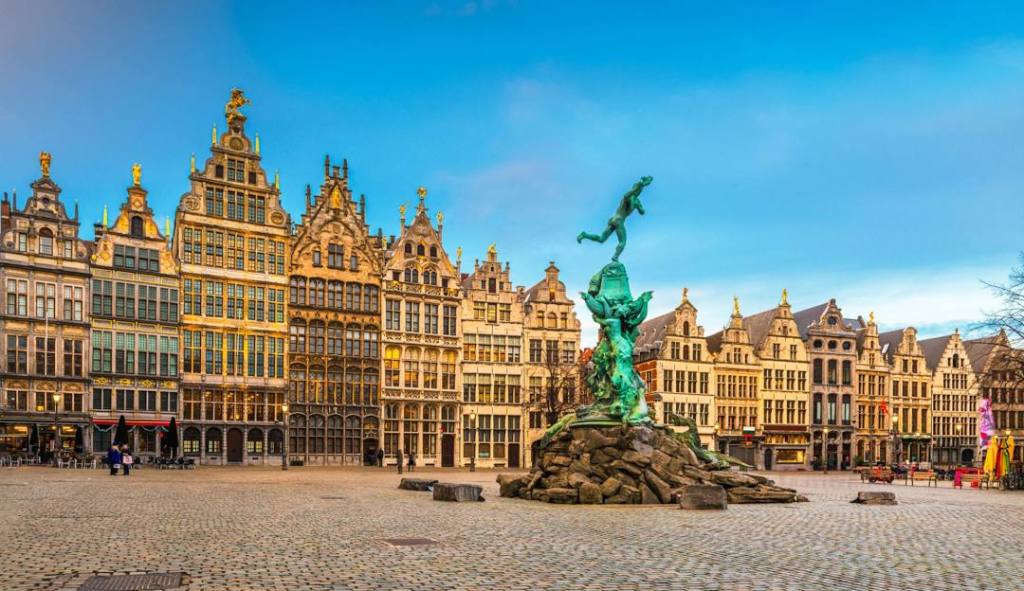
Flemish Dutch is the first language of most Antwerp citizens, who slip seamlessly in and out of English, and it’s from an amalgam of two Dutch words, hand (hand) and werpen (throwing), that the city gets its name.
Legend has it that a local giant, Druon Antigoon, demanded an exorbitant toll from anyone who wanted to sail past his fortress on the River Scheldt. If they couldn’t or wouldn’t pay, he chopped off their right hand and chucked it into the water.
Antigoon met his match when Roman soldier Silvius Brabo told him where to stick his toll and engaged him in battle. Brabo won, hacked off the giant’s hand and flung it to the fishes.
That heroic act, which allowed river traffic to flourish and Antwerp to prosper, is commemorated in Grote Markt with a monumental fountain on which stands a bronze statue of Brabo, turned green by the elements, in mid-throw.
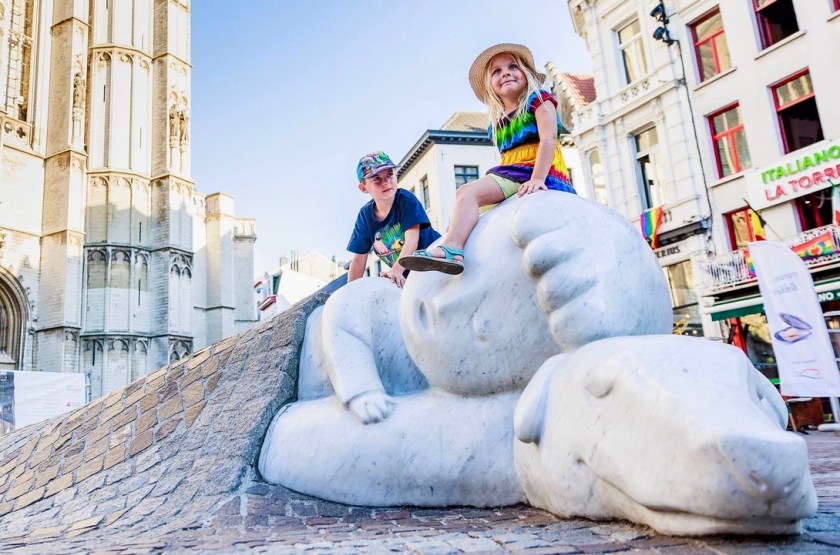
Another statue with a story is that of penniless little orphan boy Nello and his dog Patrasche, cuddled up under a blanket of cobblestones in front of the entrance to Our Lady’s in Handschoenmarkt (Glove Market).
In her 1872 novel, A Dog of Flanders, English author Maria Louise Rame tells how aspiring artist Nello longs to enter the cathedral to see Rubens’ The Descent from the Cross, but it’s on view only to paying visitors.
One snowy Christmas Eve night, he discovers the cathedral doors have been left unlocked and finally gets to marvel at the Antwerp artist’s masterpiece.
However, when the caretaker arrives in the morning, he finds Nello and Patrasche lying together in front of the altar, not asleep but dead, having succumbed to the icy temperature on the coldest night the city has ever known.
The statue is the cutest ever, and if you loiter for a few minutes while tourists listen to the story on their earphones, it’s almost guaranteed you’ll spot someone wiping away a tear, and it’s a good bet they’ll be Dutch.

Antwerp, which is 90 minutes down the track from Amsterdam, attracts nearly two million day-trippers from the Netherlands every year, and those who arrive by train start ooh-ing and aah-ing the second they set foot in the main station’s concourse.
Known as the Railroad Cathedral for its grandiose architecture and exquisite decoration inspired by the Pantheon in Rome, Antwerp Central, which opened in 1905, is considered one of the world’s most beautiful railway stations.
Contemporary English architect Jonathan Tuckey, who once missed his train there and had to wait an hour for the next, which he missed as well as he was so enchanted by his surroundings, described it as “a temple to transport”.
It was while standing under its huge glass dome that I overheard a bubbly tour guide tell her party of Swedish seniors: “The conservative Protestant Dutch love visiting Antwerp because the crazy Catholic Belgians are party animals, ha-ha.”
Far from the chorus of guffaws she was clearly expecting, there was an awkward silence, then a stern-looking woman said: “Excuse me, young lady, but Sweden is a Protestant country – I am a Lutheran minister – and we also are the party animals.”
“Ja, ja – parties with the crayfish,” said her jolly husband, who appeared to be bare-chested and covered in tattoos, until I put on my glasses and saw he was wearing a Paisley shirt.

I wandered off and nipped into the Chocolate Nation museum, just across the street, for a quick nosey, but was still there 90 minutes later – it’s great fun.
The main draw, apart from stuffing your face, is a fantastical chocolate-making machine that looks like a cross between a pipe organ and the innards of a giant watch retrieved from a skip.
It reminded me of those ridiculously complicated contraptions dreamed up by cartoonist Heath Robinson to carry out simple tasks like pouring tea or pulling a tooth using pulleys, steam-train whistles and lengths of string.
Belgium is the world’s second-biggest producer of chocolate, exporting nearly €3bn worth every year (Germany is first with €4.5bn), but it’s way down the list when it comes to consumption.
In the top 10, the Swiss are champs, chomping their way through an average of 8.8kg per person per year, the Irish are in third place with 8.3kg and the Belgians are bottom with 6.8kg, probably because they haven’t heard of Fredos.
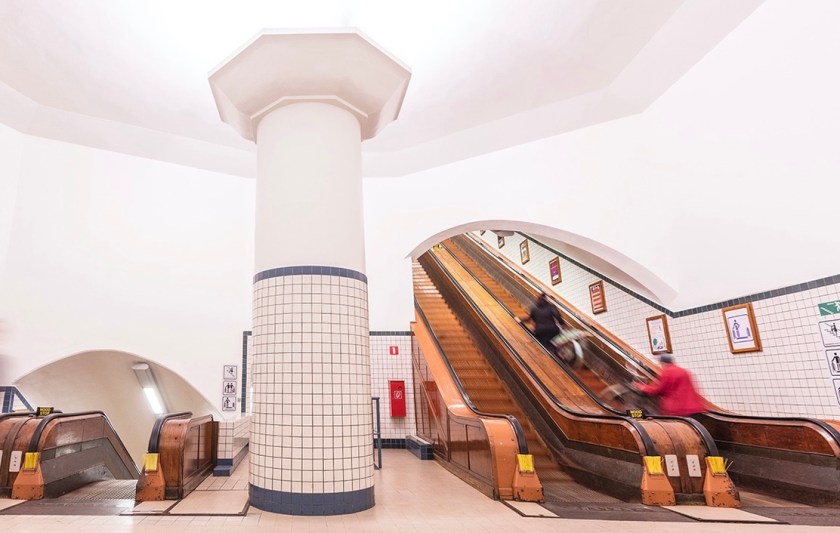
It’s a 15-minute stroll from Chocolate Nation to one of Europe’s most unlikely visitor attractions. The St Anna pedestrian and cycle tunnel that runs under the Scheldt opened in 1933 and records up to four million crossings every year, an average of nearly 11,000 a day.
But it’s not the tunnel itself that interests tourists – walking 572 metres from one end of a white-tiled tube to the other, just to do it again in the opposite direction, would be high on my list of “Ten boring things to do before you die”.
Rather, it’s the chance to take a leisurely ride on one of the few remaining sets of wooden escalators in the world, which descend 32 metres from street level to the tunnel entrance, where you can simply about turn and go back up.
It’s nowhere near as exciting – or bruising – as that bone-rattling wooden roller coaster in Emerald Park in Co Meath, but it’s quaintly rickety and takes only a few minutes. I had time to kill, so I did it twice, then hopped on a tram and went to see some art.

I spent an hour stroking my chin and cocking my head while looking at the paintings and sculptures on level one of the Royal Museum of Fine Arts Antwerp (KMSKA) and 20 minutes looking for the lift.
In the end, I gave up the ghost and nearly became one while climbing the 142 steep steps to the upper level. Of course, when I got to the top I heard a familiar “Ting!”, and there was the lift, and next to it on the wall was a defibrillator. Handy, that.
Allow at least two hours to view KMSKA’s treasures, which span seven centuries and include works by Van Dyck, Van Eyck, Titian and Rodin and Ostend artist James Ensor.
Modigliani is there, too, as is René Magritte, the Belgian surrealist whose 1954 oil on canvas L’empire des lumieres sold last month for $120 million at a Christie’s auction in New York.
But it’s Rubens’ paintings, some massive, from biblical scenes to landscapes to portraits, that most visitors come to see. The Prado has the biggest collection of his works, but those in KMSKA’s Rubens Gallery show best the range of his genius.
For an insight on his life, head to the nearby Rubenshuis. While the artist’s palazzo-style residence and his studio are closed for renovation, you can enjoy the interactive Rubens Experience and wander in the Baroque garden.

There are flowers, shrubs and trees galore in Rubens’ garden, but no vegetable patch, so no ingredients to make stoemp, the Flemish cousin of colcannon, England’s bubble and squeak and Scotland’s wonderfully named rumbledethumps.
Steamed mussels is the Belgian national dish, but stoemp is the national passion on a plate, the comfort food Antwerpers abroad miss if they’re away from home for more than a week, like the craving that Ostenders in exile have for shrimp croquettes.
At its simplest, stoemp is a mix of mashed potatoes and bits of boiled carrot (wortelstoemp), often with some fried onion. The ‘busier’ version includes egg yolk and butter, along with leeks, Brussels sprouts, turnip greens, kale and celery. It’s delicious.
Two big dollops of that lot would be a filling meal for a vegetarian, but for meat eaters it’s most commonly an accompaniment for two or three big fat sausages or thick rashers, though many have it with steak or stew.
Beavis and Butthead were well stewed when I spotted them later, criss-crossing Grote Markt like a couple of crabs. I didn’t see the grumpy Englishman from the airport train station again, but I’d say he found Antwerp to his satisfaction.
What he thought of the snack locals love is anybody’s guess, but my money would be on: “Chips with mayonnaise? Bloody disgrace.”
GET THERE
Ryanair and Aer Lingus fly from Dublin to Brussels Zaventem airport, from where it’s a 40-minute train journey to Antwerp Central Station.
STAY
I visited Antwerp as a guest of the Flanders tourism authority (visitflanders.com) and stayed at the Rubens Hotel, behind Grote Markt (hotelrubensantwerp.be).
For more information on the city’s visitor attractions, hotels, restaurants and bars, see visitantwerpen.be


 Tom Sweeney Travel Writer