Enjoy a long weekend in the capital of a country that joined its Baltic neighbours in singing their way to freedom after decades of Soviet occupation
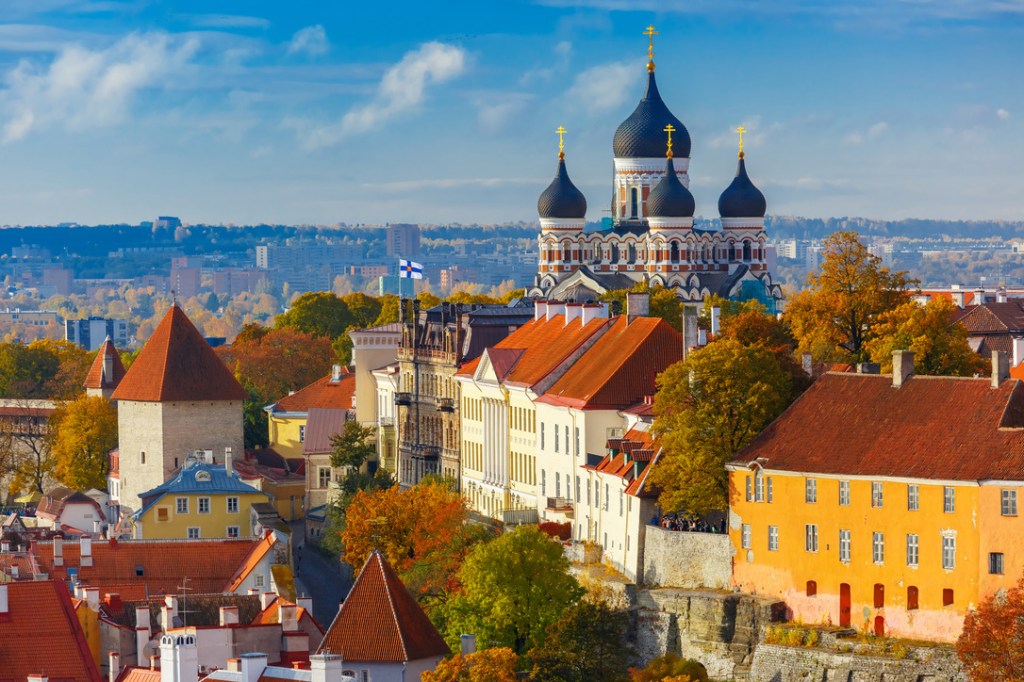
It was during a visit to the medieval Lutheran Church of the Holy Spirit in Tallinn’s old town that I lost my faith – in Shazam.
The usually reliable music recognition app is handy for cheating in a pub quiz, but it failed spectacularly to identify Bach’s Toccata and Fugue in D Minor when the daily 3pm organ recital began.
Instead, it told me I was listening to Dead or Alive’s You Spin Me Round (Like a Record), a No 1 hit in Ireland and the UK in March 1985. All together now:
All I know is that to me / You look like you’re lots of fun / Open up your lovin’ arms / Watch out here I come. / You spin me right round, baby, right round…
Tour guide Stanislav Lomunov stifled a chuckle and whispered: “I’d just like to point out that the Estonians invented Skype, not Shazam.”
Stan majored in thermal engineering at Tallinn University, which is handy in a city on the Baltic where temperatures in January often plunge to minus 20C, turning the bay into a massive grey Slush Puppy.
In summer, the weather is much the same as in Dublin.

Fifteen years ago on a dead-of-winter weekend trip to the Estonian capital, I stumbled across what appeared to be a taped-off crime scene near the Schlossle Hotel and had to walk on the road.
When I asked a police officer what had happened, she pointed to the roof, where metre-long icicles hung from the gutter. If the pavement hadn’t been out of bounds and one of those frozen spears had fallen, I might have been skewered.
Notable guests who have checked in to the Schlossle include Queen Elizabeth, King Charles, Sting, Pet Shop Boys, Duran Duran and Colin Griffiths.
Colin who? He’s an Englishman who loves Tallinn and has stayed in the hotel more than 500 times, a record acknowledged with a plaque on the wall in reception.

Maybe he appreciates Estonia’s fresh air, which is regularly ranked among the cleanest in the world, though it can have a whiff of kippers about it, thanks to the national obsession with smoke saunas.
Estonians are so devoted to stripping off and sweating their worries away that director Anna Hints’s documentary, Smoke Sauna Sisterhood, was the country’s submission for Best International Feature Film in the 2024 Academy Awards.
It wasn’t nominated, but the fact it was put forward encouraged even more people to beat the bejaysus out of each other with leafy birch twigs.
That’s probably why everyone has such glowing, youthful skin – Stan is in his mid-40s, but could easily pass for his early 30s.

I don’t know what age the air-traffic controllers are at Tallinn airport, but I hope to God they’re older than the kindergarten kid on the PA system who advises passengers not to leave their schoolbags – sorry, their luggage – unattended.
Psychologists say a child’s voice has a calming effect on nervous flyers, but for those who have watched too many episodes of Air Crash Investigation it could easily cause a hasty U-turn at the boarding gates.
Talking of childish – well, infantile – things, there’s a 15th-century round tower in the old town called Kiek in de Kok, and stag parties can’t resist getting their photo taken next to the sign while pretending they’ve just received a boot in the you-know-what.
The tower, which houses a museum and the entrance to the bastion tunnels, still has cannonballs from a 1577 Russian assault embedded in its four-metre-thick walls and is one of 26 formidable defensive structures still standing from an original 46.

Estonia, which was annexed by Stalin in August 1940, declared its independence from the crumbling Soviet Union on August 20, 1991, and the last of Boris Yeltsin’s troops went home three years later.
Five decades of occupation have left an indelible legacy, and nearly a quarter of the 1.37 million population are Russian, while many more, like Stan, speak Russian as a second language.
The quirkiest tourist attraction in Tallinn is the KGB Museum on the ‘non-existent’ 23rd floor of the Hotel Viru. Opened in 1972, the hotel officially stopped at the 22nd floor where a sign on a staircase leading up read: “No entry. There is nothing here.”
But there was something there – the secret control centre from which KGB operatives spied on foreign guests through tiny microphones and cameras hidden in every room. There were even concealed mics in the bar and restaurant tables.
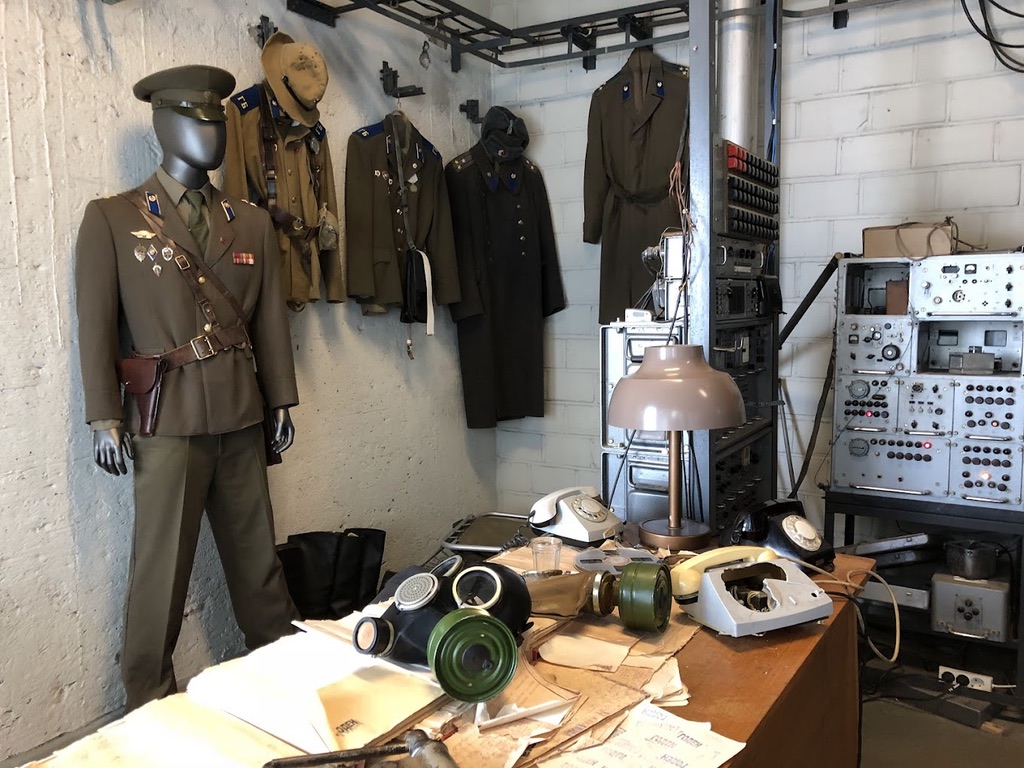
Hotel staff discovered the centre after the Kremlin eavesdroppers scarpered, leaving behind all their equipment, including ranks of tape recorders and a phone without a dial – there was no need for one as calls went straight through to Moscow.
The room is preserved just as it was found, overflowing ashtrays and all, and the guided tours are hugely entertaining and dripping with anti-Soviet sarcasm. If you thought the Irish were masters at slagging, you should hear the Estonians on their former occupiers.
There’s no record of Colin Griffiths having stayed in the Viru, but Margaret Thatcher did – at least that’s what I thought when I saw her leering out from the gallery of photos of celebrity guests. I nearly fainted with the fright.
“Don’t worry – that’s not who you imagine,” said the museum guide, who should carry smelling salts in her handbag. “That’s cosmonaut Valentina Tereshkova. In June, 1963, she was the first woman in space.”
Now aged 88, Tereshkova was decorated so many times during her long career as a space pioneer (a crater on the moon is named after her), air force officer and pro-Putin politician that if she wore all her medals at once she would fall flat on her face.
Despite her high standing among the comrades, her room in the Hotel Viru was bugged, too.

Bugs were common ingredients in medieval medicine in Tallinn, as visitors will learn in the small museum attached to the Raeapteek pharmacy in Town Hall Square, which began dispensing weird and wonderful remedies in 1422.
Earthworms, cockroaches and woodlice were added to lotions and potions, as were wolf guts, rabbit ears, viper fat, dried toads, billy goat blood, frogspawn, smoked hedgehogs and mummy fragments.
There was even an early version of Viagra, purportedly containing powdered unicorn horn; and bees were prescribed for a variety of skin ailments, which probably included hives.

As a small country, Estonia hasn’t produced many big-league sports stars, though Ragnar Klavan, the former Liverpool FC centre-back (2016-2018) and national team captain, is still fondly remembered at Anfield.
However, if the retired footballer were to stroll through the streets of Tallinn with Margo Uusorg, it’s the latter – a fella, despite his first name – who would be mobbed by selfie-seekers and autograph hunters.
Uusorg is a god in Estonia, the man who for 19 years has held the global record with teammate Sandra Kullas (a woman) for the fastest time in the World Wife-Carrying Championships, held each summer in Sonkajarvi in Finland.
On July 1, 2006, Uusorg, with eight-stone Kullas clinging upside down to his back and with her thighs wrapped around his neck, crossed the finishing line in 56.9 seconds after negotiating the 254-metre obstacle course that included muddy puddles and hurdles.
It wasn’t the most graceful of athletic achievements, but it earned the pair hero status back home, a place in the Guinness records book, a laptop each and Kullas’s weight in beer.
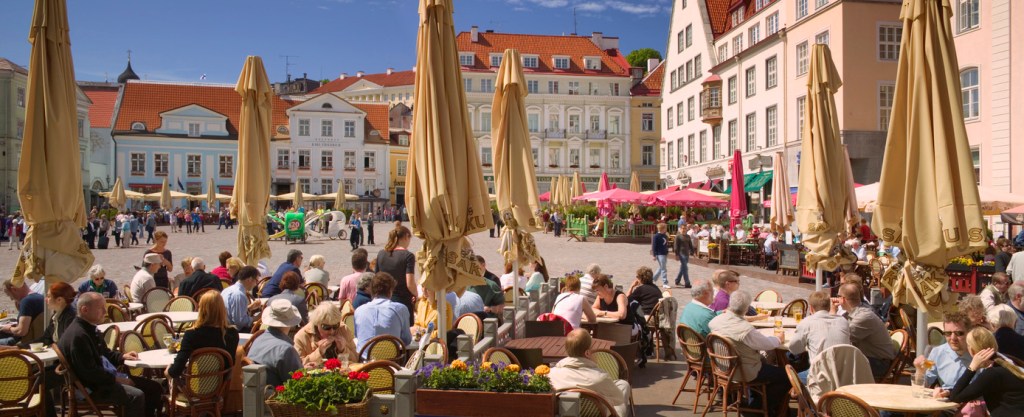
You’ll pay an average of a fiver for a pint in Tallinn (the best-selling brand is Saku Originaal), though it costs as little as €3.50 in less-touristy bars and cafes, which are usually full of Finnish day-trippers at the weekend.
From Helsinki, where I recently paid €13.40 for a 400cl glass of lager in a hotel and nursed it for an hour while I recovered from the shock, it’s only two hours by ferry or a 20-minute flight to Tallinn.
If you were to stand down at the port on a Saturday morning as the convoy of boats arrives, it would look like the D-Day landings.
There’s a great camaraderie between the Estonians and Finns, whose countries border big bad Russia and are separated by just 76km of sea.
Of course, as in any setting where like-minded souls with a common foe gather and the drink flows, sing-songs break out – and that’s when the Estonians look with pity on their near neighbours.

The Finns aren’t known for hitting the high notes, but that didn’t prevent them winning the Eurovision in 2006 with a heavy-metal anthem, Hard Rock Hallelujah, performed by a bunch of screaming Klingons under the name Lordi. It was their only victory in the contest.
Estonia has also won the contest just once, in 2001, with catchy party anthem Everybody, even though it’s a nation of nightingales where small children are enrolled in choir school before their parents even think about a creche.
On August 23, 1989, a remarkable demonstration took place that showed the power of music to change the world for the better.
That was the day when 2.2 million people in Estonia, Latvia and Lithuania joined hands in an unbroken 670km chain from Tallinn, through Riga to Vilnius and raised their voices in tuneful protest at Soviet occupation.
Two years later, all three countries had waved good riddance to Russian rule – they had sung their way to freedom.
There’s a handful of party bars in and around the old town that run karaoke competitions at the weekend, and it’s all great craic, like the warm and welcoming citizens themselves.
But don’t think you can take on the locals at their own game and win – Estonia’s got Tallinn, and they know how to sing.
GET THERE I was a guest of Finnair, which flies daily from Dublin to Helsinki with connections to Tallinn. See finnair.com
The centrally located four-star Nordic Hotel Forum, a 10-minute drive from Tallinn airport and only 150 metres from the old town, offers B&B from around €200 a night in a standard double or twin room. See nordichotels.eu
For more information on the destination and its many attractions, see visittallinn.ee and visitestonia.com

 Tom Sweeney Travel Writer