Several ports in a storm at Porto’s poshest hotel

Visitors are flocking to Portugal’s second city, thanks in large part to the jealousy-inducing views from the Yeatman
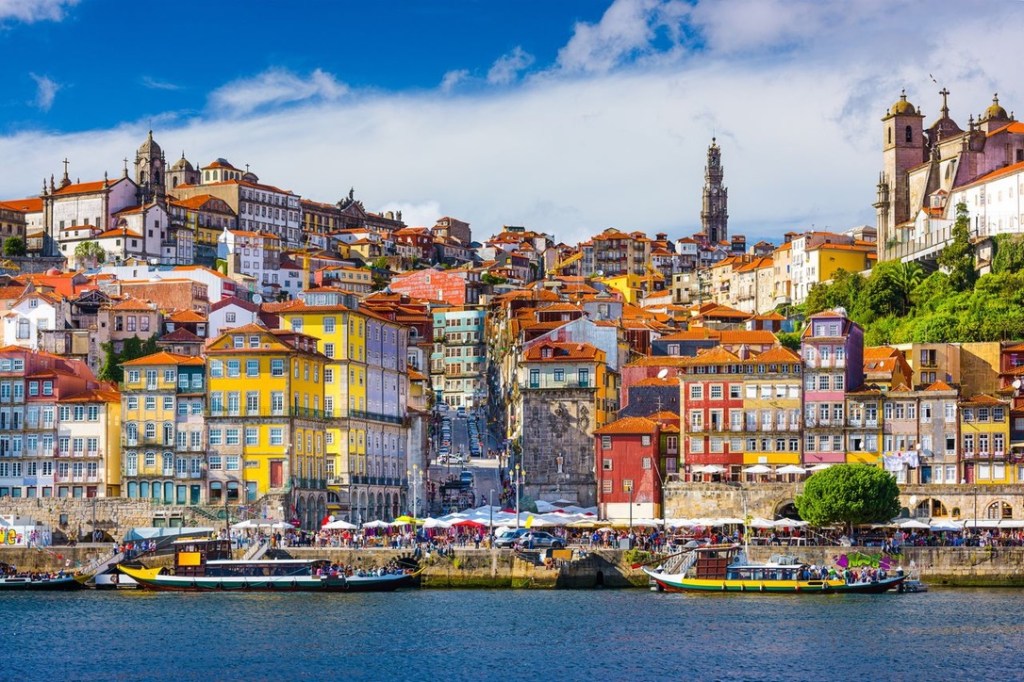
The view of Porto that sells the city to prospective long-weekenders

Torrential rain is a rarity in Porto, so there isn’t a great selection of umbrellas in the few shops that sell them when you get caught in an unseasonable September downpour.

That’s how I ended up under one of those dome-shaped clear plastic brollies that were favoured by the late Queen Elizabeth.

She had a big collection of them, each with a different coloured rim so she always had one to match her outfit on a wet day. Mine, however, was decorated with little yellow ducklings wearing wellies and splashing in puddles.

I felt like a right eejit, but it didn’t matter – I was back in my favourite city in the world.

At the five-star Yeatman hotel, where I was staying, the bowler-hatted doorman took the offending article from me and told a young porter to hurry up and hide it.

There was no sign of the rain abating, so with time to kill I squelched my way to the bar and had several ports in a storm.

The five-star Yeatman Hotel in Vila Nova de Gaia, across the Douro from Porto

Porto is the birthplace of port wine, made from grapes grown on the steep, terraced hillsides of the Douro Valley upriver from the city and fortified with spirit (aguardente) before fermentation is complete.

This results in an alcohol content as high as 22pc, which is nearly twice the strength of most table reds and whites.

There are six main types of port – tawny (matured in the barrel for up to 40 years and even longer), ruby (matured in the bottle), vintage, late bottled vintage (LBV), rosé and white.

I asked a barman buddy in Dublin if he could name a handful of well-known brands, and it was like asking a Celtic fan to name the Lisbon Lions. He rattled off 11 – Dow’s, Taylor’s, Graham’s, Sandeman, Cockburn, Croft, Niepoort, Fonseca, Offley, Kopke and Ramos Pinto.

On my most recent of many visits to Portugal’s second city, I discovered Croft Pink during a wander through the World of Wine (WOW) complex of museums, restaurants, bars and shops next door to the Yeatman and owned by the same company.

An online reviewer wrote: “Croft Pink presents attractive floral notes underlining the pungent, aromatic fruit aromas. The palate is full of deliciously ripe cherry and raspberry flavours with lovely nuances of honey and grapefruit.”

Or, as I would say: “Enough of the guff – pour another one out and to hell with the gout.”

Port wine boats on the Douro by the Dom Luis double-decker metal bridge

Actually, it’s a common misconception that drinking too much port brings on gout because, for a start, I don’t have it. The excruciating arthritic condition known as the “disease of kings” is more associated with a lavish diet and has afflicted the big toes of bigwigs down the ages.

Henry VIII, who was a martyr to it, was no stranger to a lavish diet – his idea of a breakfast roll was a goose stuffed with a pheasant stuffed with a grouse stuffed with a pigeon stuffed with a partridge.

All of those are high in purines – chemical compounds that form uric acid in the blood, which in turn forms tiny grating crystals in the joints.

Columbus, Da Vinci, Michelangelo and Nostradamus were sufferers, but like the gluttonous Tudor monarch they had shuffled off, wincing and wailing, long before port was invented in the late 17th century.

So, too much fortified wine from the massive cellars in Vila Nova de Gaia, facing Porto across the Douro, doesn’t cause gout, but too much beer does. I’m doomed.
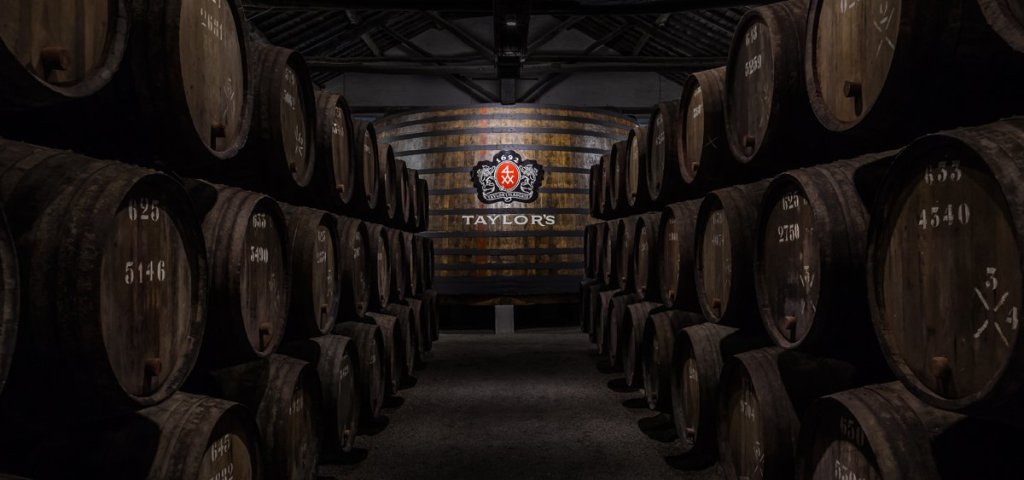
Millions of litres of port wine are stored and aged in Taylor’s cellars in Vila Nova de Gaia

By early afternoon the rain had stopped and steam was rising from the paving outside the hotel as the sun clocked on for the afternoon shift. It was time to head back out.

Port is said to be the perfect partner for chocolate, and it just so happens that WOW has a wine school and a chocolate factory.

My runners were still squelching, but it was with a spring in my step that I hurried off to class, where sommelier José had set up five bottles for a tasting session followed by a short exam.

He poured generously and spoke eloquently about hints of cinnamon, liquorice, Milkybar, toffee and other stuff from the sweetie shop while I made a show of twirling the glass, holding it up to the light, giving it a quick sniff and knocking back the contents.

It was only after I’d drained the last drop from the fifth sample that José told me the ‘vase’ on the table was a spittoon. Nevertheless, I got a certificate saying I’d passed the taste test with flying colours – mostly tawny and ruby.
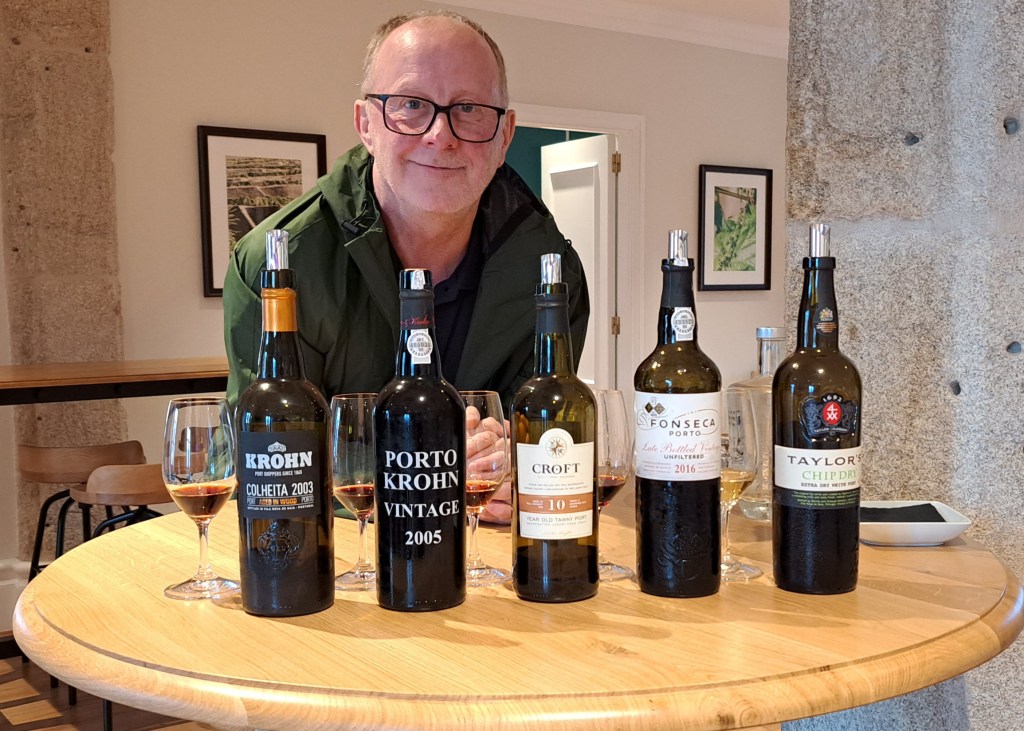
For the first time in my life, I hurried to school – well, it was port wine school, after all

In the chocolate factory’s souvenir shop, the top-sellers are individual small bars with a letter of the alphabet on the label, so you can choose to spell someone’s name under the see-through lid of the long, thin presentation box.

I have a pal who has rather large lugs, so for a laugh I wrote BIG EARS for the girl behind the counter to put on his present from Porto.

However, the bars must have got rattled around in my luggage, because when we met for a pint a few days later and I handed him the box, the labels read BIG ARSE. How weird is that?

On warm sunny mornings, breakfast on the terrace is a delight

Breakfast next morning in the Yeatman was like a scene from Brown Thomas. I’m a Penneys man myself, but I know a Prada handbag when I see one, and each of the four French women wearing enormous Gucci sunglasses at the table next to mine had one at their feet.

Small dogs are welcome in the hotel, but not in food areas, so I sneaked a peek to see if any of my neighbours had sneaked a Peke into the Orangerie, where breakfast is served, but failed to spot any hairy little heads poking out of les dames’ sacs à main.

On warm sunny mornings, guests can enjoy their coffee and croissants or made-to-order omelettes outside – if they put down their phones long enough to stop posting jealousy-inducing photos of Porto and start tucking in.

The views of the Douro below, the houses clinging to the steep hills opposite and the arched Dom Luis metal bridge to the right sell the city in an instant to prospective first-time visitors browsing for ideas for their next weekend break.

Spacious room with a view and a furnished terrace

Those same views can be seen from the balcony or furnished terrace of every massive guest room and suite, where the power showers can be turned up to water cannon strength.

The beds are so big you could nearly fit all of the Waltons into one, and there’s even a pillow menu, which I didn’t bother with as I had already dined in the Yeatman’s two-Michelin-starred Gastronomic Restaurant.

It’s hard to eat when your jaw drops with the arrival of each artfully presented dish prepared under the direction of executive chef Ricardo Costa, but eat I did, relishing each forkful as if in a reverie.
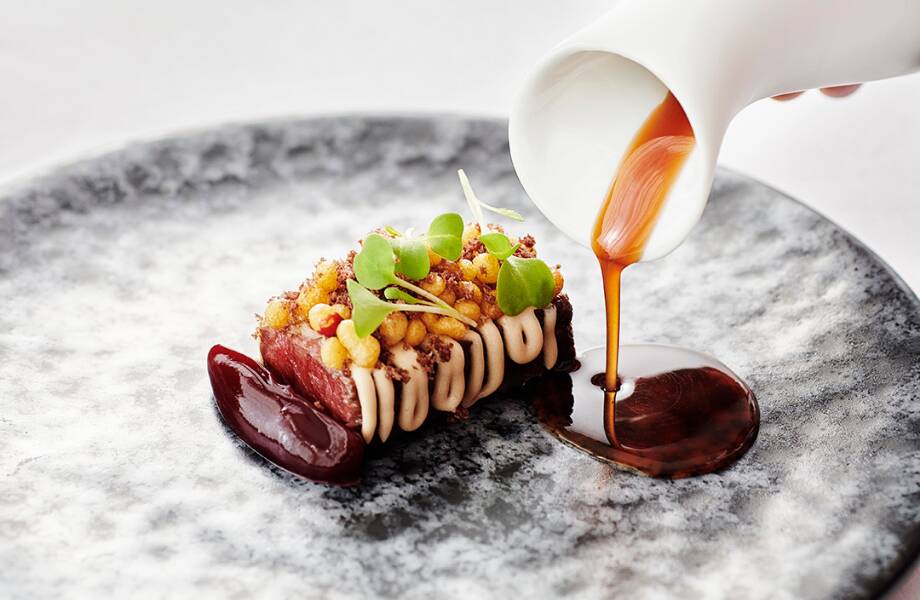
Perfection on a plate in the Yeatman’s Gastronomic Restaurant

The day of departure dawned all too soon, but cloudless, and I slipped my feet into my runners, which had dried out overnight, thanks to the underfloor heating in the bathroom.

A taxi was waiting at the hotel entrance, where the doorman doffed his bowler hat and told the young porter to put my bag in the boot.

The lad got a tenner for his troubles, but I nearly snatched it back when he then handed me my little yellow ducklings brolly. Twenty minutes later, it was in a bin outside Porto airport.

***

GET THERE Ryanair flies several times a week from Dublin and seasonally from Belfast International to Porto.

STAY Tom was a guest of the Yeatman, where rooms start from €335 a night. See the-yeatman-hotel.com for details of special offers.
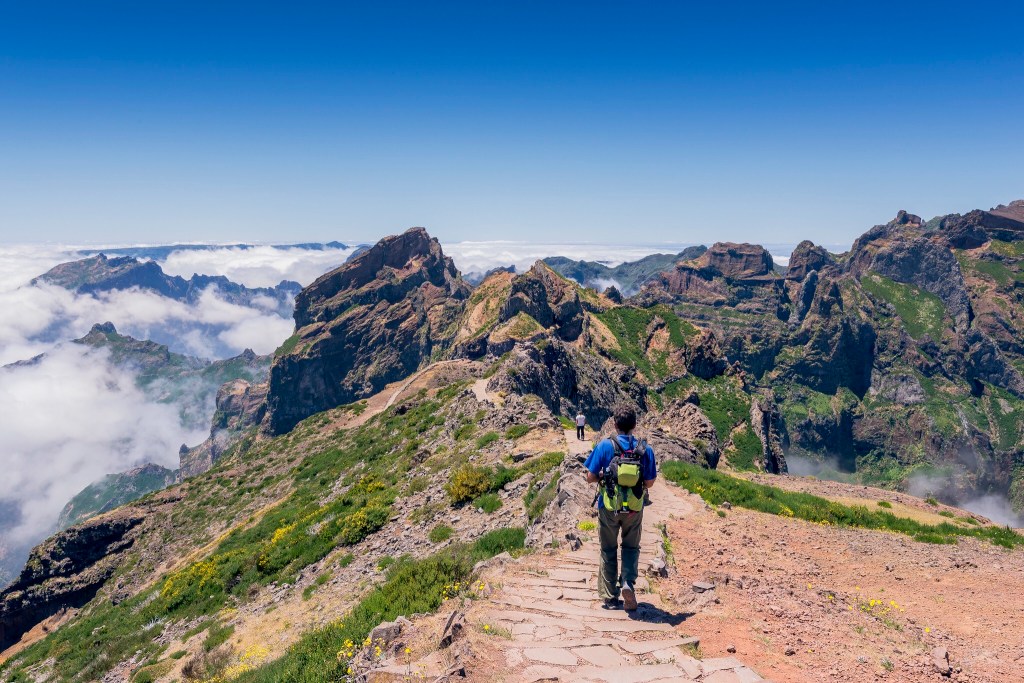
Adventure holidays in Madeira

Football superstar Cristiano Ronaldo’s home island will be one of the safest holiday destinations in Europe this summer and autumn, thanks to its no-nonsense response to the coronavirus pandemic. Here are some of the many attractions visitors can look forward to.

Hiking high above the clouds. Below, it looks scary, but the black scabbard is delicious

The black scabbard is a metre-long, lance-like predator with a mouth full of terrifying teeth that hunts in the deep Atlantic off Madeira. When a fisherman reels one in, the difference in pressure between a kilometre down and the surface makes its eyes pop out of their sockets. Visitors to this Portuguese island north of the Canaries will experience the same sensation when they see how cheap it is – food and drink cost 40pc less than in Ireland.

Having weathered the coronavirus storm significantly better than many places that rely on tourism, Madeira is being promoted as one of the safest holiday destinations in Europe once the travel traffic light turns green. The authorities are confident their rapid response to Covid and the measures imposed to suppress it will pay dividends with an influx of visitors this summer and autumn.

Since the start of February, the island has been home to hundreds of remote workers who tap at their laptops each day in the Digital Nomads Village in Ponto do Sol in the south of the island. Introduced as a pilot scheme, it’s due to end on June 30, but may be extended because of the demand for places – 4,800 people from 90 countries have so far registered an interest in passing the pandemic safely in the sun.

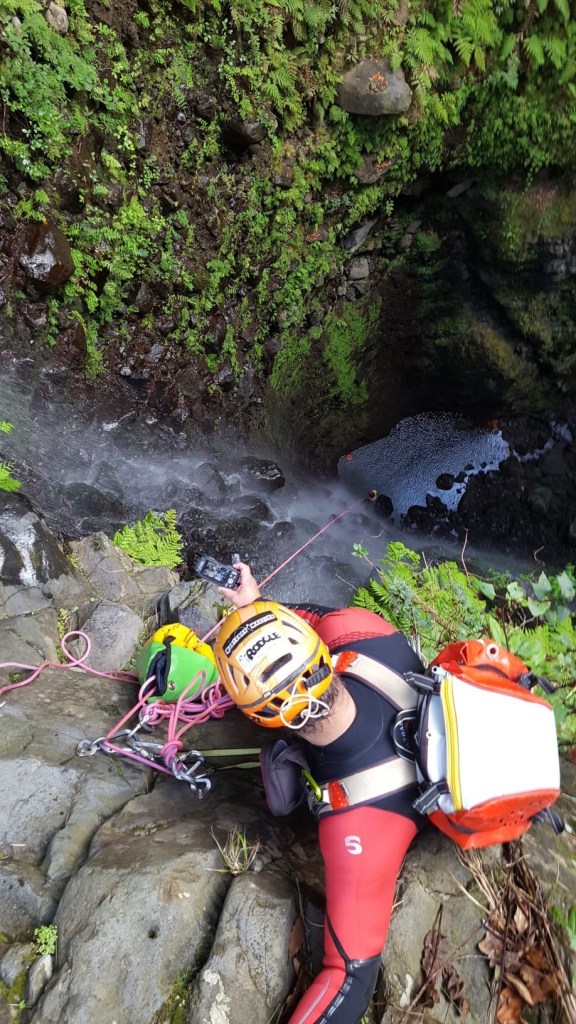
Madeira has in recent years shed its long-resented reputation as a pensioners-only paradise and become a magnet for outdoor adventurers. When holiday flights resume, they will again carry a complement of hikers, mountain bikers and trail runners, plus daredevils who go canyoning, which involves abseiling down thundering waterfalls. It’s something only a lunatic would try – and I have the selfies to prove it.

For those who aren’t faint-hearted or afraid of heights, canyoning is a thrilling experience

I’m standing, trembling, on the edge of a rocky outcrop, wearing a wetsuit I had to be shoehorned into in a situation I desperately want to get out of. Treading water in the river pool eight metres below, guide Nuno Freitas says he’ll count to three and then I should jump. As I prepare for the plunge, I ask him how often he has leapt from this same spot. “Never,” he replies. I shift swiftly into reverse gear, barge into my two companions – who are howling with laughter – and end up in a bush.

They’re still chuckling that evening over a delicious dinner of black scabbard with baked banana and passion fruit in Restaurant Santa Maria in Funchal’s old town.

Later, in Bar Venda Velha, we try poncha, Madeira’s famed firewater, made from distilled sugar cane and mixed with honey, lemon and a choice of freshly-squeezed fruit juices. Poncha packs a punch, but it goes down so well I have four – kiwi, mandarin, strawberry and tomato. A barman suggests a couple of places with music until dawn if we fancy sampling the nightlife. It took a lot of persuading for me to go canyoning, but nothing will get me to go clubbing – at 58, I’m hip replacement, not hip hop, and anyway, I have to be up early for a spot of mountain biking. It’s time for PJs, not DJs.

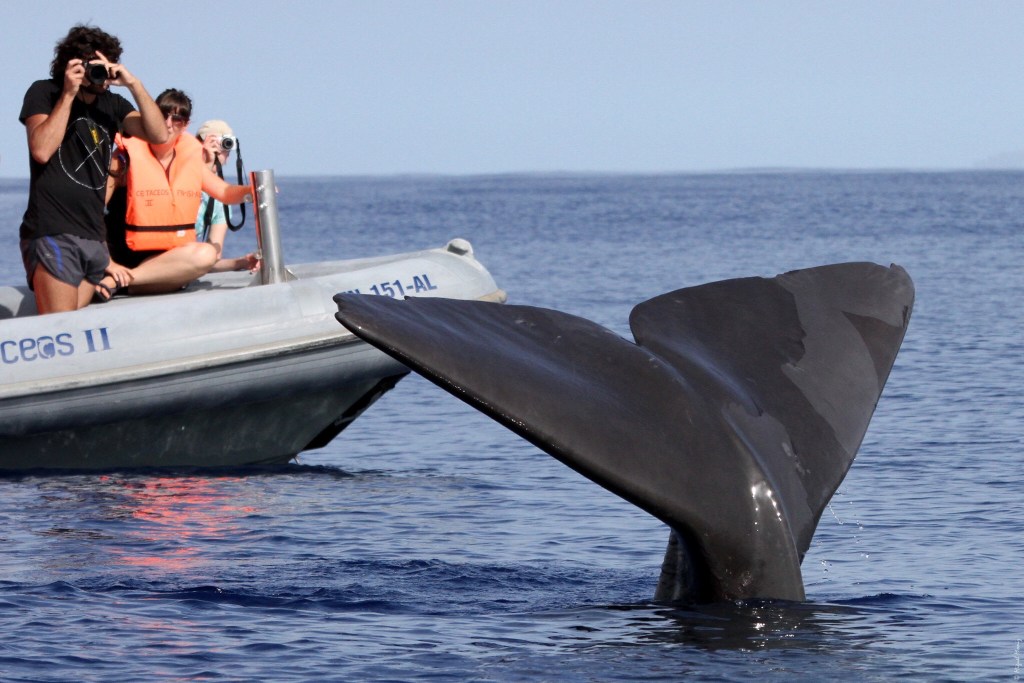
While I went mountain biking, one of my friends went out whale and dolphin spotting (below)

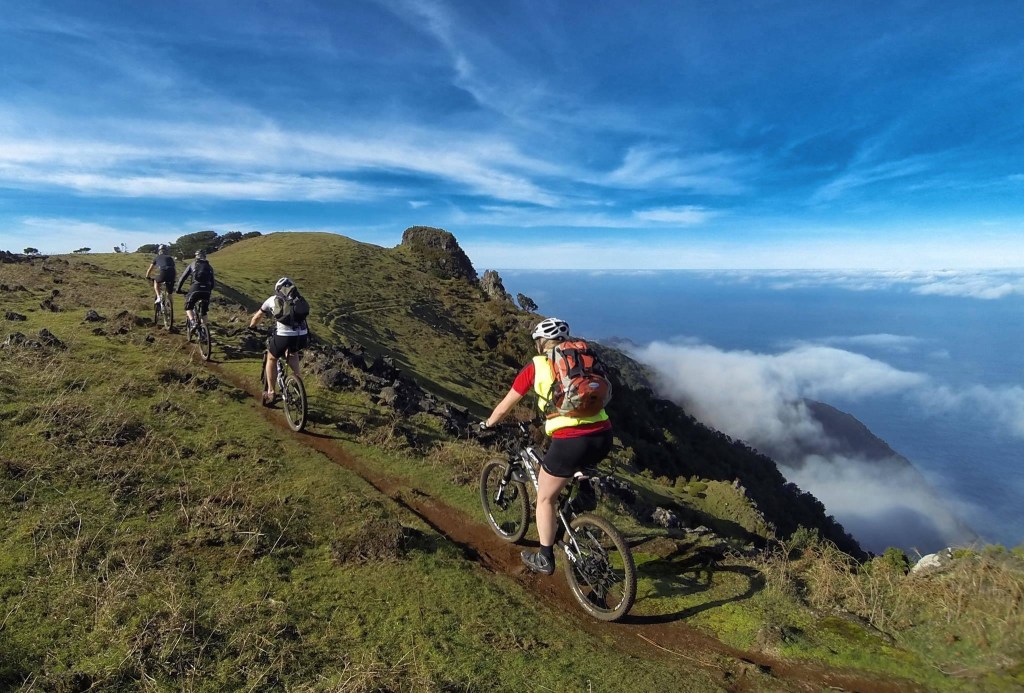
After breakfast, one of our party boards a boat for a whale spotting safari while the rest of us jump in a 4×4 that takes us high above the clouds to a roadside restaurant where our bikes await.

It’s a decent day for a descent – 10am and already 20C – that involves cycling 25km on dirt tracks and through daisy-dotted meadows, freewheeling down steep, snaking roads you’d have to be towed up and zig-zagging to avoid sunbathing lizards.

Guide Sergio Abreu, a competitive mountain biker, is impressed by my frequent up-on-the-pedals bursts of speed until I confess I could do with a cushion – those skinny saddles are torture, but the scenery goes some way to acting as a balm on my aching bum.

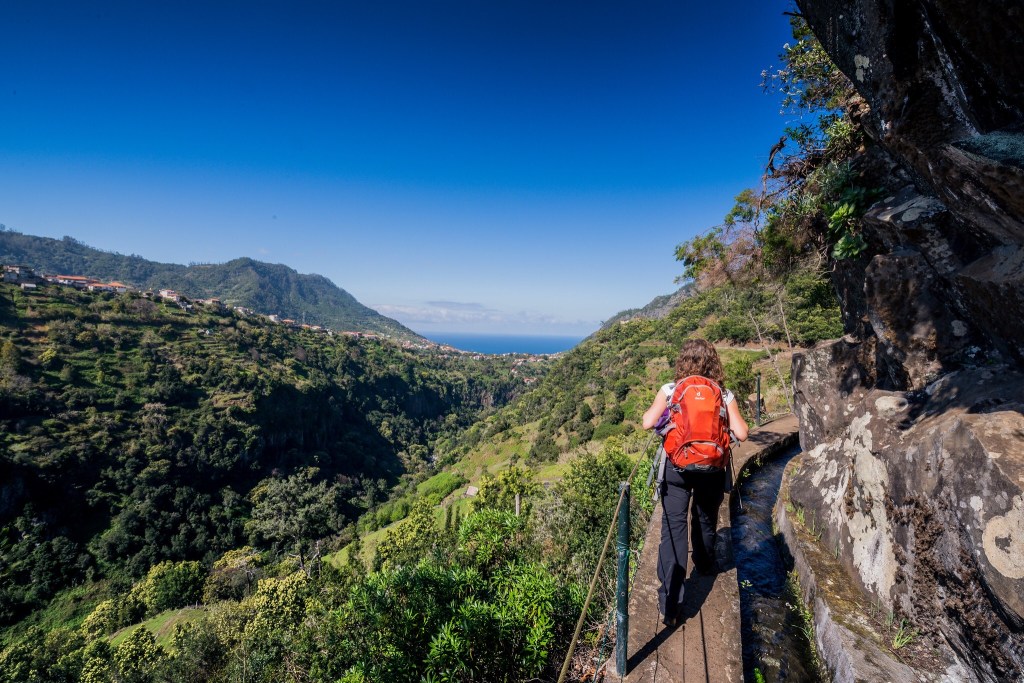
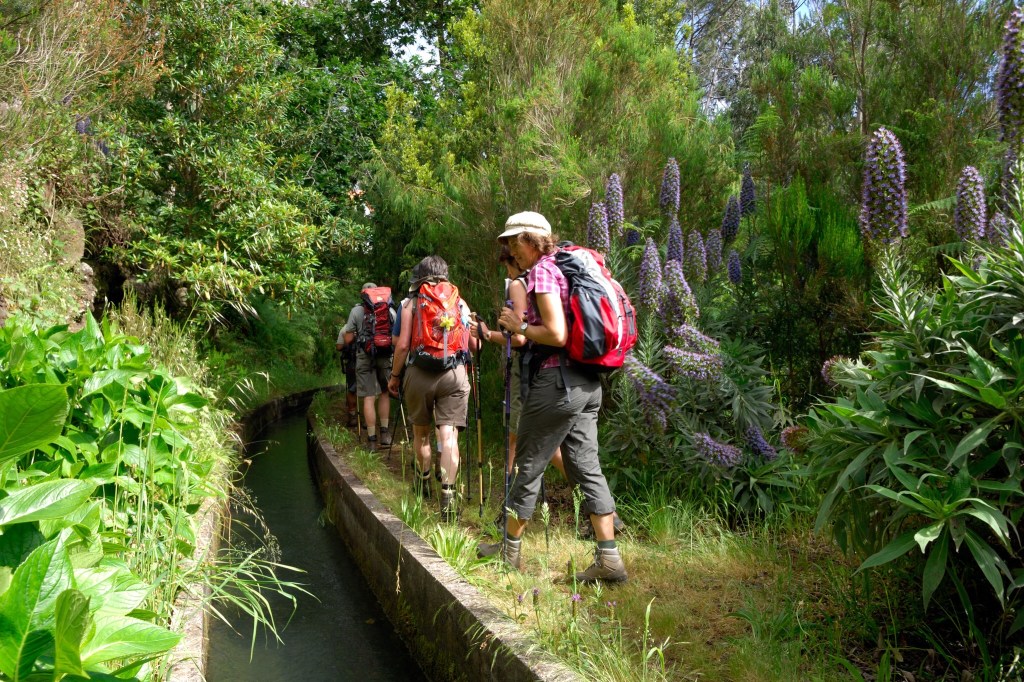
Madeira’s levadas (irrigation channels) run through a wide range of landscapes and are hugely popular with walkers

Next morning, we join naturalist Fabio Castro for a rainforest trek along a 6km stretch of Madeira’s levadas, the narrow, 16th century irrigation channels built to bring fresh water from the lush north to the more arid south. The network covers 2,200km, of which 1,400km are accessible to walkers, and the soundtrack to the trek is the cooing of doves and the chirruping of tiny firecrests, the smallest birds in Europe.

Some of the levadas are home to trout that have escaped from mountain lake fish farms, but there’s none on the menu that evening in the seafront Maktub restaurant in Paul do Mar, a 45-minute drive from Funchal.

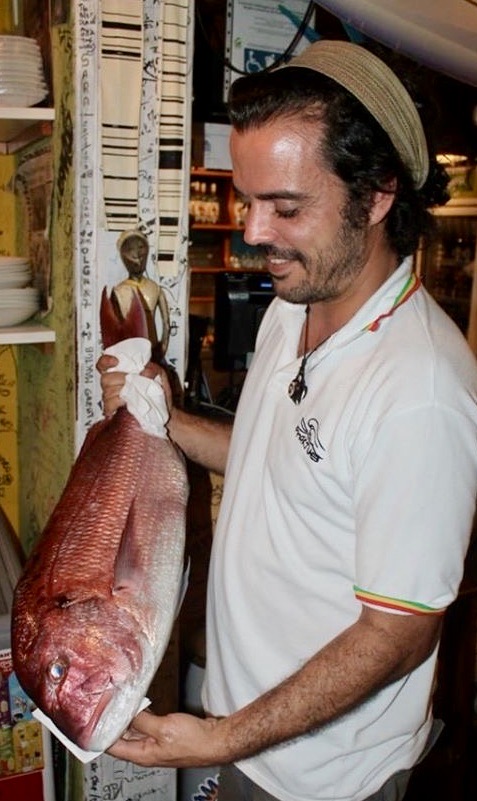
Reggae-loving owner Fabio Afonso offers only what a local fisherman brings him each morning, and tonight it’s a big bruiser of a red snapper. I throw in the towel after a second helping. There’s loads left despite four of us having tucked in twice, but we’re leaving room for a couple of Fabio’s mojitos – he serves more of these Cuban highballs than anywhere else on the island.

Restaurant owner Fabio Afonso with a red snapper

Retiring to the lantern-lit terrace, we listen to the waves and reflect on three action-packed days that blew all our preconceptions about Madeira out of the water. Who knew the World Travel Awards judges recently named it the most beautiful island destination on the planet for the sixth year in a row from a shortlist that included Hawaii, Bali and the Seychelles?

While it will continue to be a favourite with seniors, thanks to its year-round sunny climate, value for money, near-negligible crime rate and Covid controls, the age profile of visitors is slipping as the younger set in search of thrills discover it offers adrenaline – as well as afternoon tea – on tap.

My companion who went out on the boat to see the orcas isn’t the only one who had a whale of a time on Madeira – like the black scabbard, I’m hooked.

Madeira has shed its ‘sleepy’ reputation and become a magnet for outdoors enthusiasts

GET THERE I was a guest of Madeira Tourism and TAP Air Portugal. TAP flies daily from Dublin to Cristiano Ronaldo Madeira International Airport via Lisbon.

STAY I stayed at the bright and modern 4-star Alto Lido Hotel in Funchal, which offers B&B from €67 a night. Facilities include childminding, an indoor heated pool and another outdoors with sun deck, 24-hour fitness centre with sauna and free town centre shuttle bus (10 minutes).

PACK If you’re going to try canyoning, bring along a spare pair of runners (or an old pair you can bin) because they’re going to get soaked through. Canyoning is classed as an extreme sport (along with shark cage diving) and travel insurance comes at a small extra premium, so make sure you’re adequately covered.

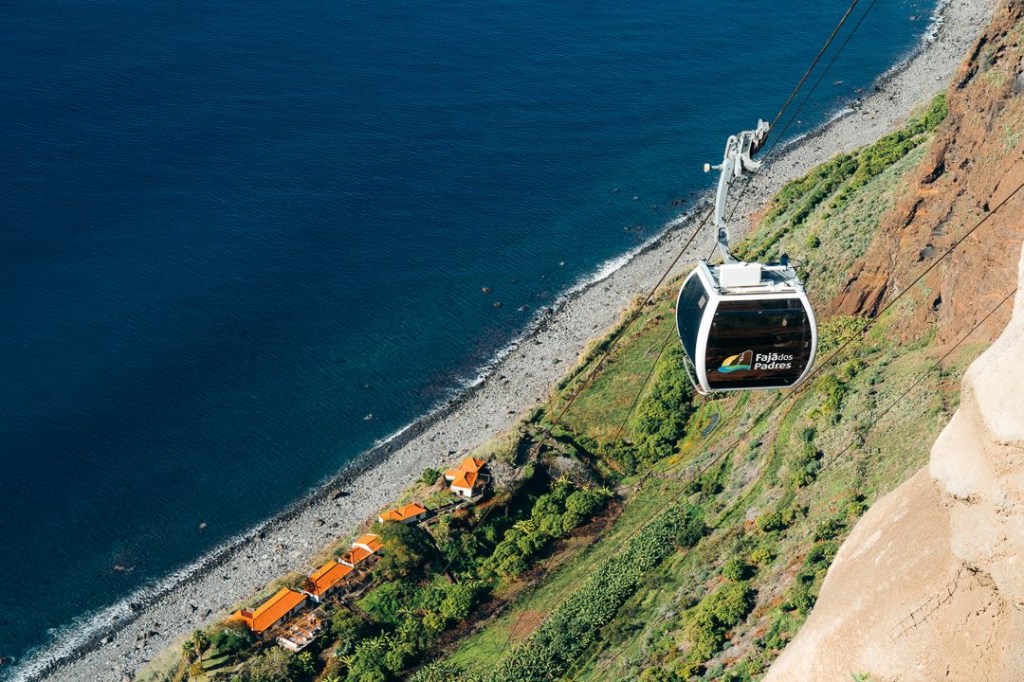
EAT The family-run Faja dos Padres beachside restaurant, at the foot of a 300-metre cliff just outside Funchal, is accessible only by cable car, which is part of the fun of having lunch there. I would urge everyone visiting Madeira to book a table – the setting is idyllic, the food is fabulous and the staff are charming.

If you want to have lunch at Faja dos Padres (you’d be crazy not to), you’ll have to take the cable car