The city where a trunk and disorderly elephant was executed by firing squad hits the target for a fun-filled long weekend
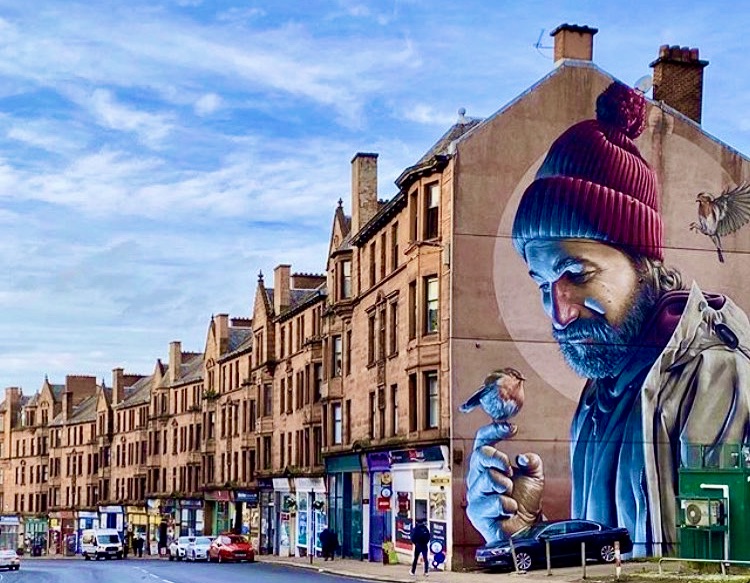
An Irishman walks into a pub in Glasgow and orders a glass of Jameson, and the barman says: “Ah, the top-selling Irish whiskey in the world. Ye know, of course, it was invented by a Scotsman.”
“Ah, here, leave it out, will ya,” says the Irishman.
“It’s true,” says the barman. “Everything worth inventing was invented by the Scots. Take the television. John Logie Baird, from Helensburgh. The telephone? Alexander Graham Bell, from Edinburgh. The steam engine? James Watt, from Greenock.
“And that whiskey ye’re holding was first distilled in Dublin in 1780 by John Jameson, from Alloa.”
The Irishman is just getting over the shock when the barman adds insult to injury by asking: “D’ye want a wee splash of Irn-Bru in that?”
The pub was The Horse Shoe, near Central Station, and the customer, a music-loving pal of mine from Dublin, was on a tour of the venues where Glasgow bands and singers who hit the big time played their earliest gigs.

Travis and Franz Ferdinand started out in a room above The Horse Shoe, while in other poky and once smoky spaces around town, Texas, Simple Minds, Deacon Blue, Paolo Nutini and Lewis Capaldi introduced their talents to appreciative audiences.
In a way, every successful band and solo artist in the world can thank John Jameson for the airplay that propelled them to stardom, as he was the great-grandfather of Guglielmo Marconi, who invented wireless telegraphy, which evolved into radio.
And everyone who enjoys Indian food can thank a grumpy bus driver, a tin of tomato soup and a restaurant owner with a dodgy stomach for chicken tikka masala, the curry invented in a hurry – in Glasgow.
It was a wet winter night in 1971 when the driver finished his shift and went into the Shish Mahal in Gibson Street (it later moved the short distance to Park Road) for a sit-down meal. After two bites, he sent it back.
Asif Ali, whose late father Ali Ahmed Aslam opened the restaurant in 1964, says: “Dad was in the kitchen having some Campbell’s tomato soup because he had an ulcer, and the chef told him the guy was moaning that his chicken was a bit dry.
“Dad said, ‘Make a sauce with tomato soup and some spices and pour it over the meat’. The bus driver loved it and came back again and again for the same dish. Dad called it tikka masala and put it on the menu, and a star was born.”

For those who aren’t too keen on curry, the half-dozen fish and chip shops run by the Varese family in the city centre are the best by far.
Italian-born Ersilio Varese and his wife Edda opened their first Blue Lagoon, an 80-seater, in Sauchiehall Street in 1975 and it immediately took off, thanks in large part to its staying open well past midnight when the pubs and clubs spilled out.
There are now 16 Blue Lagoons throughout Scotland and, naturally, they all serve deep-fried battered Mars Bars.
Visitors brave enough to try this gooey gunk, which was invented in 1990 in a fish and chip shop in Aberdeenshire, will quickly find out why so many Glaswegians have a dimple in their chin.
It’s because one bite releases a lava-like flow of molten chocolate and caramel that inflicts third-degree burns and leaves a lasting scar (in the weeks leading up to Easter, it’s deep-fried Cadbury’s Creme Eggs that do the damage).

From the Blue Lagoon branch in Dumbarton Road, it’s a 15-minute walk to Kelvingrove Art Gallery and Museum, one of Scotland’s favourite free attractions and alone worth the trip to Glasgow.
Among the most popular of the 8,000 exhibits on display are Spitfire LA198, which is suspended from the ceiling; a fibreglass caricature sculpture of a fat Elvis Presley in a blue jumpsuit; and Salvador Dali’s Christ of St John of the Cross.
The 1951 painting depicts the crucifixion from above, and for his Christ model, Dali spotted muscular Hollywood stuntman Russ Saunders on a beach in Los Angeles and flew him to his studio in Catalonia.
There, a rope attached to a roof beam was looped around his chest, he was hoisted into the air and told to stretch out his arms, and Dali sketched him through an open skylight while himself attached by a rope to the chimney as he was afraid of heights.

Then there’s stuffed Asian elephant Sir Roger, who has stood on the same spot in Kelvingrove’s West Court gallery for more than 120 years.
Poor Sir Roger. The gentle giant toured Scotland with the Bostock and Wombwell Menagerie before retiring in 1897 at the age of 24 to Glasgow Zoo (which closed in 2003), where he soon turned nasty and attacked anyone who went near him.
In October, 1900, zoo owner Edward Bostock gave the order for Sir Roger to be put down, and four soldiers formed a firing squad and shot him dead as he ate his breakfast.
It was a dirty rotten trick, not least because he wasn’t offered a blindfold, and it left a bullet hole in his forehead that can still be seen.

To get to Kelvingrove from the city centre, take the subway, which opened in 1896 and is known as the Clockwork Orange after the colour of the original carriages, and get off at Kelvin Hall, an ideal starting point for exploring the West End.
There are 15 stations on the circular route, and it’s a handy way of getting around, but for many decades it was a bit of a nausea-inducing ride, especially for passengers who had to stand when all the seats were taken.
The introduction of new trains in December 2023 was supposed to provide a more comfortable experience, but many passengers complained that the “shoogle” – the swaying and juddering when going round bends – was even shooglier than before.
So the transport authority spent £100,000 retrofitting the suspension, and all was well for a while until older citizens said they missed being thrown about the carriages and getting bruised. There’s no pleasing some people.
Like much of this largely Victorian city, which is home to some of the best 19th-century architecture in the world, the West End is full of red-sandstone buildings, with Kelvingrove and Glasgow University among the finest examples.
Glaswegians and tourists stood behind lines of New York yellow taxis and watched Tom Holland web-slinging around George Square while filming ‘Spider-Man: Brand New Day’
Most of the stone came from a cluster of quarries near Dumfries, which, at their peak, extracted 200,000 tons every year for use at home and abroad – it’s there in the steps of the Statue of Liberty and in many of New York’s brownstone buildings.
Because of its grid system of streets and resemblance to older parts of the Big Apple, Glasgow has often been the go-to location when Hollywood needed a stand-in.
It also doubled in 2012 as Philadelphia in World War Z, starring Brad Pitt; in 2020 as Gotham City in The Batman, starring Robert Pattinson; and in 2021 as Manhattan in Indiana Jones and the Dial of Destiny, starring Harrison Ford.
A few months ago, crowds of thrilled Glaswegians and tourists stood behind lines of New York yellow taxis and watched Tom Holland web-slinging around George Square while filming Spider-Man: Brand New Day, which will be released next July.

On a day off, a dozen members of the cast and crew joined other sightseers on an open-top bus for a 90-minute hop-on, hop-off tour of the city and were treated to an unexpected comedy routine.
Not only do the on-board guides know Glasgow’s history inside out, they’re great craic and keep passengers informed and entertained with fun facts and figures, jokes galore and the occasional sing-along song. It’s a laugh from start to finish.
The buses, which run on two routes, leave every 15 minutes from outside Costa Coffee on the Queen Street station side of George Square, and the £20 one-day adult ticket (£27 for two days) is a steal.
The yellow route operates from April to September and has 24 stops that include the indoor and outdoor weekend market The Barras, which is always worth a wander around, especially for the Del Boy banter from many of the stallholders.

This route also takes in Celtic Park and Ibrox Stadium, but to get to the Scottish Football Museum at Hampden requires a 15-minute ride on the number 31 city bus from St Enoch Square.
When I last toured the museum, the most-photographed exhibit was a set of giant postage stamp designs celebrating Scotland’s winning the 1978 World Cup in Argentina – remember Archie Gemmill’s wonder goal against the Netherlands?
Sadly (or inevitably), the stamps never went into production and the designs were put away a couple of years ago because English visitors kept sniggering while taking selfies, but there’s plenty more on show to keep football fans fascinated.
Buses on the red hop-on, hop-off route, which is the more popular, operate year round and stop at 21 tourist attractions that include Kelvingrove, the Riverside Museum and the Science Centre.
The Riverside incorporates the Transport Museum with its collection of old cars, trams and steam locomotives, and a walk-through reproduction of a cobbled street with shops and houses from the 1890s to the 1930s.
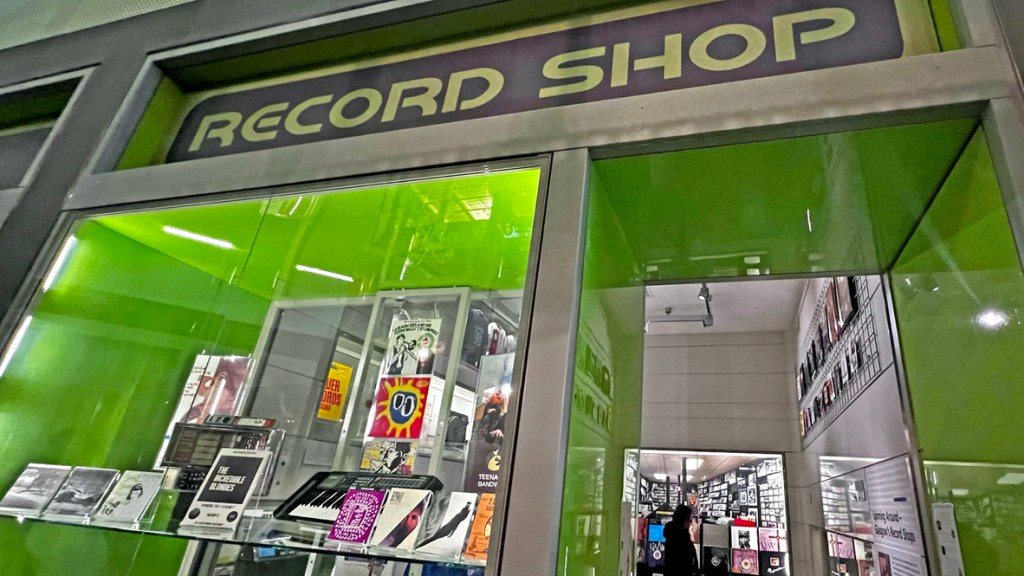
There’s also a more recent record shop full of vinyl, cassettes, CDs, gold discs, posters and concert merchandise dating from 1980 to 1995, with the focus exclusively on Scottish bands and singers.
It’s so mesmerising that visitors like my pal from Dublin who nip in for a quick look around find they’re still riffling through records an hour later and tapping their toes to hits from the period that play all day on a loop.
There are more tunes back on the bus, where passengers can alternate between chuckling at the guide’s gags and listening on earphones to singer-songwriter Eddi Reader telling the story of her home city’s rich musical heritage.
There’s no more knowledgeable narrator than Reader, who plays several sell-out gigs every year in and around Dublin and whose former band Fairground Attraction’s single, Perfect, got to number one in the Irish and UK charts in March 1988.
Her commentary on Glasgow’s musicians and music venues past and present is a joy to listen to, and the playlist she compiled to accompany it can be downloaded on Spotify.

Curiosity got the better of my buddy from Dublin, who felt he couldn’t end his visit to Clydeside without trying Irn-Bru, which outsells Coca-Cola from the Shetlands to the Lowlands, with 20 cans and bottles bought every second. I’m happy to report he liked it.
While penicillin, which was discovered in 1928 by microbiologist Alexander Fleming, from Ayrshire, continues to save countless lives, many a person has been cured of the hangover from hell thanks to the soft drink known as the fizzy defibrillator.
It’s Scotland’s second-greatest gift to humanity and was invented in 1946 in Glasgow, where it’s the mixer of choice with vodka. But don’t put it in Jameson, no matter which pub you walk into.
GET THERE A frequent bus service connects Glasgow airport with the city centre. For details of hop-on, hop-off bus tours, see citysightseeingglasgow.co.uk
For more information, see visitglasgow.com and visitscotland.com
 Tom Sweeney Travel Writer