If you haven’t heard of the capital of the Spanish Basque Country, you’re not alone, but this splendid city is well worth knowing

“I bet you all a pint you can’t name the capital of the Spanish Basque Country,” I said to the lads in Ryan’s Bar. Gerry had a guess at Bilbao. Terry thought it was San Sebastian. Liam pitched in with Pamplona.
All wrong. It’s Vitoria-Gasteiz, though softies from Seville – in fact, anywhere south of Madrid – call it Siberia-Gasteiz and arrive with raincoats, jerseys and umbrellas, even in August.
“They think it rains here every day and we’re always freezing, but I like to say we’re always prepared for any weather,” said tour guide Leire Cameno as she stuffed her fleece into her backpack.
“This morning it was dull and chilly, and three hours later it’s sunny and warm. That’s why we wear layers that we can peel off, and why we’re known as The Onions.”
I was in Vitoria-Gasteiz just after Easter and had to nip into a pharmacy for an emergency bottle of factor 50 – mid-May, and I was nearly melting.
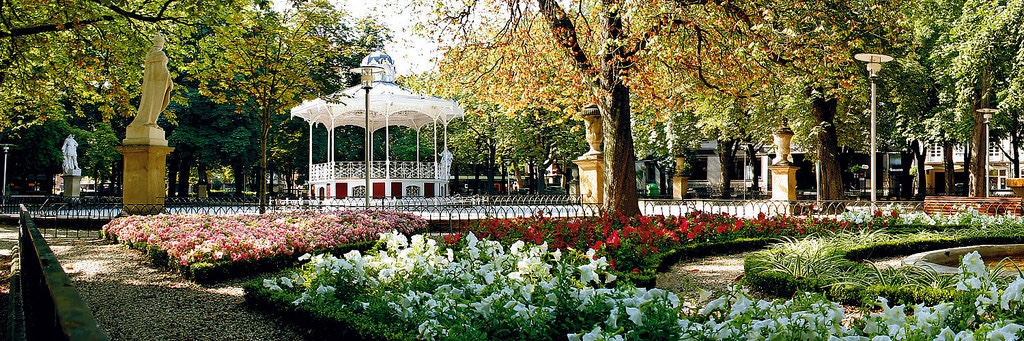
An hour’s drive south of Bilbao, the city is a mix of medieval and modern, easily walkable and surrounded by a 33km green belt that includes the Salburua Park on the eastern outskirts, with a handy tram stop at the entrance.
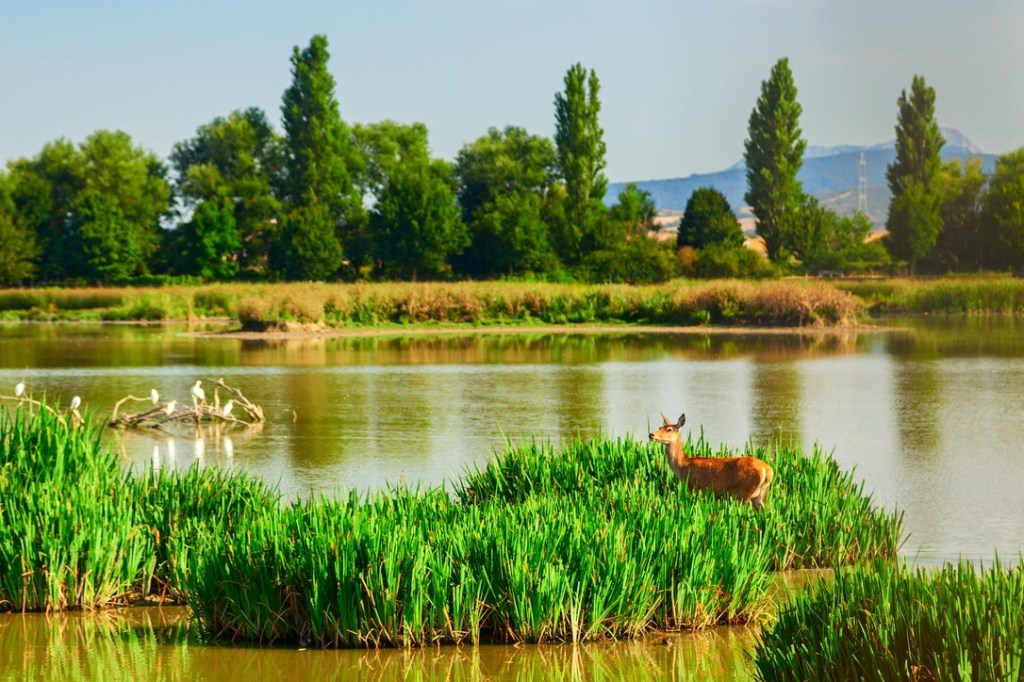
The park is a wild expanse of dry and wet grasslands and lakes, where birdsong, the quacking of ducks, the honking of geese and the slap of wings on water provide a pleasing backing track during a stroll through the poplar woods and oak groves.
In rutting season every October, the stags in the herd of red deer brought from the Scottish Highlands to keep the vegetation in trim add blood-curdling bellowing and the clash of antlers to the soundscape as they battle it out to mate with the hinds.
On April 26, 1937, it was the drone of impending death and destruction that emanated from Salburua as planes from Hitler’s Condor Legion and Mussolini’s Aviazione Legionaria took off to take part in the bombing of Guernica, 50km to the north.
It was the worst atrocity of the Spanish Civil War, killing at least 300 people, including many children, on a busy market day, and is depicted in nightmarish detail in Picasso’s grey, white and black oil painting named after the town.
The massive artwork is the main attraction in the Reina Sofia Museum in Madrid, and there it will remain – requests from galleries in the Basque Country to borrow it are always denied because the custodians fear they won’t get it back.
Citizens of Vitoria-Gasteiz and the visitors they’re always happy to welcome – no “Tourists go home” signs or protesters armed with water pistols here – aren’t short of galleries in which to get a culture fix, including the Artium Museum of Contemporary Art.
However, those who like to know what they’re looking at without wondering if it’s hanging the wrong way up should spend an hour admiring the portraits and scenes of everyday local life from the mid-18th to early-20th centuries in the Museum of Fine Arts.

The museum is in the Augustin Zulueta Palace in the city’s poshest residential avenue, Paseo de Fray Francisco, which makes Dublin’s affluent Ailesbury Road look like Coronation Street.
Completed in 1916 after four years of construction, the palace was the marital home of nobleman’s daughter Elvira Zulueta and Ricardo Augustin, the biggest pair of bigheads that ever spent an hour in front of a mirror.
If you thought Donald Trump was vain, at least he hasn’t had himself glorified in stained glass in the Oval Office.
Yet there the couple are in the first-floor landing window, captioned Sanctus Ricardus and Sanctus Elvira and with the sunlight streaming through their golden halos and multi-coloured robes like a straightened-out rainbow. How very presumptuous.

Most visitors to the 13th-century fortress Cathedral of Santa Maria presume the life-sized bronze statue of a modern-day man in a suit in Plaza de la Burulleria outside is Dustin Hoffman and wonder what he’s doing there.
Then they learn it’s his doppelganger, bestselling Welsh author Ken Follett, and wonder what he’s doing there.
Follett was in Vitoria-Gasteiz in October 2002 for a conference and took a tour of the cathedral restoration works – the building had been in danger of collapsing because of subsidence, and several columns and arches are still out of kilter, though now safe.
Having chronicled the construction of a cathedral in the fictitious English town of Kingsbridge in the 12th-century (The Pillars of the Earth, 1989), Follett was inspired by the Santa Maria project to write the sequel, World Without End (2007).
His work in promoting appreciation of church architecture through his novels earned him the Basque-Navarro College of Architects’ Olaguibel Prize, and he attended the unveiling of the statue in January 2008 to coincide with the presentation of the award.
During his acceptance speech, he said that when he told his family he was going to be immortalised in bronze, they asked if he would be mounted on a horse or nude, with a fig leaf to spare his blushes.

Guided tours of the cathedral can be booked online (catedralvitoria.eus), and if you’re lucky, the person showing you around will be Itziar Gurruchaga, whose father, Iñigo, was the correspondent in Belfast for the Basque newspaper El Correo in the 1990s.
Starting in the foundations and proceeding to the tower via narrow passages and stairways and the even narrower gallery where you have to breathe in and walk sideways, Itziar told the fascinating story of this Gothic masterpiece.
For an hour, I hung on her every word as she brought 800 years of history to life.
The cathedral sits atop the only hill in the city and is skirted by the cobbled streets of the medieval quarter, where several moving walkways, like those in airports, make it easy for less able visitors to get up to the entrance.
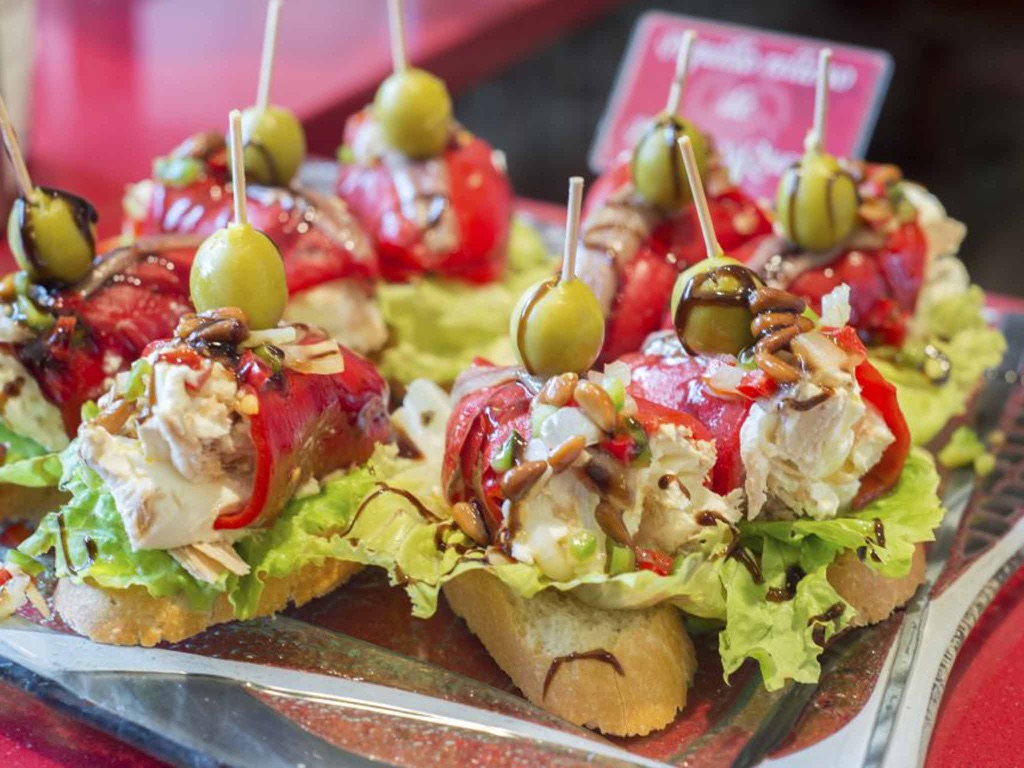
Those streets are home to some of the best pintxo bars in town, where the owners try to outdo each other in creating the tastiest tapas. It’s a friendly rivalry that ensures customers are treated to the finest finger food while bar-hopping.
In his book, The Basque Country (Signal, 2007), Irish author and journalist Paddy Woodworth writes: “Eating one’s way through the Basque Country is a constant pleasure.”
That’s true, but he adds: “I would not go back to Vitoria for the snails, which are the piece de resistance of the San Prudencio celebrations (I would rather chew black rubber, despite the spicy tomato sauce).
“But even that let-down was more than made up for by the scrambled eggs laced with baby wild mushrooms, which are the second speciality of that fiesta.”
Those little fungi are perretxikos, also known as St George’s mushrooms and often no bigger than a jelly bean, yet a premium-quality kilo costs up to €300.
They’re one of the ingredients in Irlandes de Perretxikos, an award-winning pintxo by Enrique Fuentes of Bar Toloño that also contains foie gras, soft-boiled egg yolk and truffle oil served in a glass and topped with fresh cream, so it looks like an Irish coffee.
In 2006, Enrique was encouraged by his family to enter the first ever Basque Country Pintxo Championship, in San Sebastian, and put many a Michelin-starred nose out of joint when he took top prize with his Milhojas de Habitas.
It’s mille-feuille (puff pastry where I come from) with smoked mackerel, broad beans and ratatouille, and it’s Toloño’s top-seller.
It’s also one of the featured dishes in Gastrogune (gastrogune.com), a deli by day and sit-down pintxo experience by night run by Enrique’s daughter Sonia with chef Ainhoa Gonzalez.
The two friends cater to small groups and serve a selection of freshly made signature pintxos accompanied by Basque wines (Vitoria-Gasteiz is the gateway to the Rioja-Alavesa wine region) and mouth-watering commentary from Ainhoa.
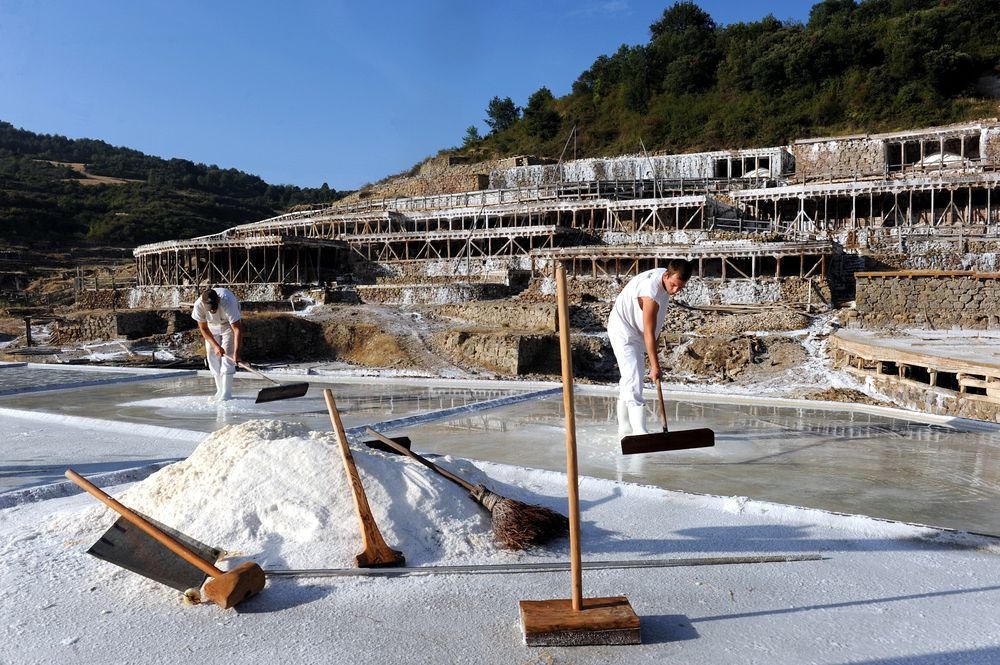
The salt on Sonia’s table comes from Añana, 30km west of Vitoria-Gasteiz, where it has been harvested for 7,500 years. So prized was this particular “white gold” in the ancient world that Roman emperors wouldn’t put anything else on their chips.
Deep beneath the floor of Añana’s Salt Valley (vallesalado.com) is a 5.5km by 3.5km mass of the solidified mineral remains of a sea that dried out 200 million years ago.
Fresh water runs through this and emerges as brine from four natural springs that were discovered by the Neolithic Autrigones people (it was like winning a huge EuroMillions jackpot), who extracted the salt by boiling away the liquid in clay pots.
Today, a network of centuries-old narrow wooden channels conveys the brine from the springs to the pans, where it evaporates, leaving behind the salt that is then collected, packed and sold throughout Spain and online as a premium product.
Visitors will learn all this during a guided tour of the 32 acres of salt pans, but I had already been educated on the way there by taxi driver Adolfo Martinez, who lives nearby and has become an expert on this remarkable world heritage site.
“Everybody thinks sea salt is the healthiest, but 90pc of it is contaminated with microplastics,” he said. “Here at Añana it’s 100pc pure, despite its marine origins – there were no vast forests of plastic bags floating around in the primordial oceans.
“The little ones call me Uncle Adolfo. That makes me very happy”
“The producers of ordinary table salt bleach it with chemicals to make it snow-white and it’s nothing but sodium chloride, but Añana salt contains 84 minerals and essential trace elements.
“It’s the best in the world, and you’ll find it in all the top restaurants of Spain. We have a world-famous Basque chef, Martin Berasategui, and he says it’s the Rolls-Royce of condiments. He should know – he has 11 Michelin stars.”
Adolfo is regarded as a star by countless families within a 20km radius of Salt Valley, as he has been driving their children to and from school, football training, debs, first dates and college for the past 30 years.
“These days, I also drive the children of the first children I used to take to nursery school in the 1990s, so life has come full circle,” he said. “The little ones call me Uncle Adolfo. That makes me very happy.”
Living in Vitoria-Gasteiz makes tour guide Leire very happy.
“I was born and raised here and I’m raising my children here,” she said. “It’s a friendly and safe place. We’re surrounded by nature – you’re never more than 300 metres from a park or other green space. It’s beautiful. Everything we need is on our doorstep.
“My husband sometimes has to travel for his work, and he has been asked several times to relocate, but we have always said no. Vitoria-Gasteiz is our home. We love it, and I love showing it off to visitors. We will never leave.”
“People make Glasgow” is the marketing slogan of my own home town. The capital of the Spanish Basque Country (I’m still waiting for those pints from Gerry, Terry and Liam) should adopt it, because every resident I spoke with couldn’t have been nicer.
Like Uncle Adolfo, they’re the salt of the earth.

SAIL I visited Vitoria-Gasteiz as a guest of Brittany Ferries (brittany-ferries.ie), whose luxury vessel Salamanca (above), which is more like a cruise ship than a ferry, sails twice a week from Rosslare Harbour to Bilbao. Salamanca has kennels and several pet-friendly cabins, and the crossing takes from 28 to 30 hours. One of the highlights of the voyage is dolphin- and whale-spotting in the Bay of Biscay with on-board ocean conservationist Éirinn Kearney, from Lochgiel, Co Antrim (orca.org.uk).
FLY Aer Lingus flies from Dublin to Bilbao. There are nine buses each day (13 in high season) from Bilbao airport to Vitoria-Gasteiz (45-minute journey, longer at peak traffic times).
STAY Aparthotel Kora Green City (koragreencity.com) in Vitoria-Gasteiz is one of the most energy-efficient accommodations in the world, ideally located in a quiet neighbourhood, yet a mere 10-minute stroll from the historical centre – just follow the tram lines.
For further information, see vitoria-gasteiz.org and spain.info
 Tom Sweeney Travel Writer