There are no ‘Tourists go home’ signs in warm and welcoming Vitoria-Gasteiz

If you haven’t heard of the capital of the Spanish Basque Country, you’re not alone, but this splendid city is well worth knowing

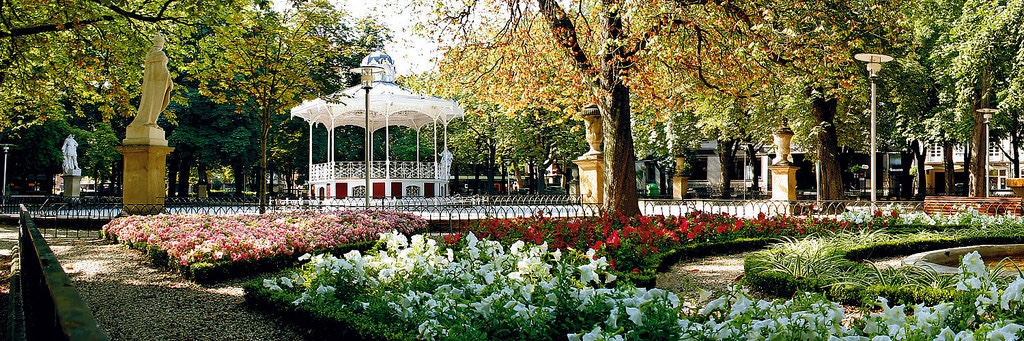
Plaza de la Virgen Blanca

“I bet you all a pint you can’t name the capital of the Spanish Basque Country,” I said to the lads in Ryan’s Bar. Gerry had a guess at Bilbao. Terry thought it was San Sebastian. Liam pitched in with Pamplona.

All wrong. It’s Vitoria-Gasteiz, though softies from Seville – in fact, anywhere south of Madrid – call it Siberia-Gasteiz and arrive with raincoats, jerseys and umbrellas, even in August.

“They think it rains here every day and we’re always freezing, but I like to say we’re always prepared for any weather,” said tour guide Leire Cameno as she stuffed her fleece into her backpack.

“This morning it was dull and chilly, and three hours later it’s sunny and warm. That’s why we wear layers that we can peel off, and why we’re known as The Onions.”

I was in Vitoria-Gasteiz just after Easter and had to nip into a pharmacy for an emergency bottle of factor 50 – mid-May, and I was nearly melting.

Florida Park

An hour’s drive south of Bilbao, the city is a mix of medieval and modern, easily walkable and surrounded by a 33km green belt that includes the Salburua Park on the eastern outskirts, with a handy tram stop at the entrance.

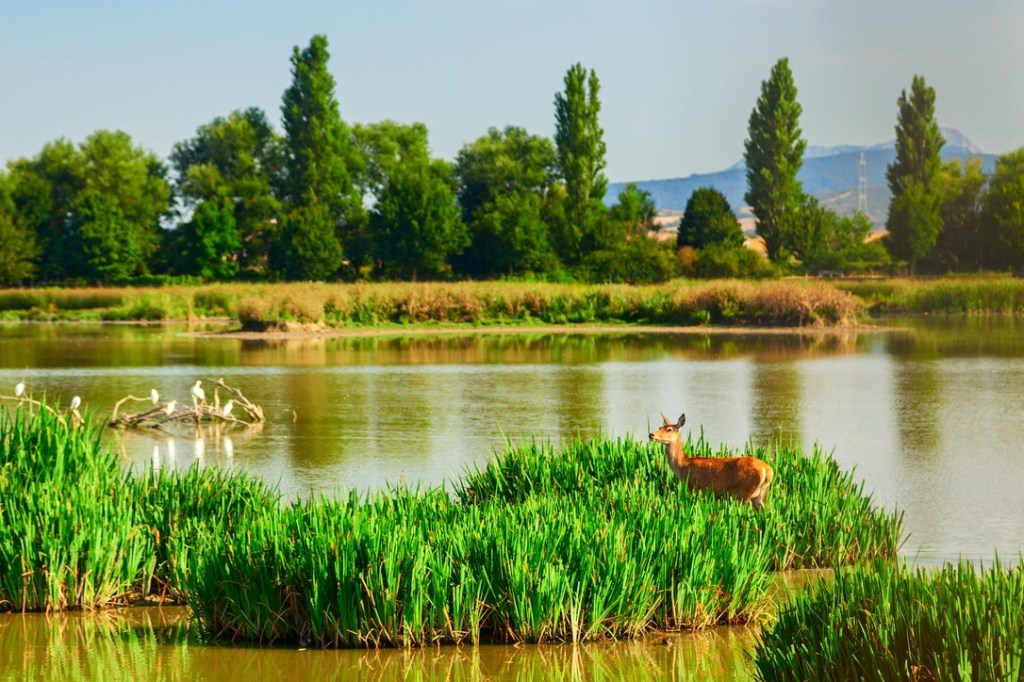
The park is a wild expanse of dry and wet grasslands and lakes, where birdsong, the quacking of ducks, the honking of geese and the slap of wings on water provide a pleasing backing track during a stroll through the poplar woods and oak groves.

In rutting season every October, the stags in the herd of red deer brought from the Scottish Highlands to keep the vegetation in trim add blood-curdling bellowing and the clash of antlers to the soundscape as they battle it out to mate with the hinds.

Red deer doe in Salburua Park, on the outskirts of the city

On April 26, 1937, it was the drone of impending death and destruction that emanated from Salburua as planes from Hitler’s Condor Legion and Mussolini’s Aviazione Legionaria took off to take part in the bombing of Guernica, 50km to the north.

It was the worst atrocity of the Spanish Civil War, killing at least 300 people, including many children, on a busy market day, and is depicted in nightmarish detail in Picasso’s grey, white and black oil painting named after the town.

The massive artwork is the main attraction in the Reina Sofia Museum in Madrid, and there it will remain – requests from galleries in the Basque Country to borrow it are always denied because the custodians fear they won’t get it back.

Citizens of Vitoria-Gasteiz and the visitors they’re always happy to welcome – no “Tourists go home” signs or protesters armed with water pistols here – aren’t short of galleries in which to get a culture fix, including the Artium Museum of Contemporary Art.

However, those who like to know what they’re looking at without wondering if it’s hanging the wrong way up should spend an hour admiring the portraits and scenes of everyday local life from the mid-18th to early-20th centuries in the Museum of Fine Arts.

Ricardo Augustin (left) and his wife Elvira Zulueta (right) had themselves immortalised in stained glass

The museum is in the Augustin Zulueta Palace in the city’s poshest residential avenue, Paseo de Fray Francisco, which makes Dublin’s affluent Ailesbury Road look like Coronation Street.

Completed in 1916 after four years of construction, the palace was the marital home of nobleman’s daughter Elvira Zulueta and Ricardo Augustin, the biggest pair of bigheads that ever spent an hour in front of a mirror.

If you thought Donald Trump was vain, at least he hasn’t had himself glorified in stained glass in the Oval Office.

Yet there the couple are in the first-floor landing window, captioned Sanctus Ricardus and Sanctus Elvira and with the sunlight streaming through their golden halos and multi-coloured robes like a straightened-out rainbow. How very presumptuous.

Statue of author Ken Follett, who looks remarkably like actor Dustin Hoffman, at the Cathedral of Santa Maria

Most visitors to the 13th-century fortress Cathedral of Santa Maria presume the life-sized bronze statue of a modern-day man in a suit in Plaza de la Burulleria outside is Dustin Hoffman and wonder what he’s doing there.

Then they learn it’s his doppelganger, bestselling Welsh author Ken Follett, and wonder what he’s doing there.

Follett was in Vitoria-Gasteiz in October 2002 for a conference and took a tour of the cathedral restoration works – the building had been in danger of collapsing because of subsidence, and several columns and arches are still out of kilter, though now safe.

Having chronicled the construction of a cathedral in the fictitious English town of Kingsbridge in the 12th-century (The Pillars of the Earth, 1989), Follett was inspired by the Santa Maria project to write the sequel, World Without End (2007).

His work in promoting appreciation of church architecture through his novels earned him the Basque-Navarro College of Architects’ Olaguibel Prize, and he attended the unveiling of the statue in January 2008 to coincide with the presentation of the award.

During his acceptance speech, he said that when he told his family he was going to be immortalised in bronze, they asked if he would be mounted on a horse or nude, with a fig leaf to spare his blushes.

Thirteenth-century Cathedral of Santa Maria

Guided tours of the cathedral can be booked online (catedralvitoria.eus), and if you’re lucky, the person showing you around will be Itziar Gurruchaga, whose father, Iñigo, was the correspondent in Belfast for the Basque newspaper El Correo in the 1990s.

Starting in the foundations and proceeding to the tower via narrow passages and stairways and the even narrower gallery where you have to breathe in and walk sideways, Itziar told the fascinating story of this Gothic masterpiece.

For an hour, I hung on her every word as she brought 800 years of history to life.

The cathedral sits atop the only hill in the city and is skirted by the cobbled streets of the medieval quarter, where several moving walkways, like those in airports, make it easy for less able visitors to get up to the entrance.

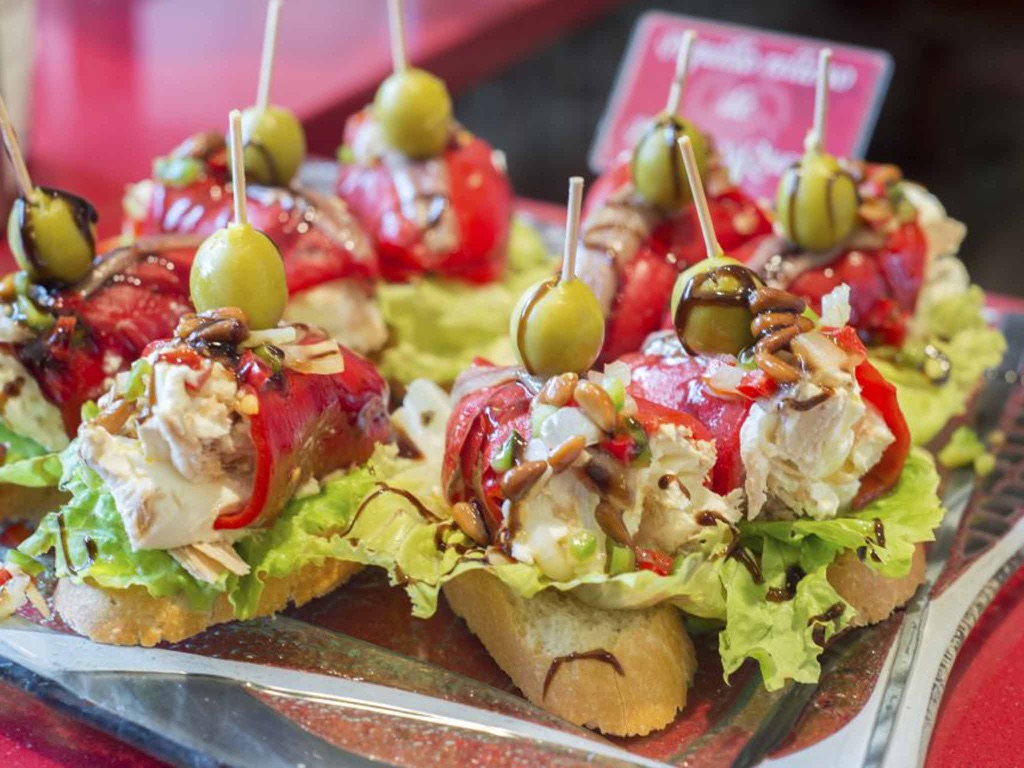
Those streets are home to some of the best pintxo bars in town, where the owners try to outdo each other in creating the tastiest tapas. It’s a friendly rivalry that ensures customers are treated to the finest finger food while bar-hopping.

The city’s many pintxos bars and restaurants offer a vast array of tasty treats

In his book, The Basque Country (Signal, 2007), Irish author and journalist Paddy Woodworth writes: “Eating one’s way through the Basque Country is a constant pleasure.”

That’s true, but he adds: “I would not go back to Vitoria for the snails, which are the piece de resistance of the San Prudencio celebrations (I would rather chew black rubber, despite the spicy tomato sauce).

“But even that let-down was more than made up for by the scrambled eggs laced with baby wild mushrooms, which are the second speciality of that fiesta.”

Those little fungi are perretxikos, also known as St George’s mushrooms and often no bigger than a jelly bean, yet a premium-quality kilo costs up to €300.

They’re one of the ingredients in Irlandes de Perretxikos, an award-winning pintxo by Enrique Fuentes of Bar Toloño that also contains foie gras, soft-boiled egg yolk and truffle oil served in a glass and topped with fresh cream, so it looks like an Irish coffee.

In 2006, Enrique was encouraged by his family to enter the first ever Basque Country Pintxo Championship, in San Sebastian, and put many a Michelin-starred nose out of joint when he took top prize with his Milhojas de Habitas.

It’s mille-feuille (puff pastry where I come from) with smoked mackerel, broad beans and ratatouille, and it’s Toloño’s top-seller.

It’s also one of the featured dishes in Gastrogune (gastrogune.com), a deli by day and sit-down pintxo experience by night run by Enrique’s daughter Sonia with chef Ainhoa Gonzalez.

The two friends cater to small groups and serve a selection of freshly made signature pintxos accompanied by Basque wines (Vitoria-Gasteiz is the gateway to the Rioja-Alavesa wine region) and mouth-watering commentary from Ainhoa.

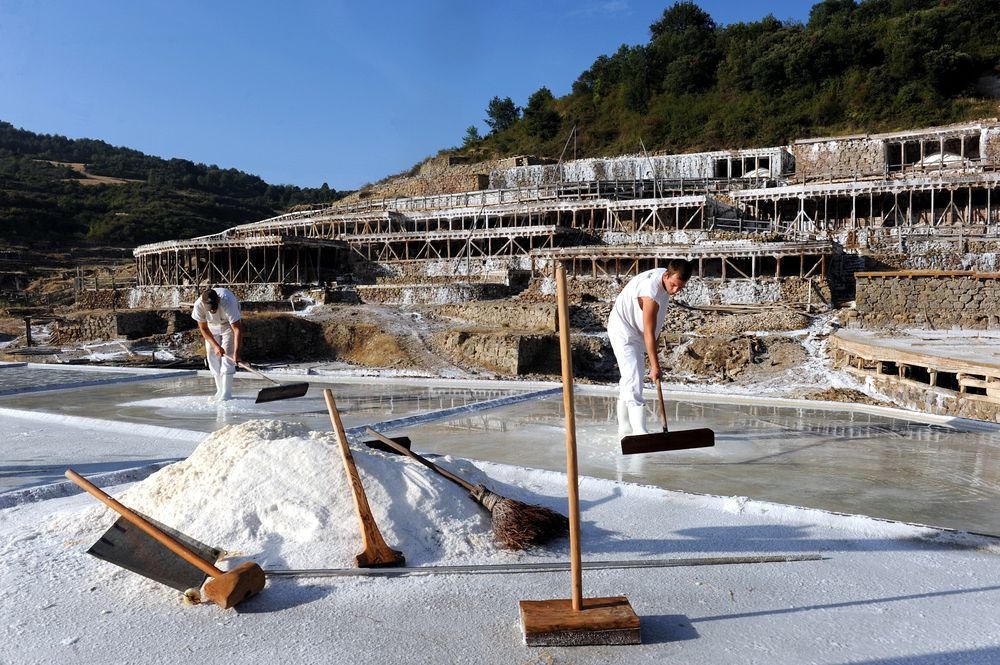
Harvesting salt from the ancient pans at Añana’s Salt Valley

The salt on Sonia’s table comes from Añana, 30km west of Vitoria-Gasteiz, where it has been harvested for 7,500 years. So prized was this particular “white gold” in the ancient world that Roman emperors wouldn’t put anything else on their chips.

Deep beneath the floor of Añana’s Salt Valley (vallesalado.com) is a 5.5km by 3.5km mass of the solidified mineral remains of a sea that dried out 200 million years ago.

Fresh water runs through this and emerges as brine from four natural springs that were discovered by the Neolithic Autrigones people (it was like winning a huge EuroMillions jackpot), who extracted the salt by boiling away the liquid in clay pots.

Today, a network of centuries-old narrow wooden channels conveys the brine from the springs to the pans, where it evaporates, leaving behind the salt that is then collected, packed and sold throughout Spain and online as a premium product.

Visitors will learn all this during a guided tour of the 32 acres of salt pans, but I had already been educated on the way there by taxi driver Adolfo Martinez, who lives nearby and has become an expert on this remarkable world heritage site.

“Everybody thinks sea salt is the healthiest, but 90pc of it is contaminated with microplastics,” he said. “Here at Añana it’s 100pc pure, despite its marine origins – there were no vast forests of plastic bags floating around in the primordial oceans.

“The little ones call me Uncle Adolfo. That makes me very happy”

“The producers of ordinary table salt bleach it with chemicals to make it snow-white and it’s nothing but sodium chloride, but Añana salt contains 84 minerals and essential trace elements.

“It’s the best in the world, and you’ll find it in all the top restaurants of Spain. We have a world-famous Basque chef, Martin Berasategui, and he says it’s the Rolls-Royce of condiments. He should know – he has 11 Michelin stars.”

Adolfo is regarded as a star by countless families within a 20km radius of Salt Valley, as he has been driving their children to and from school, football training, debs, first dates and college for the past 30 years.

“These days, I also drive the children of the first children I used to take to nursery school in the 1990s, so life has come full circle,” he said. “The little ones call me Uncle Adolfo. That makes me very happy.”

Living in Vitoria-Gasteiz makes tour guide Leire very happy.

“I was born and raised here and I’m raising my children here,” she said. “It’s a friendly and safe place. We’re surrounded by nature – you’re never more than 300 metres from a park or other green space. It’s beautiful. Everything we need is on our doorstep.

“My husband sometimes has to travel for his work, and he has been asked several times to relocate, but we have always said no. Vitoria-Gasteiz is our home. We love it, and I love showing it off to visitors. We will never leave.”

“People make Glasgow” is the marketing slogan of my own home town. The capital of the Spanish Basque Country (I’m still waiting for those pints from Gerry, Terry and Liam) should adopt it, because every resident I spoke with couldn’t have been nicer.

Like Uncle Adolfo, they’re the salt of the earth.

SAIL I visited Vitoria-Gasteiz as a guest of Brittany Ferries (brittany-ferries.ie), whose luxury vessel Salamanca (above), which is more like a cruise ship than a ferry, sails twice a week from Rosslare Harbour to Bilbao. Salamanca has kennels and several pet-friendly cabins, and the crossing takes from 28 to 30 hours. One of the highlights of the voyage is dolphin- and whale-spotting in the Bay of Biscay with on-board ocean conservationist Éirinn Kearney, from Lochgiel, Co Antrim (orca.org.uk).

FLY Aer Lingus flies from Dublin to Bilbao. There are nine buses each day (13 in high season) from Bilbao airport to Vitoria-Gasteiz (45-minute journey, longer at peak traffic times).

STAY Aparthotel Kora Green City (koragreencity.com) in Vitoria-Gasteiz is one of the most energy-efficient accommodations in the world, ideally located in a quiet neighbourhood, yet a mere 10-minute stroll from the historical centre – just follow the tram lines.

For further information, see vitoria-gasteiz.org and spain.info
European Green Capital Valencia is a breath of fresh air

Communities worldwide long to be like Spain’s third-biggest city, where citizens take their eco-conscious credentials seriously – and it shows.

Turia Garden, which runs through the centre of Valencia, occupies the former course of the Turia river

Travel agent Ciara Mooney visited Valencia for a long weekend nearly four years ago, fell in love with the place and decided to split her time between there and Celbridge, Co Kildare.

The beauty of working remotely from her sunny terrace in Spain’s third-biggest city isn’t lost on Ciara, the founder and managing director of Freedom Travel and Solo Travel.

“I consider myself the luckiest girl in the world,” she says. “I can just pack some clothes and my laptop and nip to and fro. I have to pinch myself sometimes – it’s like living a dream.”

With 12 return flights a week to Valencia from Ireland – six from Dublin, four from Cork and two from Belfast – Ciara can hop on a plane at the drop of a sombrero if she’s needed back in the office.

However, for the foreseeable future she’s more than happy to spend a few weeks at a time in this year’s European Green Capital, where Malvarrosa beach is a 10-minute walk from her house.

The golden sands of Malvarrosa beach stretch for two kilometres

Close, too, is the Turia Garden, a 9km traffic-free park that occupies the former bed of the diverted Turia river and is the envy of city-dwellers worldwide.

When local authorities from Alaska to Adelaide look for ways to improve life for their citizens, they send delegations to Valencia to see what can be achieved, and they leave mightily impressed.

On Sundays, Ciara might cycle the 10km to El Palmar, the little town at the heart of Albufera Natural Park, where the freshwater lake is the biggest in Spain at 27 square kilometres, yet only 1.5 metres deep.

All of the dozen or so restaurants in El Palmar take pride in serving authentic paella, which originates there and contains five simple ingredients – rice, chicken, rabbit, green beans and snails.

Authentic Valencian paella contains five simple ingredients, with not a shrimp in sight

The dish dates from the 18th century and was the main meal of the day back then for the families of eel fishermen and those who worked in the rice fields that are irrigated by the lake and cover 7,400 acres – nearly three times the size of Dublin Airport.

While the photogenic seafood and shellfish paella served throughout the rest of Spain is a tasty TikTok and Instagram star, Valencians look on it with disdain, dismissing it as “arroz con cosas” – “rice with stuff”.

El Palmar is a popular bus excursion from the city, with visitors boarding small passenger boats for a glide along the channels that are lined by tall rushes and lead to the lake, which is separated from the sea by a massive sandbar.

Tourists enjoy a boat trip along the channels of Albufera Natural Park

The natural park is home to more than 300 resident and migratory bird species, including flamingos. While pretty, they’ve become a bit of a pest by trampling newly sown rice fields.

As the pink-plumaged waders are protected, there’s little the farmers can do but fire blank shotgun cartridges into the air to scare them off while seeking compensation from the local government for their losses.

Birds of a different colour of feather flock together in the city centre, where squadrons of squawking green monk parakeets flit between the orange trees.

Unlike other monks, this lot – the descendants of released or escaped pets – have never heard of a vow of silence and keep up a cacophony from dawn to dusk that amuses tourists but drives night-shift workers nuts when they’re trying to sleep.

Valencia is known as the City of Oranges, and for good reason

There are 10,000 orange trees in Valencia’s streets, squares and parks, and they produce 400 tonnes of fruit every year, but don’t be tempted to try one that has fallen to the ground – they’re bitter and good only for marmalade and fertiliser.

In late January, children delight in watching tractors with special attachments shaking the tree trunks, which causes the fully ripe oranges to drop into huge upside-down umbrella contraptions.

This not only keeps the streets free of a mushy mess, it greatly reduces the number or personal injury claims from people who come a cropper by slipping and breaking their wrists.

The sweet oranges for which the city is famed are grown on the outskirts, and it’s from these that the freshly squeezed juice that goes in to agua de Valencia is made.

Cafe de Las Horas serves the best agua de Valencia in the city

As well as the juice, the city’s favourite fruity concoction with a kick contains vodka, gin, cava and sugar, and the best by far is served in Cafe de Las Horas, in a side street off Plaza de La Virgen in the old town.

Owned and run by long-time Valencia resident Marc Insanally, from English-speaking Guyana on the north coast of South America, it’s Valencia’s most eye-poppingly ornate bar and Ciara’s favourite spot to take visitors from home.

“When I was still new in town, a Spanish friend introduced me to Cafe de Las Horas one night and I couldn’t believe how beautiful it was, all red velvet drapes and chandeliers and artworks on the walls and a starry sky painted on the ceiling,” she says.

“We were sitting chatting with Marc – he’s an absolute dote – and the bar was packed, but it went all quiet when this young guy stood up and started to sing an aria from Carmen. What a voice – by the time he finished, I was in tears.

“Another night, a classical guitarist began playing and blew everybody away. Tears again! You just never know what’s going to happen in there. I can’t wait to show the place to my team in Celbridge when they come over for our Christmas party.”

Ciara has already booked a couple of tables to avoid the long queue that starts to form outside in the early evening, such is Las Horas’ popularity.

“I think we’ve become a victim of our own success,” says Marc. “It’s a bit like that line from Jaws – we’re going to need a bigger bar.”

Horchata, made from ground tigernuts, is a protein-rich pick-me-up

While agua de Valencia is the city’s cocktail of choice, horchata is the sweet, non-alcoholic drink on which every local was weaned.

Available in most cafes and from street carts in the old town, this milky-white and protein-rich beverage is made from ground tigernuts and served ice-cold with a long, sugar-coated sponge cake finger for dipping.

Horchata is the perfect pick-me-up when energy levels start to sap while walking or cycling around in the sunshine – Valencia gets 300 blue-sky days a year and mid-afternoon temperatures reach 30C-plus in July and August.

There are plenty of places of interest in which to escape the heat, though.

The magnificent ceiling fresco in the parish church of St Nicholas

In the 13th-century parish church of St Nicholas, visitors risk cricking their necks while marvelling at the baroque fresco on the ceiling, which depicts the life of the saint and has earned comparisons with the Sistine Chapel.

Nearby, in one of the chapels of the Cathedral-Basilica of the Assumption, which also dates from the 13th century, a chalice reputed to be the Holy Grail has been used during masses celebrated there by Popes Saint John Paul II and Benedict XVI.

The Hortensia Herrero Art Centre in the renovated 17th-century Valeriola Palace is home to more than 100 contemporary works by four dozen world-renowned artists, including David Hockney, Roy Lichtenstein and Dublin-born Sean Scully.

This is the private collection of billionaire philanthropist Herrero, the vice-president of supermarkets chain Mercadona, which grew from a neighbourhood butcher’s shop that opened in Valencia in 1977 and now operates 1,600 stores all over Spain and Portugal.

Touch the figures and they start knocking lumps out of each other. Keep touching and war will break out

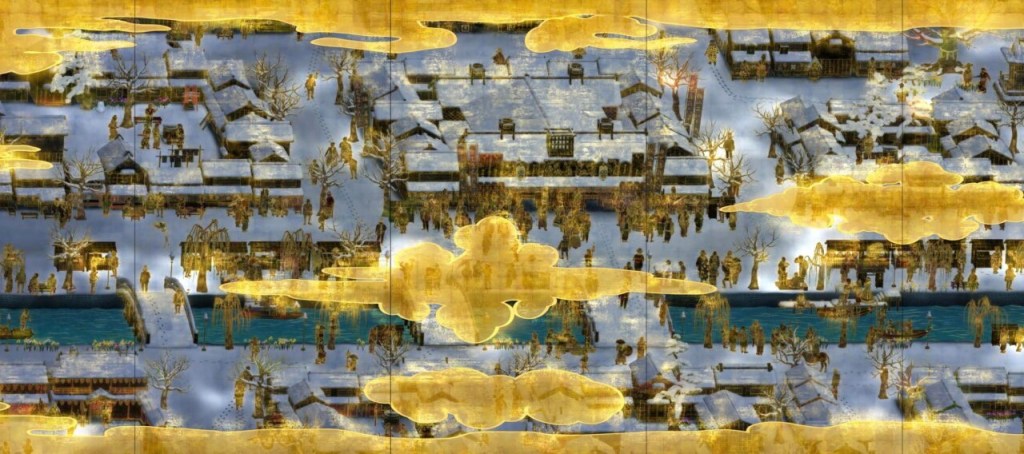
Among the art on view is teamLab’s The World of Irreversible Change (2022), a remarkable interactive digital installation depicting everyday life a long time ago in an unidentified Oriental city.

The wall-mounted work is populated by hundreds of animated figures going peacefully about their business, but wave a hand in front of a small group and they begin arguing for a few seconds.

The fun doesn’t stop there. Touch the figures and they start knocking lumps out of each other. Keep touching (which is frowned upon) and the fighting will spread, a lengthy war will break out, the city will burn down and no one will be left alive.

That installation alone is worth every cent of the €9 entrance fee, but I would gladly pay €90 to watch the security staff having nervous breakdowns trying to prevent a visiting class of junior infants from poking the little people on the screens.

Detail from The World of Irreversible Change in the Hortensia Herrero Art Centre

But those three must-sees are indoor attractions. 

Valencians love to live their lives outdoors (there are 200km of cycle paths), and they take climate awareness seriously, down to the smallest detail – when offered a business card, they snap a quick photo of it and hand it back, to reduce waste.

Most street lighting is solar-powered, and many kerbside lamp-posts also serve as electric vehicle charging points. There’s even a catchy song about what goes in to which coloured bin that children learn in pre-school and then teach to their parents.

Far from being a Johnny-come-lately, Valencia has for decades been a front-runner in promoting a clean and healthy environment, but those eco-conscious credentials were born out of catastrophe.

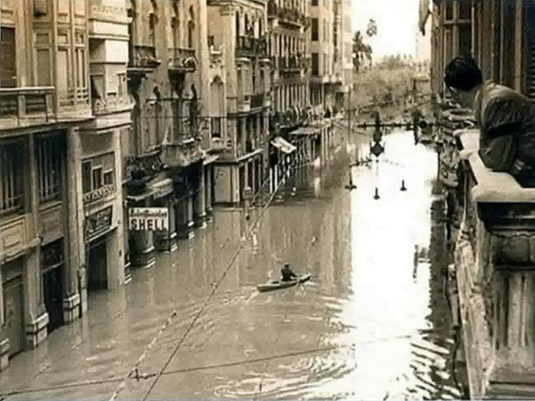
The catastrophic flood of October 1957 left 75pc of Valencia under water

On October 14, 1957, the Turia, which flowed through the centre to the sea, burst its banks after three days of torrential rain, leaving 75pc of the city under water (five metres deep in some areas), destroying 6,000 homes and killing at least 80 people.

In 1964, work began on a massive project to divert the river around the western outskirts, and it was completed nine years later.

The authorities drew up plans to turn the dry riverbed into a motorway system, but outraged citizens protested under the rallying cry “We want green!” and people power eventually won the day.

It was a long and hard-fought battle, but by the end of the 1970s, legislation to create a park was passed and Turia Garden opened to a jubilant public in 1986. They’ve been making full use of it – and making other cities jealous – ever since.


GET THERE

Ryanair flies from Dublin, Cork and Belfast to Valencia Manises airport, from where buses, taxis and Metro trains connect with the city centre, 8km away.

STAY

The SH Colon hotel in the city centre has room rates from €185 a night B&B for two people sharing, depending on the season. See hotelcolonvalencia.com

For further information, see visitvalencia.com and spain.info

Irish travel agent Ciara Mooney at the City of Arts and Sciences, at the sea end of Turia Garden

Discover the delights of northern Spain

Set your satnav for a driving tour of northern Spain, where the coastal provinces of Cantabria, Asturias and Galicia provide a culturally-rich and laid-back alternative to all-day breakfasts, packed beaches and crowded nightclubs.

Luarca cemetery

Some things are best left to the experts, such as pouring exactly 3cm of cider from a bottle held high above your head into a glass at waist level. In Asturias, trainee bar and restaurant staff have to practise for weeks with water before they’re let loose on paying customers.

“It’s to prevent their bosses going bankrupt from all the dry-cleaning bills,” tour guide Ernesto Fernandez tells me as we admire the small harbour town of Luarca from its hillside cemetery.

“Look – that’s where I live,” he says, indicating his apartment building. “And this,” he adds, turning and pointing at the Fernandez family mausoleum, “is where I’ll be laid to rest when I die – my tomb with a view.”

A waiter expertly pours Asturian cider

Necrotourism is a new one on me, but people do make a holiday out of gawping at graveyards, and Luarca’s, full of white marble statues of angels, the Virgin and the crucified Christ, is on the list of “Ten Spanish cemeteries to see before you die”.

Down in the main square, a sign on a help-yourself tap outside a cafe reads: “Sidra. Gratis.” Asturian cider is so cheap – €3 for a litre bottle – that many bars provide it free to peregrinos (pilgrims) walking the Northern Way of the Camino de Santiago, which passes through Luarca.

It’s one of the many picturesque towns and villages I’ll visit during a week-long east-to-west driving tour of northern Spain that begins in Cantabria, continues into Asturias and ends in Galicia.

Up here on the breezy Bay of Biscay, where families from sizzling Seville take their summer break to escape the oppressive heat of home – 25C is cool compared with the 40-plus degrees they’re used to – the landscape increasingly resembles Donegal the farther I travel, with soaring cliffs, secluded beaches and pointy-topped mountains.

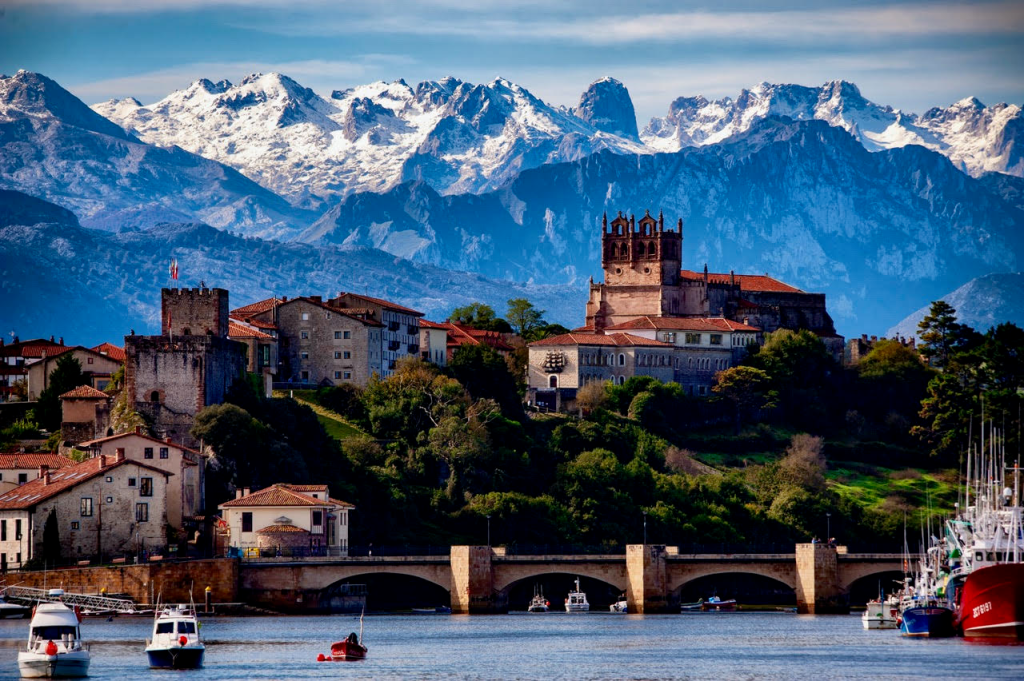
San Vicente de la Barquera

An hour’s drive from Santander, the Cantabrian capital, takes me to the fishing port of San Vicente de la Barquera, where the 13th century fortress and the Gothic church of Santa Maria, set against the snow-capped Picos de Europa, provide one of the most-photographed sights in Spain.

San Vicente is the starting point for the little-known Camino Lebaniego, which covers a mere 72km and can be completed in three days.

It might be Camino-Lite, but this inland hike, which takes pilgrims to the monastery of Santo Toribio near Potes, is heavy on the scenery, and walkers would be wise to add a fourth day as a lot of time is spent stopping to take pictures.

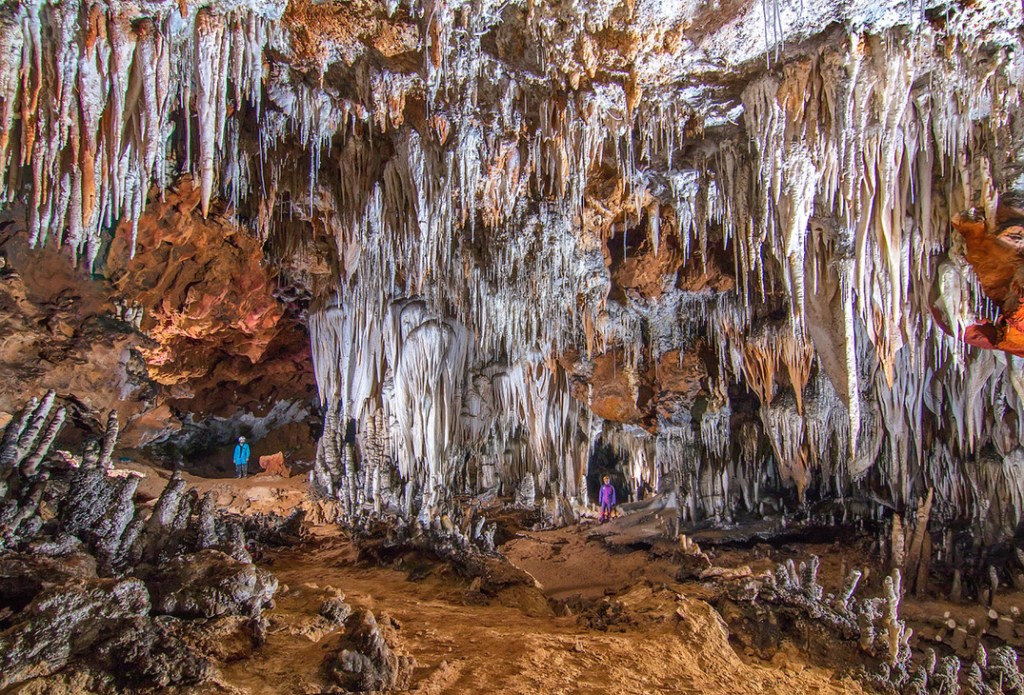
El Soplao Cave is one of the world’s greatest geological wonders
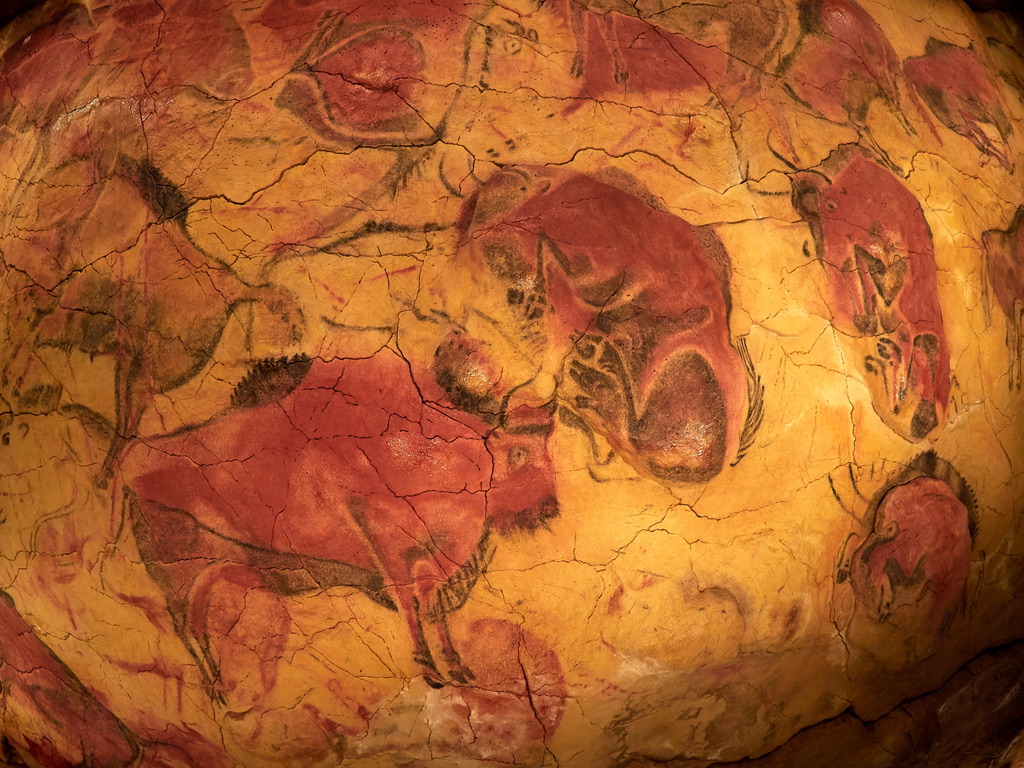
Ice Age drawings from the ceiling of Altamira Cave

Photography isn’t allowed in El Soplao Cave (elsoplao.es), but the millions of stalactites, stalagmites and physics-defying helictites – these last mentioned grow sideways, which the biggest brains in science still can’t explain – leave long-lasting mental images.

Close to the cave’s Chamber of the Phantasms, where the bigger and bulkier stalagmites resemble ghosts of the white bedsheet variety, one three-metre-tall and 45,000-year-old example looks more like a mitre-wearing Pope while another beside it reminds visitors of Homer Simpson.

Just outside medieval Santillana del Mar – arguably the most beautiful town in Spain – the Altamira Cave, with its 15,000-year-old ceiling paintings of wild bison and deer, had to be closed to the public in 2002. Exhaled breath was causing mould to form on the Ice Age artists’ work, but actual-size reproductions can be seen in the replica cave next door, which is today a world-class tourist attraction.

It’s hardly Willy Wonka’s Chocolate Factory, but every Friday, five lucky people drawn from a years-long waiting list present their printed-out golden tickets at the entrance and are given a guided tour of the real thing, which was discovered by a local hunter in 1868. 

Gaudi’s Caprice in Comillas

In the coastal resort of Comillas, which has more multi-millionaire residents per capita than Monaco, no one has to ask who dreamed up the whimsical Villa Quijano.

Antoni Gaudi’s Sagrada Familia in Barcelona, on which work began in March 1882, will be nice when it’s finished, but the villa, which he designed for super-rich lawyer Maximo Diaz de Quijano, was completed in 1885 and has been attracting envious looks ever since.

Better-known as Gaudi’s Caprice, it’s clearly influenced by Arab architecture and Oriental art, but an excited little boy gets it spot on when he says: “Mama – the tower is made from LEGO!”

Gaudi met an ignominious end in Barcelona in June 1926 when, at the age of 73, he was knocked down and gravely injured by a tram. Because he had taken to dressing in ragged clothing and was carrying no ID, he was presumed to be a beggar and taken to a hospital for the poor.

On the third day after the accident he was finally recognised, but he died that evening. Thousands of citizens lined the streets for his funeral procession, and he was laid to rest in the crypt of his art nouveau masterpiece. If he hadn’t been identified, his remains would have been buried in a pauper’s grave.

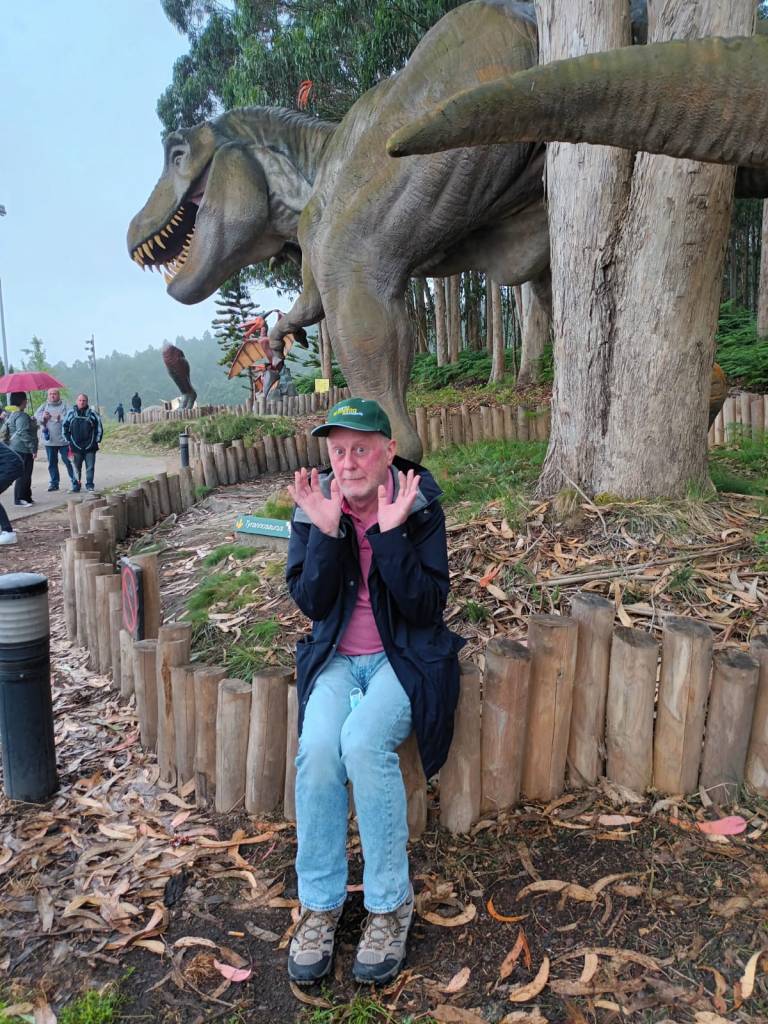
T-rex and a terrified me at the Jurassic Museum in Colunga

Cantabria has delivered big time on culture and natural history, and now it’s onward to Asturias to hook up with Ernesto in Llanes for a late-night seafood dinner in a little restaurant overlooking the marina.

After breakfast, we head off on a full-day exploration of the principality’s seaside communities, each laying claim, and not unreasonably, to the title of “Spain’s prettiest”. 

Luarca, with its des-res cemetery, is in with a shout, as are Tazones, Ribadesella and Colunga, where the Jurassic Museum is a must-see if you’re travelling with children. Little ones go nuts to have their photos taken beside its life-sized dinosaur models, and then probably wake up screaming at three in the morning, having dreamt they were being eaten by a tyrannosaurus.

However, Cudillero, a higgledy-piggledy pile of pastel-coloured shops and houses clambering up a steep gorge from the sea, gets my vote, although I don’t tell that to Ernesto – the shock might dispatch him prematurely to his tomb with a view.

Cudillero gets my vote as Spain’s prettiest seaside village

We say adiós the following lunchtime in Ribadeo, on the western side of the River Eo estuary that separates Asturias from Galicia.

The “handover”, as Ernesto ominously calls it, to “the Galician authorities” conjures up images of a midnight spy swap at fog-shrouded Checkpoint Charlie, but they’re quickly dispelled – it’s a beautiful day, and instead of being greeted by George Smiley, smiling tour guide Gabriela Garcia is waiting to whisk us off for a dip in the sea.

Unfortunately for me, but a lucky let-off for the public, I haven’t brought my Speedos, so I content myself with an hour-long stroll along Cathedrals Beach, which is only a short hop from Ribadeo.

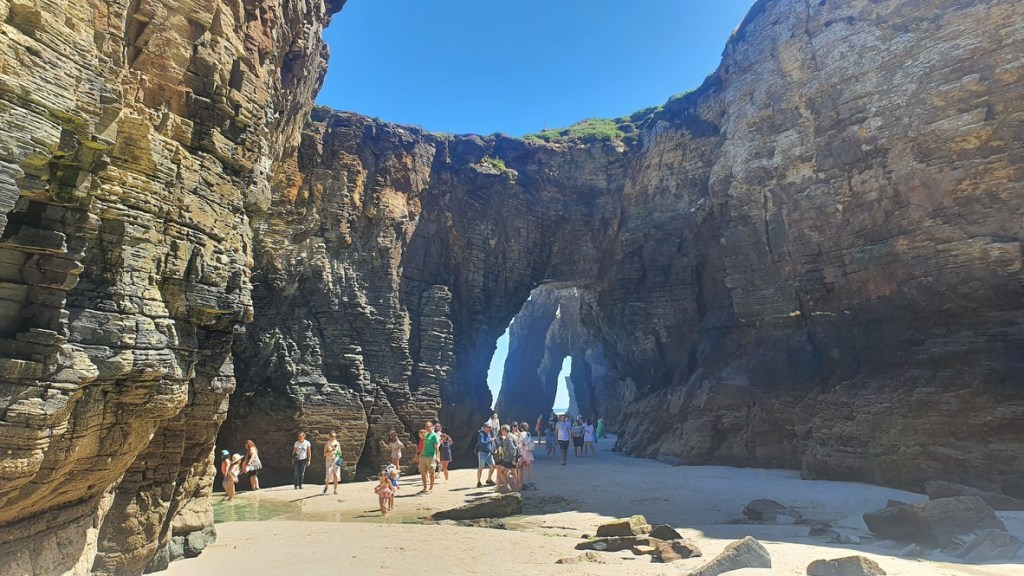
The beach, with its 30-metre-tall sea arches that resemble flying buttresses, hence the name, is accessible only at low tide, and in the busy summer months you need permission, but free online reservations are available from ascatedrais.xunta.es.

Small section of Cathedrals Beach, which runs for several kilometres
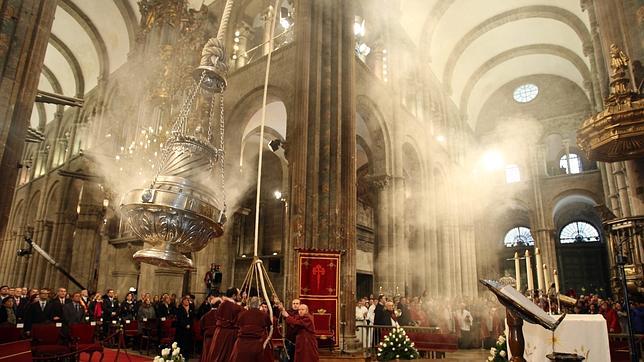
Botafumeiro in the cathedral of Santiago de Compostela

The Galician capital, Santiago de Compostela – my ultimate destination – has loads to offer footsore hikers at the end of their long Camino journey, but there’s really only one show in town once they’ve emptied the local pharmacies of blister pads.

At 7.30pm mass each day, the 1,000-year-old cathedral is thronged with 1,200 people hoping to see the giant botafumeiro (censer) being swung from the ceiling by eight priests pulling hard on thick ropes.

It’s a centuries-old ritual with a practical purpose. In the pre-deodorant Dark Ages, pilgrims arriving at the cathedral to pray at the tomb of St James stank to high heaven after months on the road, so the wafting clouds of herb-scented smoke helped mask the stench.

Disappointingly, my visit doesn’t coincide with a scheduled ‘show’, so instead of getting giddy on smouldering incense, I’m treated to the heady aroma of Deep Heat sprayed on hundreds of aching legs.

Pilgrims with money to burn can pay in advance to see the botafumeiro in action, but the privilege comes at an eye-watering price – up to €800.

That’s a bit beyond my budget as I’m facing a hefty dry-cleaning bill after several pathetic attempts at pouring my own cider in Asturias left me looking like I’d peed my pants. Some things are best left to the experts.

A pilgrim arrives at the end of her long Camino journey in Santiago de Compostela

GET THERE

Ryanair flies to Santander and Santiago de Compostela from Dublin; Britanny Ferries Brittany Ferries sails from Rosslare to Bilbao, from where it’s a one-hour drive to Santander.

*I visited northern Spain as a guest of turismodecantabria.comturismoasturias.esturismo.gal and spain.info
Top dishes to try when you visit Spain

Millions of holidaymakers will head this year to Spain’s costas and vibrant historical cities to soak up the sun, immerse themselves in the country’s culture and enjoy their favourite dishes. Here’s a tantalising taste of the most popular Spanish fare to try while you’re there, plus some recommendations that might not be so familiar. Buen provecho!

The paella served in Valencia is the real deal, with not one pesky prawn in sight

Paella (Valencia)

The dish associated worldwide with Spain originates in Valencia and the real deal contains rice, chicken, rabbit, green beans and often snails. In the 18th century, when meat was unaffordable for many, water voles were one of the main ingredients as they were abundant in the Albufera rice fields not far from the city.

A proud Valencian wouldn’t touch the touristy versions, which contain prawns, crayfish, mussels, clams, calamares and, for some strange reason, garden peas.

The best paella I’ve ever had – and the one by which all others are judged – was in Casa Carmela, facing Valencia’s Malvarrosa Beach. Cooked in a pan as big as a wagon wheel on an open range fuelled by orange-tree wood, it’s so popular that reservations are a must, especially on Sundays when families pack the place.

TOP TIP: Valencia is a hugely enjoyable city break destination, and the outrageously ornate Cafe de Las Horas bar is a must-visit to try Agua de Valencia – gin, vodka, cava and freshly-squeeze orange juice.

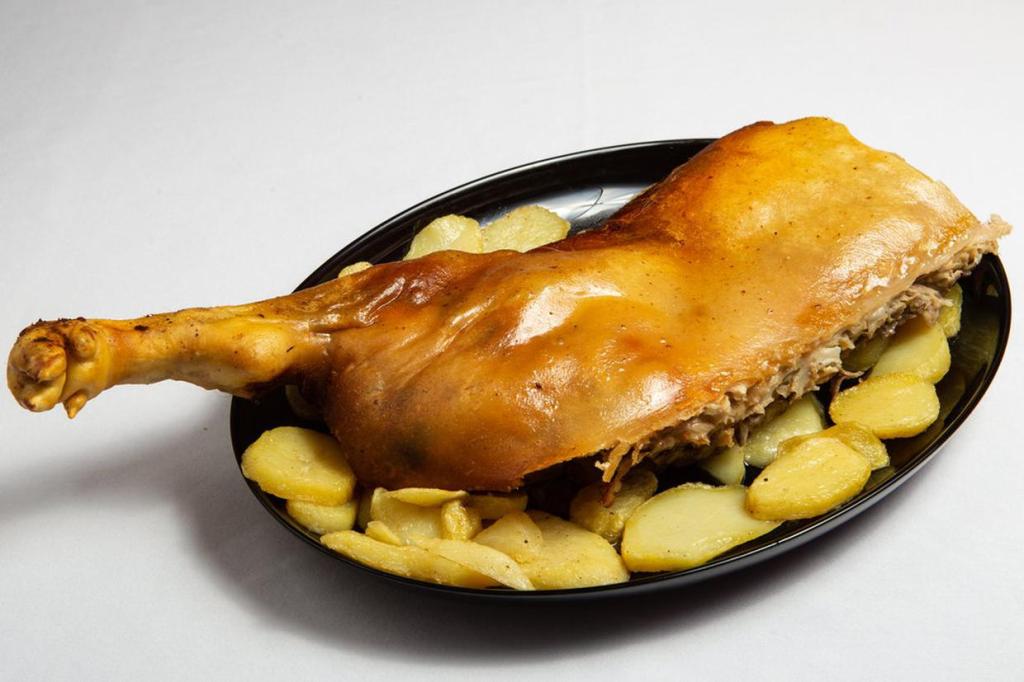
Succulent cochinillo asado, a speciality of Segovia

Cochinillo asado (Segovia)

My most memorable meal (apart from the best-forgotten bull’s testicles I was tricked into eating) during the many years I lived in Spain was Christmas dinner in a friend’s house in Marbella in 1984.

The star of the spread was cochinillo asado – roast suckling pig – which my pal’s mother, like all the other mammies in the neighbourhood, had entrusted to the local baker to cook overnight in his bread oven.

When Señora Fay came to carve it at the table, she didn’t use a knife – the meat was so tender she sliced through it with the edge of a saucer. It was like watching a magic trick.

TOP TIP: Chefs in Segovia, north-west of Madrid, will tell you the city is famous first for its cochinillo asado and then for its 160-arch Roman aqueduct. If you’re spending some time in Madrid, take a half-day excursion to Segovia (high-speed train from Chamartin station, 30 minutes, renfe.com, then hop on the local bus to the centre) and have a cochinillo lunch in Meson de Candido in the shadow of the aqueduct.

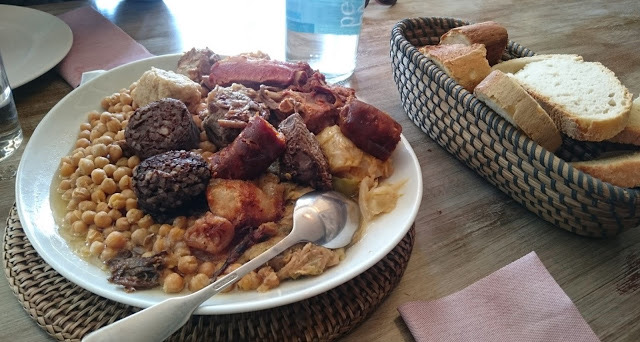
Cocido Lebaniego contains a bit of just about every animal that boarded Noah’s Ark

Cocido (Cantabria) 

At the end of a three-day, 72km trek along the Camino Lebaniego in the northern province of Cantabria, I could have eaten a horse. It wasn’t on the menu in the attic dining room of El Cenador del Capitan in Potes, but cocido was.

Every Spanish region has its own version of cocido, which is a vegetarian’s nightmare – a hearty winter stew that contains ham, pork belly, beef, baby goat, black pudding, sausages, chickpeas and beans. It’s ladled out in glutton-sized portions and has the same restorative powers Popeye gets from spinach.

TOP TIP: The Camino Lebaniego goes inland from the Cantabrian fishing port of San Vicente de la Barquera to the monastery of Santo Toribio just outside Potes, and every step of the way is a scenic delight. Fly to Santander and take a bus to San Vicente, then back from Potes (busbusgo.com).

When you visit Galicia, you must try pulpo a la Gallega

Pulpo a la Gallega (Galicia) 

Octopus Galician-style isn’t to everyone’s taste, especially after that Netflix film, My Octopus Teacher, but I’m a sucker for it, and the very best is found in Santiago de Compostela.

Nothing could be simpler – it’s boiled, cut up with scissors, served on a wooden board, sprinkled with paprika and accompanied by sliced boiled potatoes and a generous drizzle of extra virgin olive oil. The texture is rubbery and the taste divine.

TOP TIP: In Santiago de Compostela, the ancient and beautiful cathedral city at the end of the several Caminos de Santiago (unless you carry on walking to Finisterre), Meson do Pulpo (Calle Vista Alegre 57) serves octopus to beat the band.

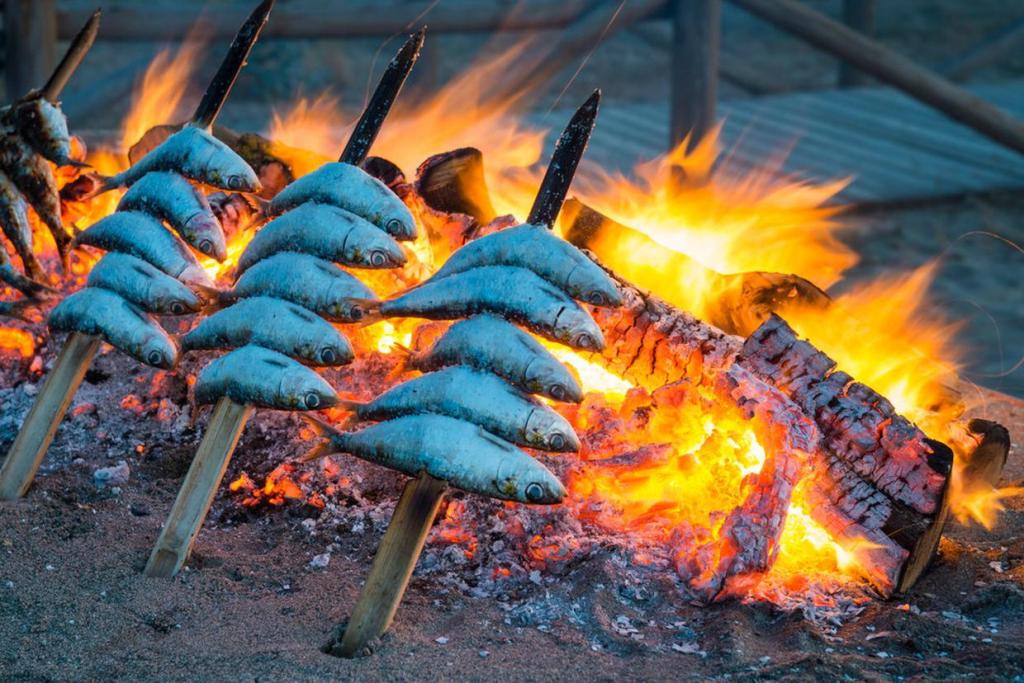
Can you smell them? Sardines grilling on the beach

Grilled sardines (Costa del Sol)

The sardines that come in tins are tiddlers compared with those you’ll see – and smell from afar – being grilled on the beaches along the Costa del Sol.

These big bruisers are skewered on wooden sticks stuck in the sand in front of a wood fire, then served whole with a sprinkling of sea salt and half-a-lemon to squeeze over them.

They’re available from May to October, but are at their best in June, and a cold beer washes them down nicely.

TOP TIP: If you’re in Torremolinos or Benalmadena, wander along the seafront to La Carihuela, which is famous throughout Spain for its seafood restaurants, all of which serve grilled sardines.

Tuck in to a nice thick slice of simple yet sensational tortilla de patatas

Tortilla de patatas (Nationwide)

If any dish can be said to occupy the throne of Spanish cuisine, it’s the tortilla de patatas, the simple but splendid potato omelette, which is made with only three ingredients – eggs, sliced boiled potatoes and onions.

Tortilla de patatas needs no adornment, but if the onions are caramelised before being added to the mix, the omelette steps up from perfecto to perfectisimo. Some misguided cooks put chopped red peppers in their tortilla to add a dash of colour – a sacrilege akin to putting honey on a Highlander’s porridge.

TOP TIP: The tortilla de patatas served in Juana La Loca is considered the best in Spain. Juana La Loca (Joanna the Mad), the elder sister of Catherine of Aragon and sister-in-law of Henry VIII, was Queen of Castile from 1504 to 1555, but never actually ruled due to her mental instability.

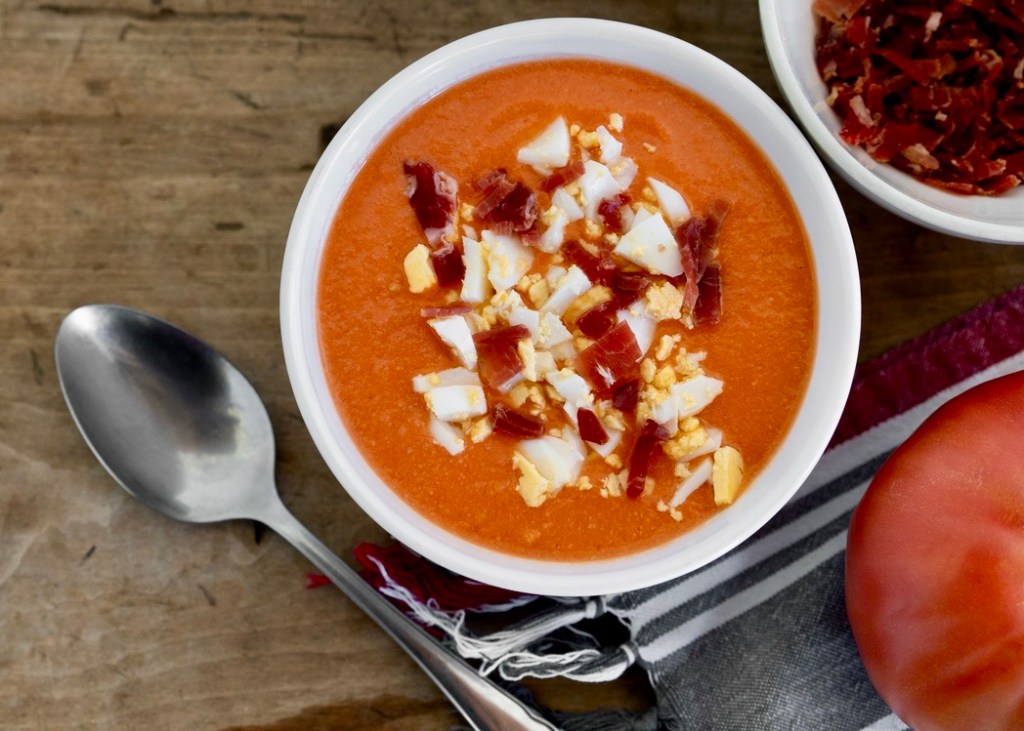
Cordoba’s famous and fabulous cold soup, salmorejo

Salmorejo and oxtail (Cordoba)

Just about every cafe and restaurant in Cordoba serves the city’s two signature dishes.

Cold soup salmorejo – a simpler version of gazpacho – is made from tomatoes, bread, extra virgin olive oil, garlic and salt and is sensational, especially on a hot day (July and August temperatures in Cordoba often reach 40C).

Braised oxtail (rabo de toro) is what Cordobans dream of when they’re living away from home. Served on the bone, it’s a bit fatty, but the morsels of meat melt in the mouth.

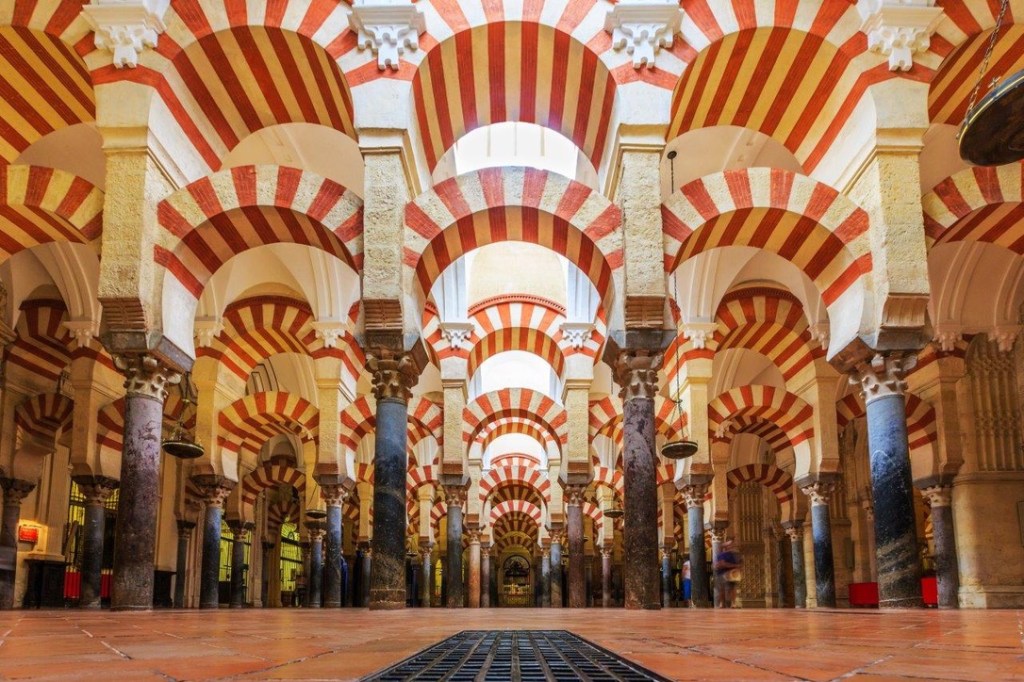
TOP TIP: Cordoba is the only place in the world where Catholics go to mass in a mosque – the Mosque-Cathedral, with its vast forest of pillars and ornamental arches. The mosque was completed in 988AD during the Moorish occupation of Spain, and the cathedral was built inside it in the 16th century. If you’re spending time in Sevilla or on the Costa del Sol, Cordoba is only a 50-minute high-speed train ride away (renfe.com).

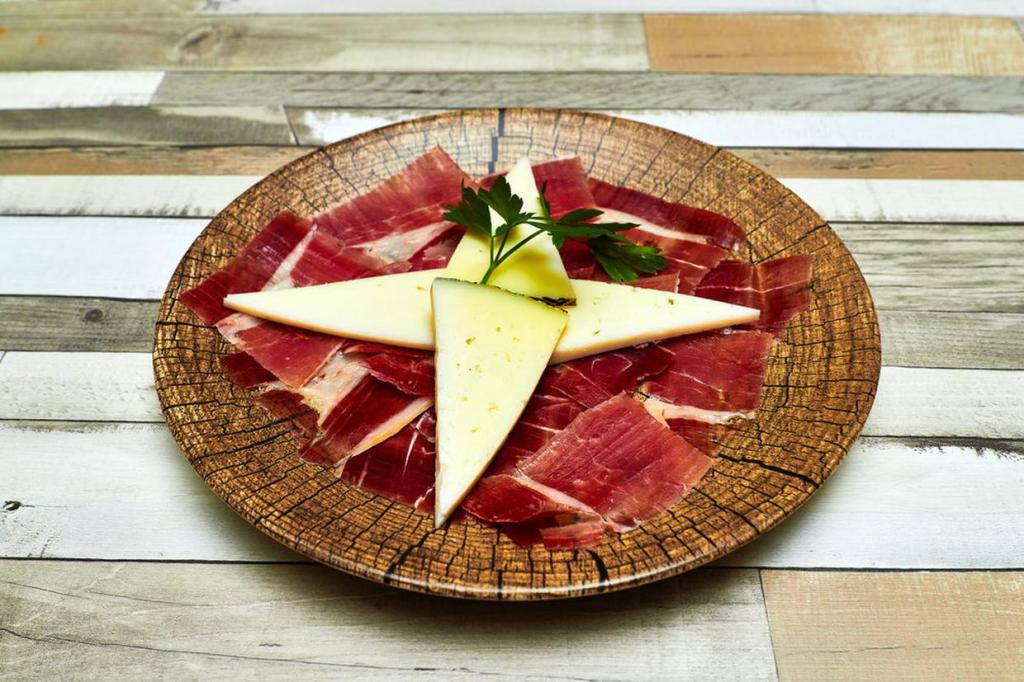
Jamon Serrano and Manchego cheese – add some chorizo and you have the Holy Trinity

Jamon, queso y chorizo (Nationwide)

A plate of wafer-thin slices of Serrano ham with half-a-dozen half-centimetre-thick triangles of Manchego cheese and some not-too-chunky circles of chorizo constitutes the Holy Trinity of Spanish snacks.

Available in every bar, cafe and restaurant in the country, this winning combination is eaten at all hours of the day as a stop-gap between meals and is best accompanied by an ice-cold glass of lager or a chilled dry sherry.

TOP TIP: Think Spanish lager and the names that immediately spring to mind are San Miguel and Cruzcampo, but the best two brews by far are Mahou and Estrella Galicia. As for chilled dry sherry, Tio Pepe stands alone.

A Majorcan ensaimada is best accompanied by a cafe con leche

Ensaimada (Majorca)

Visitors to Majorca who set aside a day of their holiday to stroll around the island capital, Palma, will be glad they did. Among its many attractions is the indoor Santa Catalina market – the beating heart of the city.

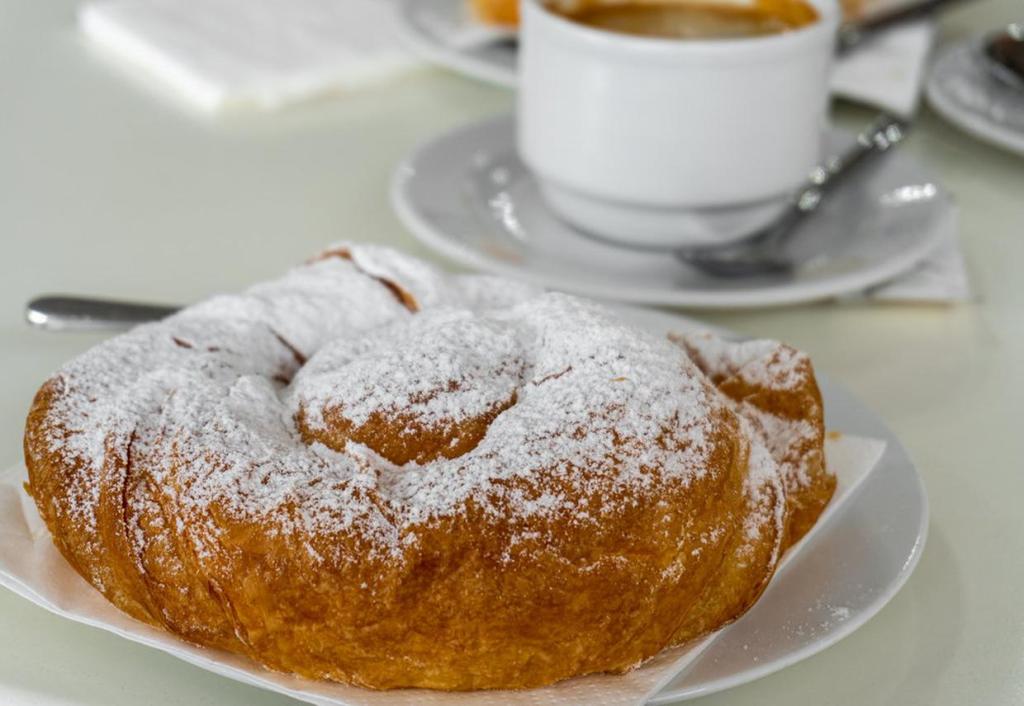
In any of the market’s many bars and coffee kiosks you can enjoy a cafe con leche and an ensaimada – a soft, sweet and fluffy breakfast pastry sprinkled with icing sugar. This uniquely Majorcan treat is the perfect way to start the day, and they’re available in several sizes to take back home in souvenir boxes.

Top tip: Palma’s Apuntadores/La Lonja neighbourhood is home to the most beautiful nightspot in the world, the flower-filled Bar Abaco. Gregorian chants murmur from the speakers, doves flutter around the rafters, rose petals rain from the minstrels’ gallery and incense fills the air. This former nobleman’s townhouse is as posh as they come, so don’t wander in wearing shorts – only local hero Rafa Nadal, who’s a regular, is allowed to do that.

Irresistible – churros dipped in thick hot chocolate

Churros con chocolate (Nationwide)

Churros are long fingers of deep-fried doughnut batter that you dip in thick hot chocolate and are a great start to the day, although they’re also devoured by nightclubbers on their way home at OMG o’clock when most people have been asleep for hours.

Top tip: In Madrid, Chocolateria de San Gines (Pasadizo de San Gines 5), which opened in 1894, never closes, so there’s no excuse for not feasting on this breakfast of ‘campeones’. Recognised nationwide as the best in the business, Chocolateria de San Gines serves 10,000 freshly-made churros and 2,000 cups of hot chocolate every day.

The selection of pintxos available in Bilbao is mind-boggling

Pintxos (Bilbao)

San Sebastian is the gastro capital of Spain, where you can’t move for tripping over Michelin-star restaurants, but Bilbao, home to the remarkable Guggenheim Museum, has many more visitor attractions.

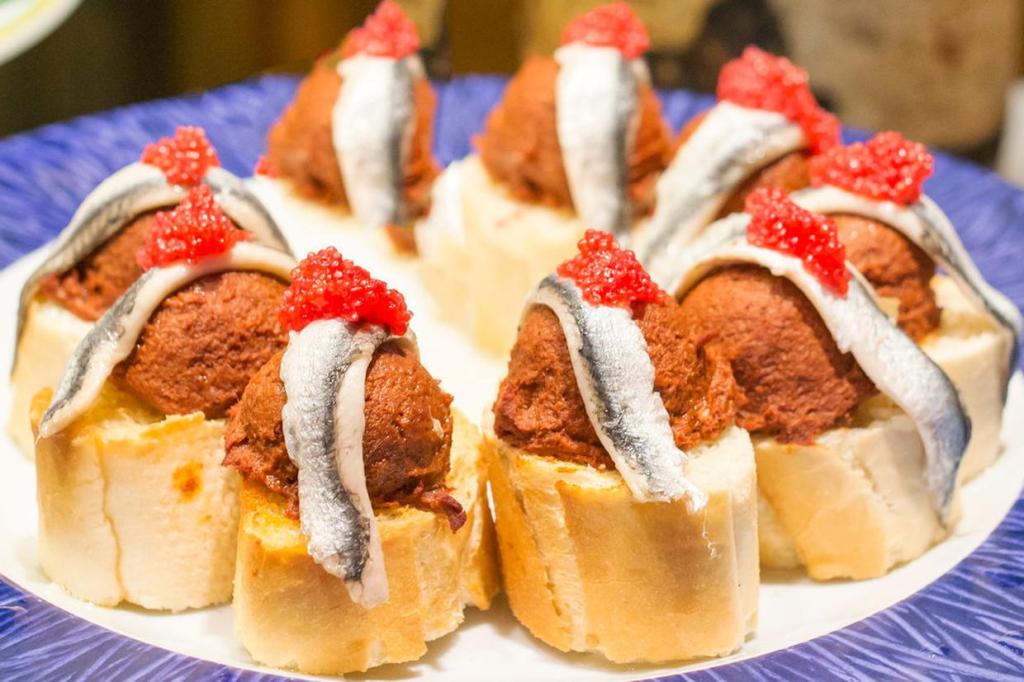
Pintxos are the far-superior Basque version of tapas, and the selection appears endless, with bars, cafes and restaurants coming up with new versions on a weekly basis. My favourite Bilbao pintxo palace is Cafe Iruña.

Top tip: In Bilbao (a long-weekend top recommendation), rugby-loving and kilt-wearing cocktail expert Manu Iturregi owns Bar Residence, an award-winning Aladdin’s Cave of Irish, Scotch and world whiskies with regular live music sessions. A half-hour metro train ride from the city centre takes you to the beach.

Camino Lebaniego: Spain’s ‘Secret’ Camino in Cantabria

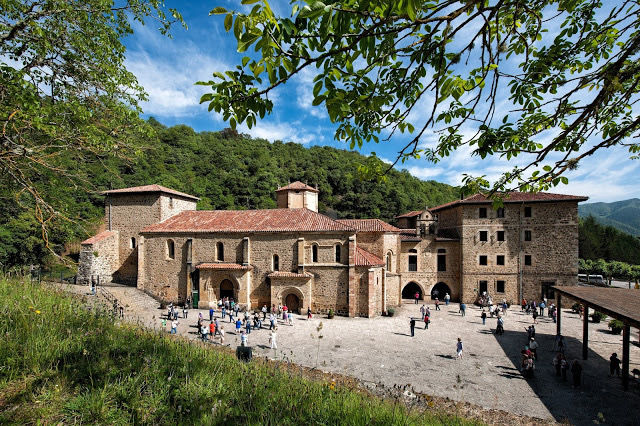
Everyone has heard of the Camino de Santiago, the collective name for the ancient Christian pilgrimage routes that lead to Santiago de Compostela and the tomb of Saint James in Galicia. However, very few people outside of northern Spain know of the Camino Lebaniego in Cantabria, which is a pity. At only 72kms, or roughly 95,000 steps, the ‘Secret Camino’ is the road less travelled but the most scenic of all. (First published in October 2017.)

The monastery of Santo Toribio de Liébana. Photo: Cantabria Tourism

In the Franciscan monastery of Santo Toribio de Liébana, close to the picturesque town of Potes, two thick walls either side of a courtyard separate the church from the souvenir shop cum pilgrimage office – which is just as well. Were it not for the sound-absorbing stone, visitors queuing in solemn silence before the altar to kiss a piece of the cross on which Christ died would have heard a little Spanish girl squeal: “Daddy! Look! The baby Jesus is riding Noddy’s scooter!”

She was right. Standing out from the array of rosary beads and religious statuettes in the shop was a small, red and yellow ceramic Vespa with the Holy Family on board. The little girl’s daddy was mortified, but the footsore pilgrims waiting to get the final stamp on their special passports (credenciales) nearly wet their pants laughing.

They had chosen a good time (mid-May) to walk the Camino Lebaniego – a few weeks earlier and they might have arrived at the monastery with their pants already sodden. Cantabria didn’t get to be as green as Ireland without getting drenched; in summer it can be scorching, but at other times the rain in Spain falls mainly here.

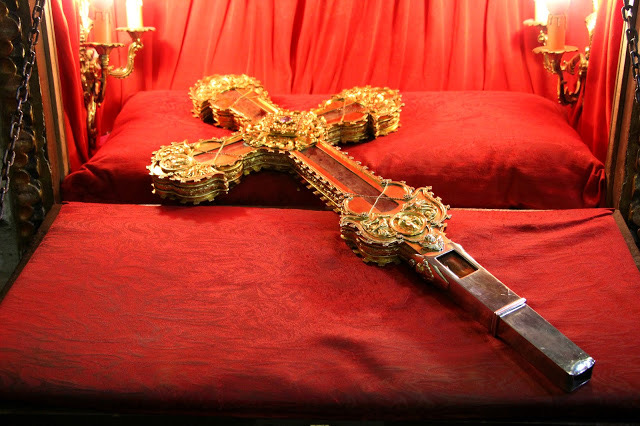
The Lignum Crucis, which is kept in the monastery

The purpose of the pilgrims’ journey is to venerate the Lignum Crucis, reputedly the largest surviving piece of the True Cross, which would be a lot larger but for its early monastic custodians’ readiness to exchange fragments for favours.

When it arrived in Cantabria in the Middle Ages from the Church of the Holy Sepulchre in Jerusalem, brought by Saint Turibius of Astorga, it was the entire left arm of the cross, but splinter by splinter it was whittled away until it resembled a walking stick well on its way to becoming a chopstick.

In 1679, the monks cut what remained into two pieces and encased them in a gilded silver cruciform reliquary. The longer, vertical piece is exposed near its base, revealing the hole where the nail was hammered through Christ’s wrist.

The wood is Mediterranean cypress, which was and is common in the Holy Land, and carbon dating shows the tree from which it came grew 2,000-odd years ago. Science puts it in the right place at the right time, while faith verifies its bona fides for believers.

The Door of Forgiveness in the monastery

The Secret Camino is walked almost exclusively by in-the-know Spaniards, but that’s not because they’re keeping it quietly to themselves; rather, it’s put in the shade by the more famous long-distance routes, especially the busy, 790km Camino Frances, which has become even busier on the back of the worldwide success of the 2011 film, The Way, in which it and Martin Sheen co-starred.

Now, however, it’s the Lebaniego’s turn to shine – without the help of Hollywood lighting – because 2017 is a Jubilee, or Holy Year, on the Cantabrian Way, which occurs only when the feast of Santo Toribio, April 16, falls on a Sunday (the next one is in 2023).

During the current special 12-month period, which ends next April 15, pilgrims who pass through the monastery’s Puerta del Perdon (Door of Forgiveness) and comply with a handful of simple conditions will have the time they’ve accrued in Purgatory annulled. It’s like getting penalty points wiped from a driving licence.

Walking the Camino Lebaniego on a beautiful summer day

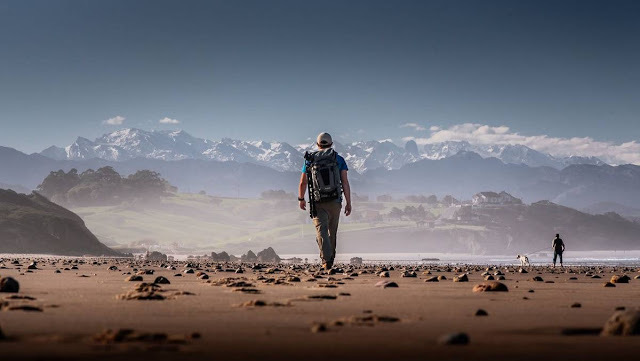
Beginning at the fishing port and holiday resort of San Vicente de la Barquera, the Lebaniego can be walked in as few as three days or incorporated in a weeks-long trek that takes in the North and French Ways, which it partly connects, en route to Santiago.

For those keen on keeping in touch with the outside world while getting in touch with their inner selves, there’s free wifi every step of its modest length, making even the narrowest forest trail a lane on the information super-highway.

Spiritual fulfilment aside, the reward for walking the Lebaniego is a certificate of completion (a lebaniega), but it’s the coastal, riverside, woodland and mountain scenery that make the journey such a joy. Snappable sights that nature crafted or man made present themselves at almost every turn, so pilgrims should factor into their daily schedule time spent stopping to take photos.

San Vicente de la Barquera and the Picos de Europa. Photo: Cantabria Tourism

Those who opt to spend a pre-pilgrimage night in San Vicente should stand on the eastern shore of the estuary just before twilight and look across the water. With some moody clouds to better highlight the historic towers, turrets and rooftops against the snow-capped mountains, the town looks like it should be hanging in a frame.

The mountains are the Picos de Europa, so named by 16th century cod fishermen and whalers from the Basque Country returning after months of hooking and harpooning in the waters off of what are now Newfoundland and Maine. When the Picos came into view, they knew they were nearly home – the Basques are the Cantabrians’ next-door neighbours to the east.

Pilgrims and holidaymakers are not alone in flocking to San Vicente. Thanks to the estuary and the nearby marshes, cliffs and dunes, many species of migratory aquatic birds congregate here; in the Picos, vultures, eagles, hawks, falcons and owls rule the roost.

Anyone with even only a passing interest in our feathered friends will find Fat Birder a fascinating online resource. Clearly a labour of love for English ornithologist Richard Crombet-Beolens, whose surname looks suspiciously like an anagram but isn’t, it includes a comprehensive section on Cantabria’s birdlife.

Gallery of the Ghosts in the 240-million-year-old cave of El Soplao, near Cades

The Lebaniego has three stages – San Vicente to Cades (28.5kms), Cades to Cabañes (31.3kms) and Cabañes to Potes and the monastery (12.1kms) – and most people walk them in three days. However, the journey can be broken into four or five, which allows time for some peripheral exploring.

Any visitor attraction described as “the subterranean Sistine Chapel” had better live up to its billing. The natural cave of El Soplao, near Cades, does so with its extraordinary stalactites, stalagmites and helictites, these last also known as eccentrics because they grow at gravity-defying angles.

The 240-million-year-old cave was discovered in the early 20th century during exploratory drilling for zinc deposits, which were there in abundance. Unfortunately for the prospectors, they knocked through into what became known as the Gallery of the Ghosts; fortunately for posterity, what they saw – before they turned tail and ran, screaming – helped ensure El Soplao has remained unspoiled.

The gallery is named after the group of 500,000-year-old man-sized stalagmites that look like spooks of the white bedsheet variety. Fear of the supernatural meant miners gave this part of the cave a wide berth, although apprentices were tricked into a first-day-on-the-job initiation they would never forget. Disappointingly, photography in the cave’s several galleries isn’t allowed, but on the plus side there are no bats.

A big plate of cocido lebaniego looks a tough task, but that food disappears pretty quickly

A day on the go can be taxing, and food becomes a fixation. There’s no such thing as a free lunch, but with a three-course menu del dia including coffee and a half-litre of wine costing as little as €10 in roadside restaurants, it’s as good as gratis.

For dinner, Cantabrians love hearty stews (cocidos) and ladle them out in glutton-sized portions. That might sound off-putting, but the spectacle of skinnymalinks feverishly polishing their plates with chunks of bread is unremarkable.

Cocido lebaniego and cocido montañes, which feature on most menus along the way, differ only in that the former contains chickpeas while the latter has white beans. Otherwise, the big terracotta dishes from which both are served are piled high with ham, pork belly, beef, baby goat, black puddings and sausages.

Cocidos are nutritious and delicious and more than replace all those calories burned on the hoof, allowing pilgrims to set off each morning with a spring in their step. These beauts are made for walking.

Arguably the rudest tree in the world

At the 55km mark, two of the Lebaniego’s most photographed sights stand, in jarring contrast, a few metres apart. One is the small, 10th century church of Santa María de Lebeña with its tiny, overgrown graveyard where wildflowers have been spared the hoe. The other is the gnarled, barkless and sun-bleached trunk of a lifeless yew that has inexplicably been spared the axe.

Resembling a fist with the middle finger raised, it’s the rudest tree in the world. The parish powers-that-be must have a mischievous sense of humour or are blissfully oblivious to the obvious; either way, there it is – dead, defiant and crying out for a photo to be sniggered over later in the El Hayal hostel in Cabañes, 5 kilometres distant.

Typical of most hostels on the Lebaniego, El Hayal (+34 942 744203) offers B&B for around €20, and half and full-board are also available. It’s not the Ritz: guests sleep in singles or bunk beds in six rooms accommodating from four to 18 people with half-a-dozen shared bathrooms, but it’s well-run and spotlessly clean.

Although not exclusively for pilgrims, being principally a base for hillwalkers, cyclists and birders, everyone’s welcome to enjoy the food and facilities, which include a pool, and drift off beneath its rustic timbered roof.

Wander by the Deva River in Potes before an end-of-pilgrimage feast

Birders rise with the larks, but pilgrims needn’t get up early for the last stage of the journey. With only 12kms to go, there’s time to tarry over lunch in Tama, where a chunky tuna salad in the Hotel Corcal’s Casa Fofi restaurant is sufficient sustenance for the home stretch; anything more substantial might spoil the appetite for a mission-accomplished dinner in Potes.

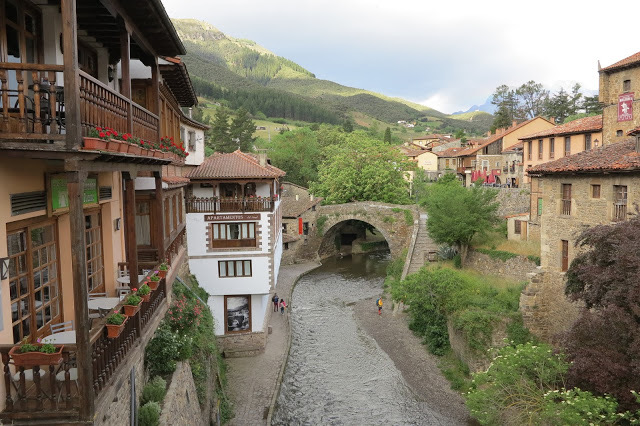
After collecting that certificate from the monastery, there’s not a lot to do back in Potes apart from pottering around the narrow streets, admiring the medieval houses and dandering by the Deva River that runs through town; still, it’s a pleasant way to kill time until the best restaurant on the Lebaniego opens at 8pm.

In the attic dining room of El Cenador del Capitán, where reservations are a must and tall people should beware the rafters, choosing from the menu isn’t easy: diners who spend 10 minutes deciding what to order frequently change their minds as soon as they see what those at neighbouring tables are having.

To avoid trying the waiting staff’s patience, opt for the house’s award-winning cocido lebaniego; a bottle of local red wine, rarely seen outside of Cantabria but top class; a dessert selection of local cheeses, which are among the best in Spain; and, to round things off, a pot of herbal rock tea (té de roca) with a generous splash of the regional firewater, orujo. At around €30 a head, it’s a steal.

One of the Fuente de cable cars in the clouds. Photo: Cantabria Tourism

As soon as that orujo hits the spot, it’s time to hit the pillow. The pilgrimage is over – but not necessarily so the adventure. Those with time to spare and a head for heights should hop on the bus the next morning to Fuente de, half-an-hour from Potes, for a daredevil cable car ride in the Picos de Europa National Park.

There are two cars, which sway and sometimes lurch in anything more than a breeze, each with a capacity for 20 passengers. The bottom station is at 1,090 metres above sea level and the top one is at 1,850 metres – a vertical ‘drop’ of 760 metres, or six-and-a-bit Dublin Spires. The trip, which covers a cable distance of 1.45kms, takes three minutes and 40 seconds and the cars can reach a top speed of 10 metres per second, or 36kms per hour.

Nervy passengers tend to observe the ascent and descent through splayed fingers, but even a peek-a-boo view of the mountains high above and the valleys far below draws admiring gasps. Only a fibber would deny it’s frightening: countless prayers are said in the church in the monastery, but plenty of Hail Marys are whispered aboard the cable cars, too.

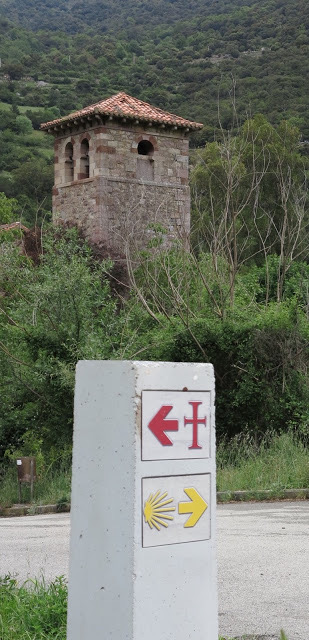
Maroon arrow and cross for the Lebaniego, yellow arrow and scallop shell for the Camino de Santiago

The phenomenal international interest in the various caminos shows no sign of abating – year after year, they register sizeable increases in the number of people walking them. When next April 15 comes around and the Jubilee ends, the souvenir shop cum pilgrimage office where everyone nearly wet their pants laughing will have issued more lebaniegas than in any previous 12-month period.

As people continue to return home to regale family and friends with tales of their experiences and share treasured photos, the Secret Camino won’t stay secret for much longer. It will, however, remain the loveliest pilgrimage route in Europe.

Talking of lovely: somewhere in Spain, a beautiful little girl is the proud owner of a unique souvenir of her visit to the monastery in the mountains. Her father may have been mortified by her excited outburst, but no doting daddy could refuse to buy his daughter a model of the baby Jesus riding Noddy’s scooter.

A little taste of why the Camino Lebaniego is the loveliest pilgrimage route. Photo: Cantabria Tourism

GET THERE: Ryanair flies from Dublin to Santander and Aer Lingus from Dublin to Bilbao. Flights arrive in late afternoon, so stay over and take an early Alsa Lines bus to San Vicente (book well in advance). To reserve a bed in a pilgrims’ hostel (again, book well in advance) and for detailed information on the Lebaniego route, see caminolebaniego.com. Autobuses Palomera (+34 942 880641) operates a three-times-daily service from Potes to Santander, from where Alsa serves Bilbao.

PILGRIM PASSPORT: You’ll need a credencial to sleep in cheap pilgrim hostels, where it will be stamped as proof of your journey, and to obtain a certificate of completion at the monastery of Santo Toribio de Liébana. Collect your credencial (€2) from the Church of Santa María de Los Ángeles, Calle Alta 24, in San Vicente. Apply at parroquiaelcristo@gmail.com or call +34 942 211563 (it might be wiser and quicker to phone, because they’re frustratingly slow at responding to emails).

TOP TIP: There are no ATMs or supermarkets between San Vicente and Potes, so carry sufficient cash for lunch stops and commandeer pastries and fruit from the breakfast buffets of your accommodation, where vending machines offer water (always carry a litre), chocolate and energy bars.

FURTHER INFORMATION: See cantur.com, turismodecantabria.com and spain.info

Madrid: Art, culture and cuisine

Artists of every kind make all of Madrid a stage. From footballers on the playing field to painters in world-renowned museums, and from buskers and flamenco dancers to cooks preparing haute or homely cuisine, visitors will find the Spanish capital a hotbed of talent waiting to be discovered.

Cristiano Ronaldo scores the equaliser in the 1-1 match against Athletic Bilbao

It’s a balmy Wednesday night in April, and 59,000 football fans are swarming out of the Santiago Bernabeu, where Real Madrid have just drawn 1-1 with Athletic Bilbao. On a traffic island in front of the stadium’s main entrance a digital display shows the temperature is 17C and the hour 23.02. Time for dinner. In a city where long, leisurely lunches often last beyond five o’clock and the evening meal rarely starts before half-past nine, eating late is the norm.

A 12-minute ride on the Metro from Santiago Bernabeu takes me to Plaza España, where my hotel is located. I squeeze through the throng into a nearby bar bunged with disappointed Real supporters. The result has left a sour taste in their mouths – they expected an easy win – and they’re doing their best to wash it away with glasses of Madrid brew Mahou, for me the best lager in Spain.

The kitchen is working overtime turning out tapas and the noise is off the scale. Customers bawl their orders at the barmen, who acknowledge them with a bellow. The floor is a debris field of discarded serviettes, toothpicks, prawn shells and olive pips, but every five minutes a boy with a broom clears it all away. In a lacklustre match the Real and Athletic sweepers did little of note, but this kid is playing a blinder.

All eyes are on the TV. In the studio, the football pundits are giving their considered analyses of the game. In the bar, the fans are giving them dog’s abuse. It’s great fun – cursing in Spanish is colourful and not a little cringe-inducing – but it’s nearly 1am and time for bed. The bill for three bottles of Mahou and a plate each of Serrano ham, Manchego cheese and potato omelette comes to €16.50. That’s what you call a result.

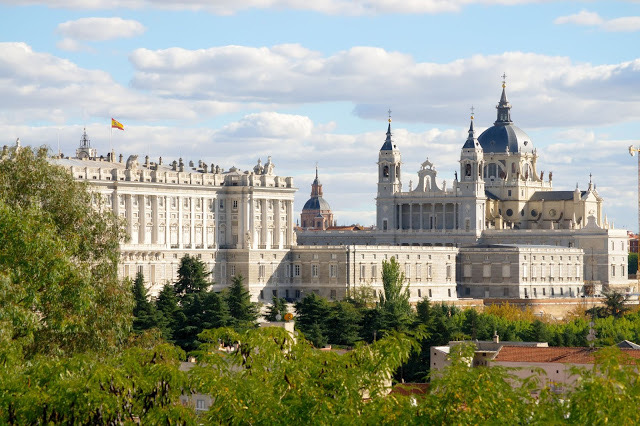
The Royal Palace, in front of which the best buskers in Madrid entertain delighted crowds

Around the corner from the VP Plaza España Design hotel, where I’m staying, is the 18th century Royal Palace. With its five-metre-high doorways, the 3,418-room official residence of the Spanish monarchs is one of the few buildings that six-foot-four King Felipe can enter without doing a limbo dance.

At midday in front of the palace, tourists gather around street musicians. These aren’t any old buskers: as befits the regal backdrop, they’re the best in town and have had to audition to earn a city hall permit and a coveted performance spot.

An elderly gentleman in a pristine cream suit and Panama hat, looking every inch the man from Del Monte, plays Glenn Miller favourites on a clarinet. When he follows Moonlight Serenade with Little Brown Jug, a middle-aged American couple can’t contain themselves and start dancing like professionals.

A teenage girl with an acoustic guitar and a mane of natural red hair – a much-admired rarity in Spain – enchants her audience with the haunting second movement of Rodrigo’s Concierto de Aranjuez. When she finally takes a bashful bow, coins rain into her instrument case.

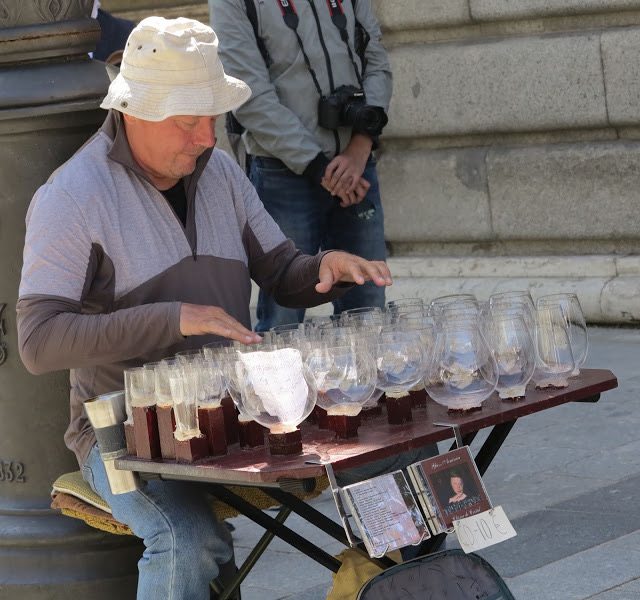
The Golden Buzzer, however, goes to the man playing movie themes on an array of stemless brandy bowls and champagne flutes stuck with putty to a trestle table. Dipping his fingertips into a flask of water at his hip, he runs them around the rims and the Titanic signature tune fills the air. He must dread the day when a mezzo-soprano sets up nearby and hits a glass-shattering high C.

This talented street musician is the top draw in front of the Royal Palace
Cork-born Tony O’Connor in Plaza de la Puerta del Sol

It’s a 20-minute walk to Plaza de la Puerta del Sol, which has its street entertainers too, and among them is a man dressed as Charlie Chaplin’s little tramp character, known in Spain as Charlot. At his feet is a sign that reads: “English spoken here by man who left City Cork 65 years ago.”

This is former millionaire builder Tony O’Connor, who made a fortune and then lost the lot a decade ago when the construction boom went bust. Don’t expect to hear a lilting Leeside accent, though – his parents left Cork for London when he was small and he’s as Cockney as they come.

Tony, who has emphysema, has a pitch in front of the famed La Mallorquina cake shop, whose display windows need to be wiped a couple of times a day to remove child-sized palm prints and smudges left by little noses pressed against the glass.

“I don’t have the breath to sing and I can’t compete with those young guys over there doing their acrobatics,” says Tony. “I’m lucky to collect €400 a month in winter, though I can make around €1,400 in the summer, just sitting here chatting with whoever stops to hear my story. A couple of years ago, a guy handed me an envelope and disappeared. When I opened it, there was €600 inside. I couldn’t believe it.”

On the third floor above La Mallorquina is the luxury apartment that Tony and his wife had to sell when it all went wrong. If it came on the market today, the owner would be looking for at least €700,000. “Ah, well, that’s life,” says Tony, and breaks off to direct an English couple to Madrid’s top visitor attraction, the Prado Museum.

The Prado and its near neighbours, the Reina Sofia and the Thyssen-Bornemisza, form the 1.5-kilometre-long Paseo del Arte (Art Walk), otherwise known as the Golden Triangle. No other city in the world has three treasure houses in such close proximity. The English couple are in for a treat.

Velazquez’s Las Meninas in the Prado Museum

The Prado is a 15-minute stroll from Puerta del Sol and houses the most important collection of Spanish art in the world. It also has the best air-conditioning in Madrid, a godsend in July and August when afternoon temperatures hit 30C and forget to stop.

Diego Rodriguez de Silva Velazquez (1599-1660) and Francisco Jose de Goya y Lucientes (1746-1828) are the stars of the show, with El Greco as the main support act on a bill that includes Rubens, Raphael, Titian, Tintoretto, Van Der Weyden, Ribera, Zurburan and Murillo, which sounds like a Real Madrid starting XI.

While the galleries and halls of the Prado are dripping with masterpieces, two paintings attract the biggest crowds: Velazquez’s Las Meninas (1656), which is most visitors’ favourite, and Goya’s Carlos IV of Spain and His Family (1801).

Goya’s portrait depicts King Carlos, his wife Maria Luisa, seven of their 14 children, including Crown Prince Ferdinand who later ruled as the despised Ferdinand VII, and other relatives in a line-up more motley than majestic.

The focal point of Las Meninas is King Felipe IV and Queen Mariana’s five-year-old daughter Princess Margarita, who stands with two ladies-in-waiting, a nun, a dwarf, a jester and a mastiff dog. In an open doorway in the background lurks the queen’s chamberlain, and reflected in a mirror on the back wall are Felipe and Mariana.

In perhaps the first example of a selfie, Velazquez has included himself in his most-admired work, eyes front as he paints the out-of-shot royal couple, hence their reflection in the mirror. Not to be outdone, fellow bighead Goya appears in the background of his painting of Carlos and his kin.

Picasso’s Guernica attracts visitors from all over the world to the Reina Sofia

French painter Edouard Manet (1832-1883) said Seville-born Velazquez was “the greatest painter that has ever existed. He alone is worth the trip to Madrid”. Few who stand before Las Meninas would disagree, but it’s another painting by another Andalucian, in the Reina Sofia, that art lovers from all over the world do make the trip to see.

Pablo Picasso’s Guernica (1937) is arguably the best-known painting of the 20th century. Measuring 7.8 by 3.5 metres, it’s certainly one of the biggest. Completed in black, white and grey oils on canvas, it’s a denunciation of the aerial bombing on April 26, 1937 of the eponymous Basque town by Hitler’s Condor Legion.

Picasso, or to give him his full name, Pablo Diego Jose Francisco de Paula Juan Nepomuceno Maria de los Remedios Cipriano de la Santisima Trinidad Ruiz y Picasso, which added five minutes to the morning roll call in school, was born in Malaga in October 1881 and spent most of his long adult life in France, where he died aged 91 in April 1973.

It was in his Paris loft that he painted Guernica for the Spanish Republic’s pavilion at the 1937 International Exposition in his adopted city. On learning of the attack – the town was the northern stronghold of the Republican resistance during the Spanish Civil War (1936-1939), which made it a target for Franco’s Nationalist forces – Picasso abandoned his intended commissioned work and produced instead the most powerful anti-war painting of all time.

The bombs fell on market day, and many women and children were among the at least 300 people killed. A mother holding a dead baby features large in the work, but the two most prominent figures are a bull, representing the onslaught of fascism, and a gored horse, representing the people of the town (horses were often disembowelled by the bulls’ horns during a corrida).

The death and destruction visited on Guernica were appalling; that the attack was used by the Condor Legion and the Italian Aviazione Legionaria to try out new carpet bombing techniques on a civilian target was atrocious. At the Nuremberg Trials in 1946, Luftwaffe chief Herman Goering said Guernica was a “testing ground” – confirmation, if any were needed, that Picasso painted the nightmarish result of a cynical experiment in extermination.

Hans Holbein’s portrait of Henry VIII hangs in the Thyssen-Bornemisza. Photo: M. Duran Albareda

Portraiture rules in the Thyssen-Bornemisza, and its most instantly recognisable portrait is of a ruler. German artist Hans Holbein the Younger’s (1497-1543) painting of Henry VIII of England is one of scores of contemporaneous copies of the original (1537), which was lost in a fire in 1698, but this is the only one by Holbein (the others were by apprentices). Think of Henry, and this is the bejewelled and bejowled image that springs to mind.

While the Prado and the Reina Sofia allow art lovers to study specific painters’ bodies of work, the Thyssen-Bornemisza is more a Hall of Fame of all-time greats, who are represented in abundance.

Bacon is here, as are Freud, Pollock, Munch and Hockney, whose 1972 Portrait of an Artist (Pool with Two Figures) sold recently at auction in New York to an anonymous buyer for $90.3m, setting a new record for a work by a living artist. Visitors can also gaze upon paintings by Spaniards Dali and Miro; France’s Gauguin, Manet, Renoir, Degas and Matisse; Dutch masters Rembrandt and Vermeer; and Italy’s Caravaggio, Canaletto and Tintoretto. It’s like rubbing shoulders with Hollywood royalty at the best Oscars after-party.

The museum’s most poignant painting is not a portrait. Vincent van Gogh’s French rural landscape, Les Vessenots, is the last work he completed, only days before his suicide in 1890. In late May of that year, the Dutch post-impressionist (born 1853) travelled 35 kilometres north from Paris to the village of Auvers-sur-Oise. For several weeks he worked outdoors in glorious weather, producing many landscapes, until he surrendered to his demons. On the morning of July 27, Van Gogh put down his paintbrush, lifted a gun and ended his torment. He was 37.

Van Gogh’s last painting, Les Vessenots, in the Thyssen-Bornemisza
Who needs a full Irish breakfast when you can have chocolate con churros?

Some of Madrid’s best-loved artists work mostly anonymously behind the scenes in kitchens. The city has 20 Michelin-starred restaurants, but in this most cosmopolitan of capitals where all of the world’s great cuisines are on offer, humble fare is preferred to highfalutin.

Cocido is the comfort food that exiled Madrileños yearn for in the way Irish people living abroad dream of Tayto crisps. A hearty but not mushy stew, it typically contains chicken, beef, bacon, pork belly, morcilla (blood sausage), chorizo, potatoes, carrots, cabbage and chickpeas. It’s among the top choices when eating out, but even as they’re tucking in, diners are thinking: “Mmmm, tasty, but nowhere near as tasty as Mama’s.” In a word, albeit a makey-uppy one, cocido is stewpendous.

Merluza (hake), bacalao (cod), rape (rah-pay – monkfish) and dorado (sea bream) are the most popular fish dishes, but when time is pressing, the seafood snack of choice is the bocata de calamares, a hot bread roll that’s crispy on the outside, moist inside and loaded with deep-fried squid rings. No sauce, no garnish, no need.

A close second in the snack stakes is the bocata de jamon Serrano. The air-cured, mildewed legs of ham from which wafer-thin slices of succulent Serrano are carved with expert precision bordering on the parsimonious cost up to €500 each, but a bocata will set you back a mere €3. Traditionalists prefer their ham on a plate, accompanied perhaps by slices of Manchego cheese and some big fat juicy olives that have been marinated so long they’re falling apart.

Chocolateria de San Gines, which opened in 1894, never closes, so there’s no excuse for not feasting on the quintessential Spanish breakfast of chocolate con churros. These long fingers of deep-fried doughnut batter (and the fatter version, porras) dipped in hot chocolate are a great start to the day, though they’re also devoured by nightclubbers on their way home when most people have been asleep for hours.

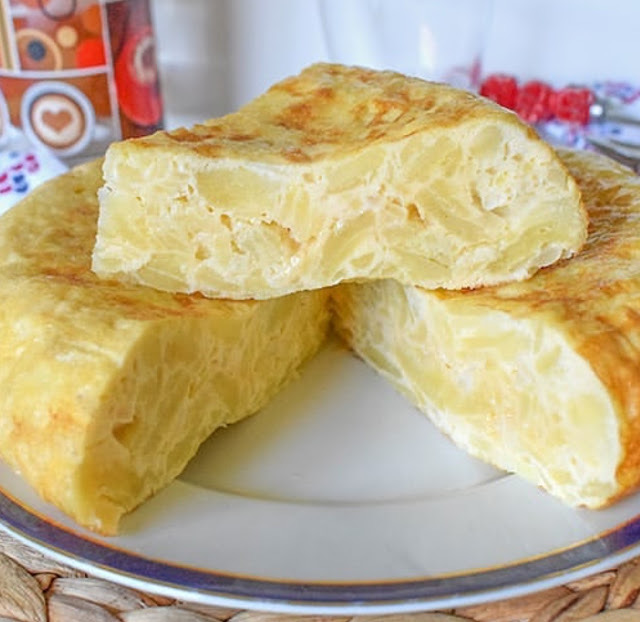
If any dish can be said to occupy the throne of Spanish cuisine, it’s the tortilla de patatas – the ubiquitous potato omelette. It’s made with only three ingredients: eggs, sliced boiled potatoes and onions. Some cooks who don’t know any better add chopped red peppers, a sacrilege akin to putting honey on a Highlander’s porridge. Tortilla de patatas needs no adornment, although if the onions are caramelised before being added to the mix, the omelette steps up from perfecto to perfectisimo.

Spain’s national dish, tortilla de patatas – simple yet sensational

In his 1932 novel, Death In The Afternoon, Ernest Hemingway wrote: “Nobody goes to bed in Madrid until they have killed the night.” No better man, then, to have written The Sun Also Rises (1926) – he witnessed the dawn often enough during his many long stays here in the 1920s, 30s and 50s.

On the wall of the Antigua Farmacia de la Reina Madre on Calle Mayor, the illuminated green cross shows the temperature is 19C and the hour 22.05. Time to walk the short distance to one of the author’s favourite haunts, Plaza de Santa Ana, where hundreds of people are eating and drinking on the terraces of some of the most popular bars and restaurants in the city (‘Don Ernesto’ drank daily in Cerveceria Alemana).

Jazz and other live music venues abound around here, but in the plaza itself is Villa Rosa where, every night, art and soul fuse in a frenetic performance of raw passion that makes audiences’ hearts beat faster and throats go dry. It’s called flamenco, and Villa Rosa, which staged its first show in 1911, is the temple to which aficionados and tourists flock. It’s not the only place staging this most Spanish of spectacles, which consists of three parts – guitar, song and dance – but for me it’s the best.

A statue of Granada-born poet and playwright Federico Garcia Lorca (1898-1936) stands in Plaza de Santa Ana. Lorca, who was executed without trial by a right-wing firing squad in the opening month of the Spanish Civil War, lived in Madrid for 17 years and never missed a chance to see a flamenco show. No one has better described the principal performer.

He wrote: “The dancer’s trembling heart must bring everything into harmony, from the tips of her shoes to the flutter of her eyelashes, from the rustles of her dress to the incessant play of her fingers. Shipwrecked in a field of air, she must measure lines, silences, zig-zags and rapid curves, with a sixth sense of aroma and geometry, without ever mistaking her terrain. In this she resembles the torero, whose heart must keep to the neck of the bull. Both of them face the same danger – he, death; and she, darkness.”

Flamenco, football, food, fine art and a fella with an orchestra at his damp fingertips are only a few of the attractions that make a long weekend in the Spanish capital a memorable experience. There’s an old saying: “If you’re in Madrid, you’re from Madrid.” Well, maybe; but one thing’s for sure – if you’re in Madrid, you have very good taste in cities.

Flamenco show in Villa Rosa, Plaza de Santa Ana

GET THERE: Aer Lingus and Ryanair fly daily from Dublin to Adolfo Suarez Madrid-Barajas airport. The Airport Express yellow bus service to and from the city centre operates 24 hours, every 15 minutes during the day and every 35 minutes at night. There are only three stops – O’Donnell, Atocha and Plaza de Cibeles (this last one is the most central). The journey takes around 40 minutes and a one-way ticket costs €5 from the driver.
EAT: Cocido In 2015, the multi-award-winning Cruz Blanca Vallecas (58 Martin Alvarez) received the National Catering Award for its cocido, and quite right too. Try also Casa Paco (11 Puerta Cerrada), a family-run restaurant that serves a wide range of fabulous homemade food.

Bocata de calamares El Brillante (8 Plaza del Emperador Carlos V) serves 2,000 bocatas de calamares every day, and that’s recommendation enough.

Bocata de jamon Serrano The excellent kosher restaurant La Escudilla (16 Santisima Trinidad) is one of only a handful of establishments in Madrid that doesn’t offer bocatas de jamon Serrano or anything else containing pork. Otherwise, every bar, cafe and restaurant serves this simple yet sensational staple.

Chocolate con churros Chocolateria San Gines (5 Pasadizo de San Gines) serves 10,000 freshly-made churros and 2,000 cups of hot chocolate every day. Chocolateria Valor (7 Postigo de San Martin) is the pretender to San Gines’s crown.

Tortilla de patatas The potato omelette served in Juana la Loca (4 Plaza de la Puerta de Moros) has no equal. Juana la Loca (Joanna the Mad), the elder sister of Catherine of Aragon and sister-in-law of Henry VIII, was Queen of Castile from 1504 to 1555, but never actually ruled due to her mental instability.

Hearts begin to beat faster when the sun sets on Madrid, but the night is still young

VISIT: Prado Museum Paseo del Prado (Metro Banco de España). Mon-Sat 10am-8pm, Sun 10am-7pm; general admission €15.

Reina Sofia Museum 52 Santa Isabel (Metro Atocha). Mon-Sat (closed Tuesday) 10am-9pm, Sun 10am-7pm; general admission €10.

Thyssen-Bornemisza Museum Paseo del Prado (Metro Banco de España). Mon 12pm-4pm, Tues-Sun 10am-7pm; general admission €9.

Santiago Bernabeu Avenida de Concha Espina (Metro Santiago Bernabeu). Stadium tour, including trophy room, dressing room, press room and pitch, Mon-Sat 10am-7pm, Sun 10.30am-6.30pm (except match days); from €14.

Tablao de Flamenco Villa Rosa 15 Plaza de Santa Ana (Metros Sol, Anton Martin and Tirso de Molina). Shows: Sun-Thu 8.30pm and 10.45pm, Fri & Sat 8.30pm, 10.45pm and 12.15am. Admission to show, including a drink, costs €35; show plus meal, including a drink, from €65. Book well in advance online.

STAY: I was a guest of the 5-star VP Plaza de España Design. On the 12th floor, the Gingko Restaurant and Sky Bar with its swimming pool and wraparound terrace welcomes non-guests and has quickly become one of the city’s most popular nightspots for wining, dining, partying and 360-degree views of the city. Double rooms cost from €220.

The VP Plaza España Design hotel, close to the Royal Palace