There are no ‘Tourists go home’ signs in warm and welcoming Vitoria-Gasteiz

If you haven’t heard of the capital of the Spanish Basque Country, you’re not alone, but this splendid city is well worth knowing

Plaza de la Virgen Blanca

“I bet you all a pint you can’t name the capital of the Spanish Basque Country,” I said to the lads in Ryan’s Bar. Gerry had a guess at Bilbao. Terry thought it was San Sebastian. Liam pitched in with Pamplona.

All wrong. It’s Vitoria-Gasteiz, though softies from Seville – in fact, anywhere south of Madrid – call it Siberia-Gasteiz and arrive with raincoats, jerseys and umbrellas, even in August.

“They think it rains here every day and we’re always freezing, but I like to say we’re always prepared for any weather,” said tour guide Leire Cameno as she stuffed her fleece into her backpack.

“This morning it was dull and chilly, and three hours later it’s sunny and warm. That’s why we wear layers that we can peel off, and why we’re known as The Onions.”

I was in Vitoria-Gasteiz just after Easter and had to nip into a pharmacy for an emergency bottle of factor 50 – mid-May, and I was nearly melting.
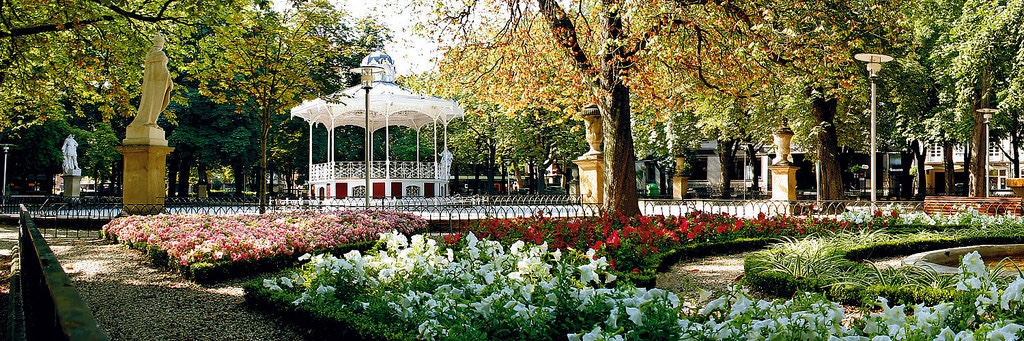
Florida Park

An hour’s drive south of Bilbao, the city is a mix of medieval and modern, easily walkable and surrounded by a 33km green belt that includes the Salburua Park on the eastern outskirts, with a handy tram stop at the entrance.

The park is a wild expanse of dry and wet grasslands and lakes, where birdsong, the quacking of ducks, the honking of geese and the slap of wings on water provide a pleasing backing track during a stroll through the poplar woods and oak groves.

In rutting season every October, the stags in the herd of red deer brought from the Scottish Highlands to keep the vegetation in trim add blood-curdling bellowing and the clash of antlers to the soundscape as they battle it out to mate with the hinds.
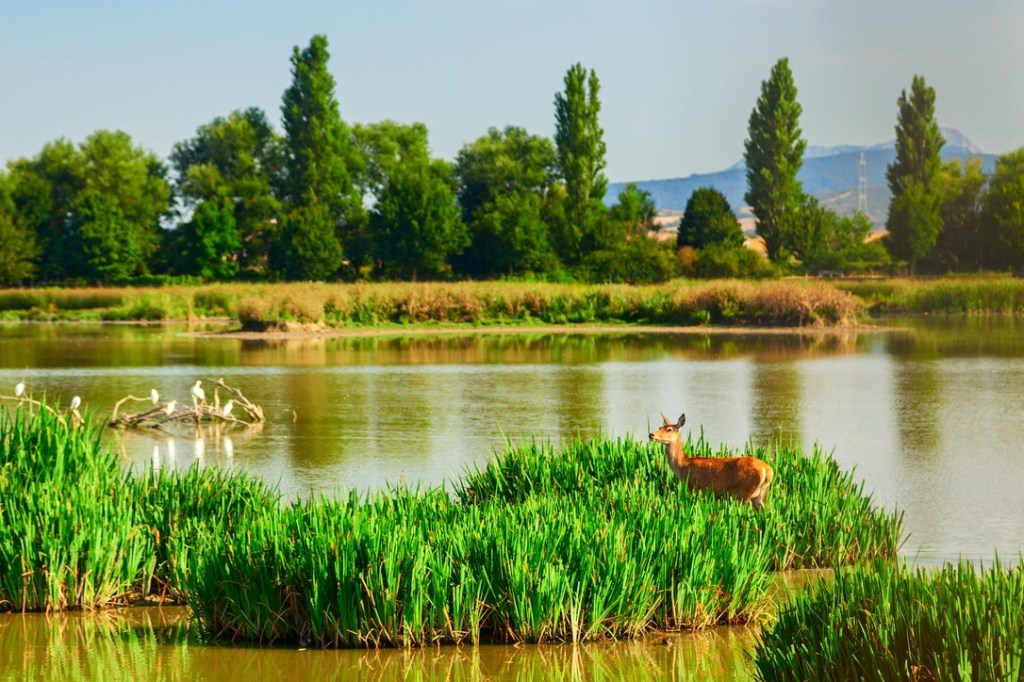
Red deer doe in Salburua Park, on the outskirts of the city

On April 26, 1937, it was the drone of impending death and destruction that emanated from Salburua as planes from Hitler’s Condor Legion and Mussolini’s Aviazione Legionaria took off to take part in the bombing of Guernica, 50km to the north.

It was the worst atrocity of the Spanish Civil War, killing at least 300 people, including many children, on a busy market day, and is depicted in nightmarish detail in Picasso’s grey, white and black oil painting named after the town.

The massive artwork is the main attraction in the Reina Sofia Museum in Madrid, and there it will remain – requests from galleries in the Basque Country to borrow it are always denied because the custodians fear they won’t get it back.

Citizens of Vitoria-Gasteiz and the visitors they’re always happy to welcome – no “Tourists go home” signs or protesters armed with water pistols here – aren’t short of galleries in which to get a culture fix, including the Artium Museum of Contemporary Art.

However, those who like to know what they’re looking at without wondering if it’s hanging the wrong way up should spend an hour admiring the portraits and scenes of everyday local life from the mid-18th to early-20th centuries in the Museum of Fine Arts.

Ricardo Augustin (left) and his wife Elvira Zulueta (right) had themselves immortalised in stained glass

The museum is in the Augustin Zulueta Palace in the city’s poshest residential avenue, Paseo de Fray Francisco, which makes Dublin’s affluent Ailesbury Road look like Coronation Street.

Completed in 1916 after four years of construction, the palace was the marital home of nobleman’s daughter Elvira Zulueta and Ricardo Augustin, the biggest pair of bigheads that ever spent an hour in front of a mirror.

If you thought Donald Trump was vain, at least he hasn’t had himself glorified in stained glass in the Oval Office.

Yet there the couple are in the first-floor landing window, captioned Sanctus Ricardus and Sanctus Elvira and with the sunlight streaming through their golden halos and multi-coloured robes like a straightened-out rainbow. How very presumptuous.

Statue of author Ken Follett, who looks remarkably like actor Dustin Hoffman, at the Cathedral of Santa Maria

Most visitors to the 13th-century fortress Cathedral of Santa Maria presume the life-sized bronze statue of a modern-day man in a suit in Plaza de la Burulleria outside is Dustin Hoffman and wonder what he’s doing there.

Then they learn it’s his doppelganger, bestselling Welsh author Ken Follett, and wonder what he’s doing there.

Follett was in Vitoria-Gasteiz in October 2002 for a conference and took a tour of the cathedral restoration works – the building had been in danger of collapsing because of subsidence, and several columns and arches are still out of kilter, though now safe.

Having chronicled the construction of a cathedral in the fictitious English town of Kingsbridge in the 12th-century (The Pillars of the Earth, 1989), Follett was inspired by the Santa Maria project to write the sequel, World Without End (2007).

His work in promoting appreciation of church architecture through his novels earned him the Basque-Navarro College of Architects’ Olaguibel Prize, and he attended the unveiling of the statue in January 2008 to coincide with the presentation of the award.

During his acceptance speech, he said that when he told his family he was going to be immortalised in bronze, they asked if he would be mounted on a horse or nude, with a fig leaf to spare his blushes.

Thirteenth-century Cathedral of Santa Maria

Guided tours of the cathedral can be booked online (catedralvitoria.eus), and if you’re lucky, the person showing you around will be Itziar Gurruchaga, whose father, Iñigo, was the correspondent in Belfast for the Basque newspaper El Correo in the 1990s.

Starting in the foundations and proceeding to the tower via narrow passages and stairways and the even narrower gallery where you have to breathe in and walk sideways, Itziar told the fascinating story of this Gothic masterpiece.

For an hour, I hung on her every word as she brought 800 years of history to life.

The cathedral sits atop the only hill in the city and is skirted by the cobbled streets of the medieval quarter, where several moving walkways, like those in airports, make it easy for less able visitors to get up to the entrance.

Those streets are home to some of the best pintxo bars in town, where the owners try to outdo each other in creating the tastiest tapas. It’s a friendly rivalry that ensures customers are treated to the finest finger food while bar-hopping.
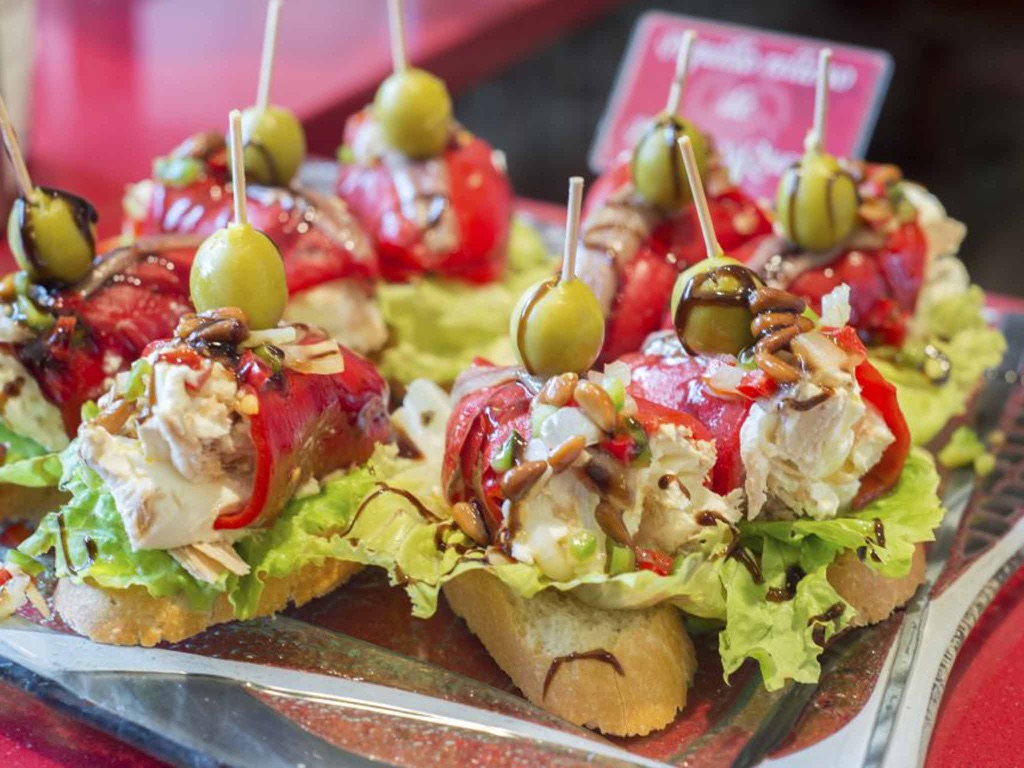
The city’s many pintxos bars and restaurants offer a vast array of tasty treats

In his book, The Basque Country (Signal, 2007), Irish author and journalist Paddy Woodworth writes: “Eating one’s way through the Basque Country is a constant pleasure.”

That’s true, but he adds: “I would not go back to Vitoria for the snails, which are the piece de resistance of the San Prudencio celebrations (I would rather chew black rubber, despite the spicy tomato sauce).

“But even that let-down was more than made up for by the scrambled eggs laced with baby wild mushrooms, which are the second speciality of that fiesta.”

Those little fungi are perretxikos, also known as St George’s mushrooms and often no bigger than a jelly bean, yet a premium-quality kilo costs up to €300.

They’re one of the ingredients in Irlandes de Perretxikos, an award-winning pintxo by Enrique Fuentes of Bar Toloño that also contains foie gras, soft-boiled egg yolk and truffle oil served in a glass and topped with fresh cream, so it looks like an Irish coffee.

In 2006, Enrique was encouraged by his family to enter the first ever Basque Country Pintxo Championship, in San Sebastian, and put many a Michelin-starred nose out of joint when he took top prize with his Milhojas de Habitas.

It’s mille-feuille (puff pastry where I come from) with smoked mackerel, broad beans and ratatouille, and it’s Toloño’s top-seller.

It’s also one of the featured dishes in Gastrogune (gastrogune.com), a deli by day and sit-down pintxo experience by night run by Enrique’s daughter Sonia with chef Ainhoa Gonzalez.

The two friends cater to small groups and serve a selection of freshly made signature pintxos accompanied by Basque wines (Vitoria-Gasteiz is the gateway to the Rioja-Alavesa wine region) and mouth-watering commentary from Ainhoa.
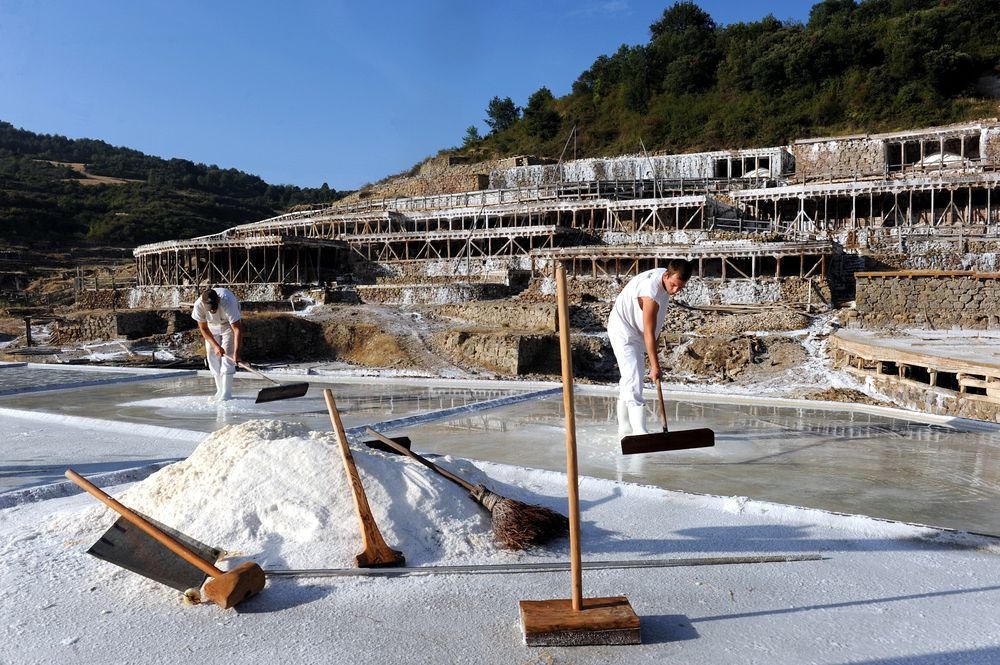
Harvesting salt from the ancient pans at Añana’s Salt Valley

The salt on Sonia’s table comes from Añana, 30km west of Vitoria-Gasteiz, where it has been harvested for 7,500 years. So prized was this particular “white gold” in the ancient world that Roman emperors wouldn’t put anything else on their chips.

Deep beneath the floor of Añana’s Salt Valley (vallesalado.com) is a 5.5km by 3.5km mass of the solidified mineral remains of a sea that dried out 200 million years ago.

Fresh water runs through this and emerges as brine from four natural springs that were discovered by the Neolithic Autrigones people (it was like winning a huge EuroMillions jackpot), who extracted the salt by boiling away the liquid in clay pots.

Today, a network of centuries-old narrow wooden channels conveys the brine from the springs to the pans, where it evaporates, leaving behind the salt that is then collected, packed and sold throughout Spain and online as a premium product.

Visitors will learn all this during a guided tour of the 32 acres of salt pans, but I had already been educated on the way there by taxi driver Adolfo Martinez, who lives nearby and has become an expert on this remarkable world heritage site.

“Everybody thinks sea salt is the healthiest, but 90pc of it is contaminated with microplastics,” he said. “Here at Añana it’s 100pc pure, despite its marine origins – there were no vast forests of plastic bags floating around in the primordial oceans.

“The little ones call me Uncle Adolfo. That makes me very happy”

“The producers of ordinary table salt bleach it with chemicals to make it snow-white and it’s nothing but sodium chloride, but Añana salt contains 84 minerals and essential trace elements.

“It’s the best in the world, and you’ll find it in all the top restaurants of Spain. We have a world-famous Basque chef, Martin Berasategui, and he says it’s the Rolls-Royce of condiments. He should know – he has 11 Michelin stars.”

Adolfo is regarded as a star by countless families within a 20km radius of Salt Valley, as he has been driving their children to and from school, football training, debs, first dates and college for the past 30 years.

“These days, I also drive the children of the first children I used to take to nursery school in the 1990s, so life has come full circle,” he said. “The little ones call me Uncle Adolfo. That makes me very happy.”

Living in Vitoria-Gasteiz makes tour guide Leire very happy.

“I was born and raised here and I’m raising my children here,” she said. “It’s a friendly and safe place. We’re surrounded by nature – you’re never more than 300 metres from a park or other green space. It’s beautiful. Everything we need is on our doorstep.

“My husband sometimes has to travel for his work, and he has been asked several times to relocate, but we have always said no. Vitoria-Gasteiz is our home. We love it, and I love showing it off to visitors. We will never leave.”

“People make Glasgow” is the marketing slogan of my own home town. The capital of the Spanish Basque Country (I’m still waiting for those pints from Gerry, Terry and Liam) should adopt it, because every resident I spoke with couldn’t have been nicer.

Like Uncle Adolfo, they’re the salt of the earth.

SAIL I visited Vitoria-Gasteiz as a guest of Brittany Ferries (brittany-ferries.ie), whose luxury vessel Salamanca (above), which is more like a cruise ship than a ferry, sails twice a week from Rosslare Harbour to Bilbao. Salamanca has kennels and several pet-friendly cabins, and the crossing takes from 28 to 30 hours. One of the highlights of the voyage is dolphin- and whale-spotting in the Bay of Biscay with on-board ocean conservationist Éirinn Kearney, from Lochgiel, Co Antrim (orca.org.uk).

FLY Aer Lingus flies from Dublin to Bilbao. There are nine buses each day (13 in high season) from Bilbao airport to Vitoria-Gasteiz (45-minute journey, longer at peak traffic times).

STAY Aparthotel Kora Green City (koragreencity.com) in Vitoria-Gasteiz is one of the most energy-efficient accommodations in the world, ideally located in a quiet neighbourhood, yet a mere 10-minute stroll from the historical centre – just follow the tram lines.

For further information, see vitoria-gasteiz.org and spain.info
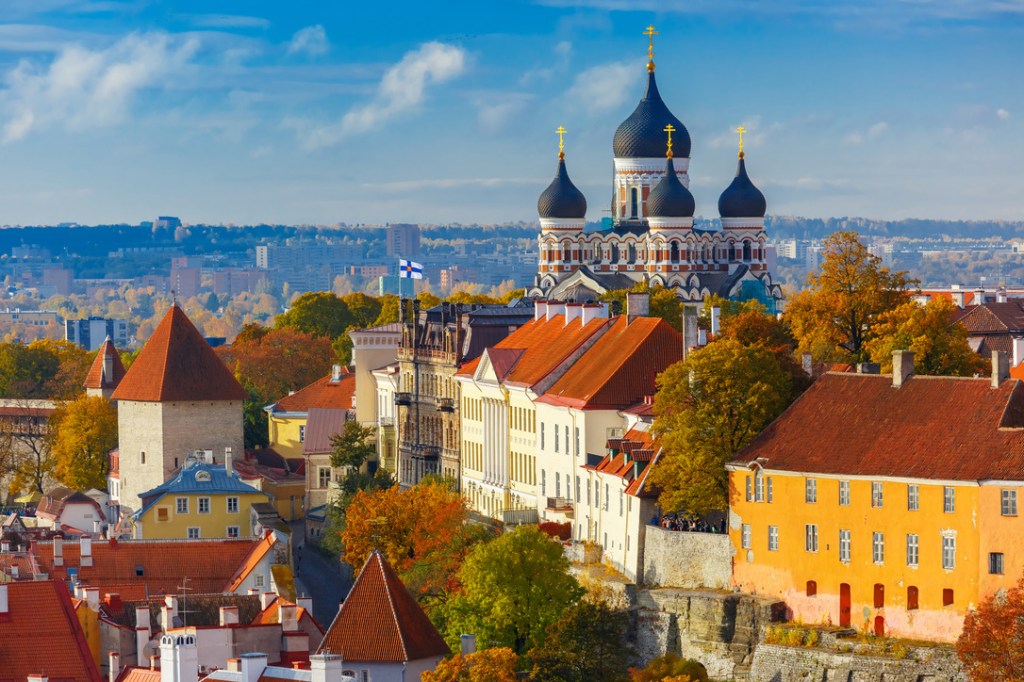
Estonia’s got Tallinn – and they know how to sing

Enjoy a long weekend in the capital of a country that joined its Baltic neighbours in singing their way to freedom after decades of Soviet occupation

Toompea Hill and the Russian Orthodox Alexander Nevsky Cathedral

It was during a visit to the medieval Lutheran Church of the Holy Spirit in Tallinn’s old town that I lost my faith – in Shazam.

The usually reliable music recognition app is handy for cheating in a pub quiz, but it failed spectacularly to identify Bach’s Toccata and Fugue in D Minor when the daily 3pm organ recital began.

Instead, it told me I was listening to Dead or Alive’s You Spin Me Round (Like a Record), a No 1 hit in Ireland and the UK in March 1985. All together now:

All I know is that to me / You look like you’re lots of fun / Open up your lovin’ arms / Watch out here I come. / You spin me right round, baby, right round…

Tour guide Stanislav Lomunov stifled a chuckle and whispered: “I’d just like to point out that the Estonians invented Skype, not Shazam.”

Stan majored in thermal engineering at Tallinn University, which is handy in a city on the Baltic where temperatures in January often plunge to minus 20C, turning the bay into a massive grey Slush Puppy.

In summer, the weather is much the same as in Dublin.

In winter, falling icicles pose a danger to passing pedestrians

Fifteen years ago on a dead-of-winter weekend trip to the Estonian capital, I stumbled across what appeared to be a taped-off crime scene near the Schlossle Hotel and had to walk on the road.

When I asked a police officer what had happened, she pointed to the roof, where metre-long icicles hung from the gutter. If the pavement hadn’t been out of bounds and one of those frozen spears had fallen, I might have been skewered.

Notable guests who have checked in to the Schlossle include Queen Elizabeth, King Charles, Sting, Pet Shop Boys, Duran Duran and Colin Griffiths.

Colin who? He’s an Englishman who loves Tallinn and has stayed in the hotel more than 500 times, a record acknowledged with a plaque on the wall in reception.

Englishman Colin Griffiths can’t get enough of the Schlossle Hotel

Maybe he appreciates Estonia’s fresh air, which is regularly ranked among the cleanest in the world, though it can have a whiff of kippers about it, thanks to the national obsession with smoke saunas.

Estonians are so devoted to stripping off and sweating their worries away that director Anna Hints’s documentary, Smoke Sauna Sisterhood, was the country’s submission for Best International Feature Film in the 2024 Academy Awards.

It wasn’t nominated, but the fact it was put forward encouraged even more people to beat the bejaysus out of each other with leafy birch twigs.

That’s probably why everyone has such glowing, youthful skin – Stan is in his mid-40s, but could easily pass for his early 30s.

Still image from the documentary film ‘Smoke Sauna Sisterhood

I don’t know what age the air-traffic controllers are at Tallinn airport, but I hope to God they’re older than the kindergarten kid on the PA system who advises passengers not to leave their schoolbags – sorry, their luggage – unattended.

Psychologists say a child’s voice has a calming effect on nervous flyers, but for those who have watched too many episodes of Air Crash Investigation it could easily cause a hasty U-turn at the boarding gates.

Talking of childish – well, infantile – things, there’s a 15th-century round tower in the old town called Kiek in de Kok, and stag parties can’t resist getting their photo taken next to the sign while pretending they’ve just received a boot in the you-know-what.

The tower, which houses a museum and the entrance to the bastion tunnels, still has cannonballs from a 1577 Russian assault embedded in its four-metre-thick walls and is one of 26 formidable defensive structures still standing from an original 46.

The Kiek in de Koek (Peek in the Kitchen) tower

Estonia, which was annexed by Stalin in August 1940, declared its independence from the crumbling Soviet Union on August 20, 1991, and the last of Boris Yeltsin’s troops went home three years later.

Five decades of occupation have left an indelible legacy, and nearly a quarter of the 1.37 million population are Russian, while many more, like Stan, speak Russian as a second language.

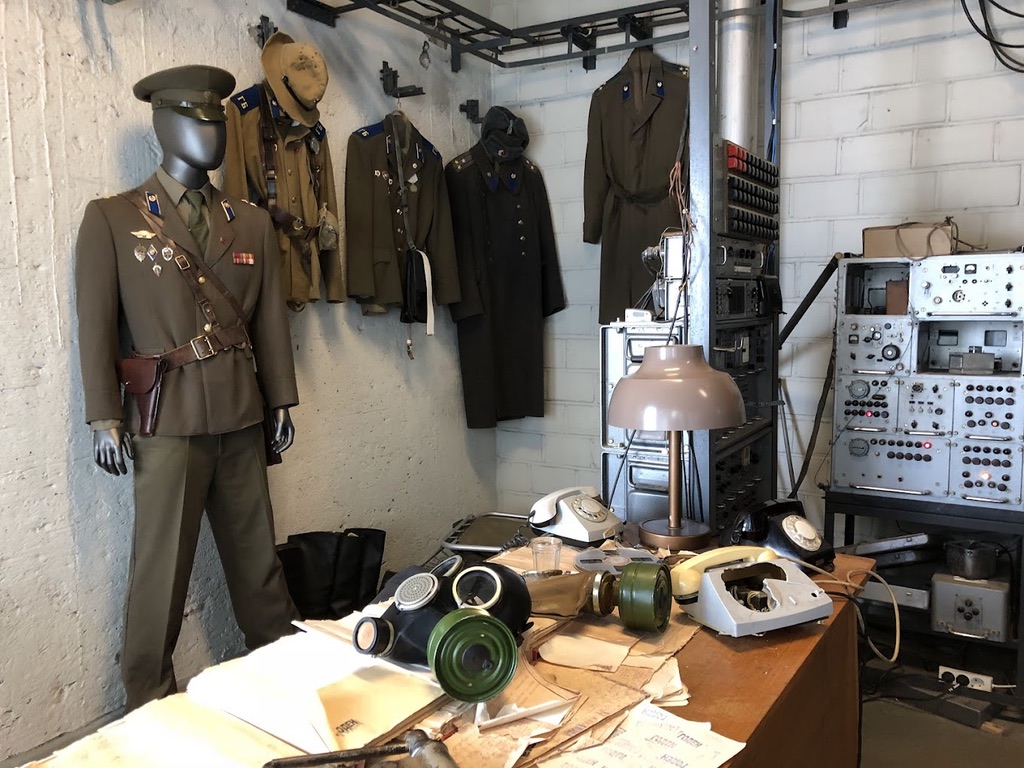
The quirkiest tourist attraction in Tallinn is the KGB Museum on the ‘non-existent’ 23rd floor of the Hotel Viru. Opened in 1972, the hotel officially stopped at the 22nd floor where a sign on a staircase leading up read: “No entry. There is nothing here.”

But there was something there – the secret control centre from which KGB operatives spied on foreign guests through tiny microphones and cameras hidden in every room. There were even concealed mics in the bar and restaurant tables.

Eavesdropping equipment and other spying paraphernalia in the KGB Museum

Hotel staff discovered the centre after the Kremlin eavesdroppers scarpered, leaving behind all their equipment, including ranks of tape recorders and a phone without a dial – there was no need for one as calls went straight through to Moscow.

The room is preserved just as it was found, overflowing ashtrays and all, and the guided tours are hugely entertaining and dripping with anti-Soviet sarcasm. If you thought the Irish were masters at slagging, you should hear the Estonians on their former occupiers.

There’s no record of Colin Griffiths having stayed in the Viru, but Margaret Thatcher did – at least that’s what I thought when I saw her leering out from the gallery of photos of celebrity guests. I nearly fainted with the fright.

“Don’t worry – that’s not who you imagine,” said the museum guide, who should carry smelling salts in her handbag. “That’s cosmonaut Valentina Tereshkova. In June, 1963, she was the first woman in space.”

Now aged 88, Tereshkova was decorated so many times during her long career as a space pioneer (a crater on the moon is named after her), air force officer and pro-Putin politician that if she wore all her medals at once she would fall flat on her face.

Despite her high standing among the comrades, her room in the Hotel Viru was bugged, too.

Among the ancient remedies on display in the Raeapteek pharmacy are stallion hooves, mummy fragments and smoked hedgehogs

Bugs were common ingredients in medieval medicine in Tallinn, as visitors will learn in the small museum attached to the Raeapteek pharmacy in Town Hall Square, which began dispensing weird and wonderful remedies in 1422.

Earthworms, cockroaches and woodlice were added to lotions and potions, as were wolf guts, rabbit ears, viper fat, dried toads, billy goat blood, frogspawn, smoked hedgehogs and mummy fragments.

There was even an early version of Viagra, purportedly containing powdered unicorn horn; and bees were prescribed for a variety of skin ailments, which probably included hives.

Competitors in the annual World Wife-Carrying Championships, a sport in which Estonians excel

As a small country, Estonia hasn’t produced many big-league sports stars, though Ragnar Klavan, the former Liverpool FC centre-back (2016-2018) and national team captain, is still fondly remembered at Anfield.

However, if the retired footballer were to stroll through the streets of Tallinn with Margo Uusorg, it’s the latter – a fella, despite his first name – who would be mobbed by selfie-seekers and autograph hunters.

Uusorg is a god in Estonia, the man who for 19 years has held the global record with teammate Sandra Kullas (a woman) for the fastest time in the World Wife-Carrying Championships, held each summer in Sonkajarvi in Finland.

On July 1, 2006, Uusorg, with eight-stone Kullas clinging upside down to his back and with her thighs wrapped around his neck, crossed the finishing line in 56.9 seconds after negotiating the 254-metre obstacle course that included muddy puddles and hurdles.

It wasn’t the most graceful of athletic achievements, but it earned the pair hero status back home, a place in the Guinness records book, a laptop each and Kullas’s weight in beer.

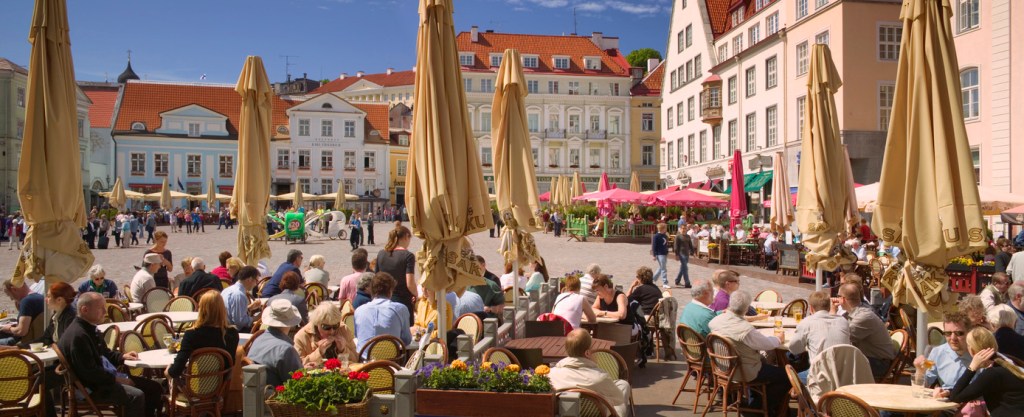
Busy outdoor cafes in the Town Hall Square on a fine summer day

You’ll pay an average of a fiver for a pint in Tallinn (the best-selling brand is Saku Originaal), though it costs as little as €3.50 in less-touristy bars and cafes, which are usually full of Finnish day-trippers at the weekend.

From Helsinki, where I recently paid €13.40 for a 400cl glass of lager in a hotel and nursed it for an hour while I recovered from the shock, it’s only two hours by ferry or a 20-minute flight to Tallinn.

If you were to stand down at the port on a Saturday morning as the convoy of boats arrives, it would look like the D-Day landings.

There’s a great camaraderie between the Estonians and Finns, whose countries border big bad Russia and are separated by just 76km of sea.

Of course, as in any setting where like-minded souls with a common foe gather and the drink flows, sing-songs break out – and that’s when the Estonians look with pity on their near neighbours.

Members of a female choir take part in the Estonian Song Festival, held every five years in Tallinn

The Finns aren’t known for hitting the high notes, but that didn’t prevent them winning the Eurovision in 2006 with a heavy-metal anthem, Hard Rock Hallelujah, performed by a bunch of screaming Klingons under the name Lordi. It was their only victory in the contest.

Estonia has also won the contest just once, in 2001, with catchy party anthem Everybody, even though it’s a nation of nightingales where small children are enrolled in choir school before their parents even think about a creche.

On August 23, 1989, a remarkable demonstration took place that showed the power of music to change the world for the better.

That was the day when 2.2 million people in Estonia, Latvia and Lithuania joined hands in an unbroken 670km chain from Tallinn, through Riga to Vilnius and raised their voices in tuneful protest at Soviet occupation.

Two years later, all three countries had waved good riddance to Russian rule – they had sung their way to freedom.

There’s a handful of party bars in and around the old town that run karaoke competitions at the weekend, and it’s all great craic, like the warm and welcoming citizens themselves.

But don’t think you can take on the locals at their own game and win – Estonia’s got Tallinn, and they know how to sing.

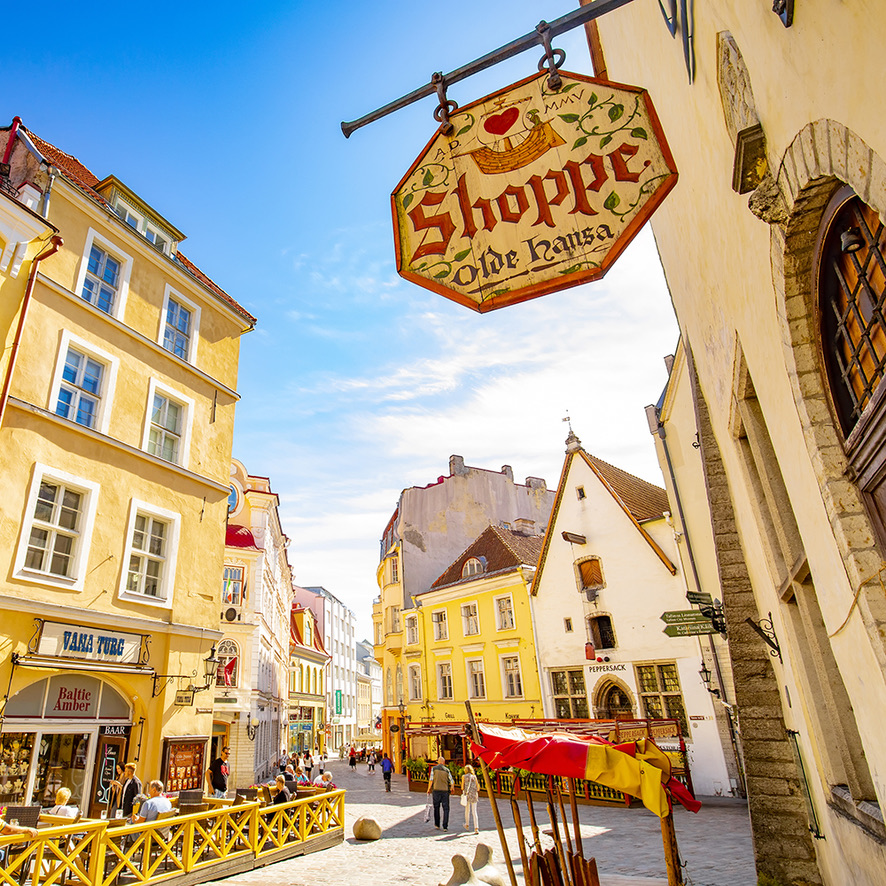
Shop sign in the old town – the ‘shoppe’ is attached to the Olde Hansa restaurant, which specialises in medieval-themed banquets

GET THERE I was a guest of Finnair, which flies daily from Dublin to Helsinki with connections to Tallinn. See finnair.com

The centrally located four-star Nordic Hotel Forum, a 10-minute drive from Tallinn airport and only 150 metres from the old town, offers B&B from around €200 a night in a standard double or twin room. See nordichotels.eu

For more information on the destination and its many attractions, see visittallinn.ee and visitestonia.com

Starry, starry nights on a Seine river cruise

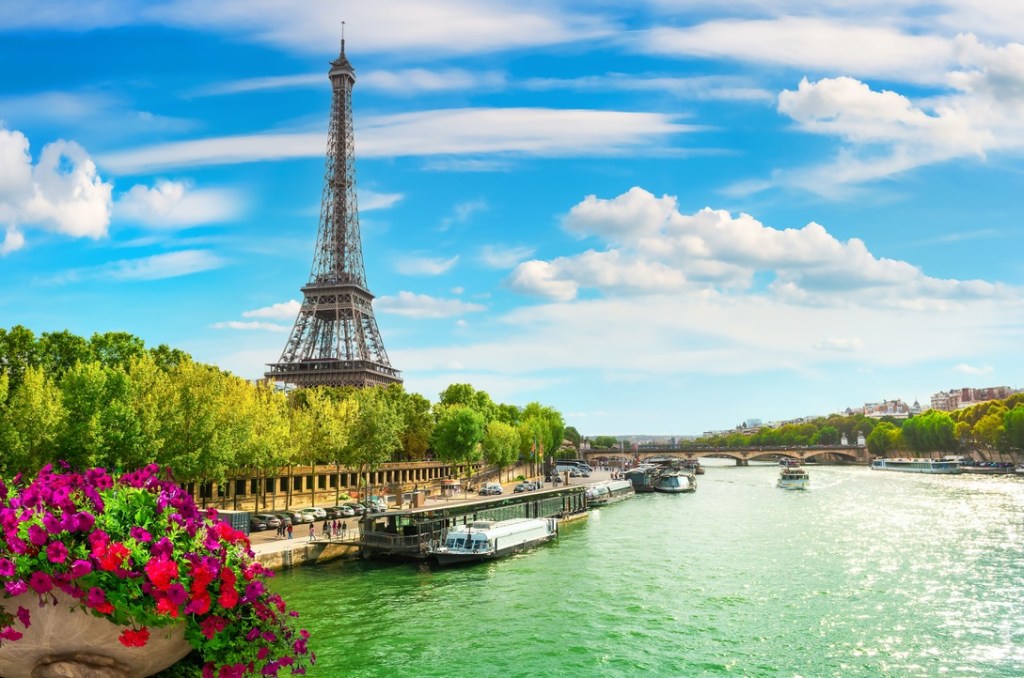
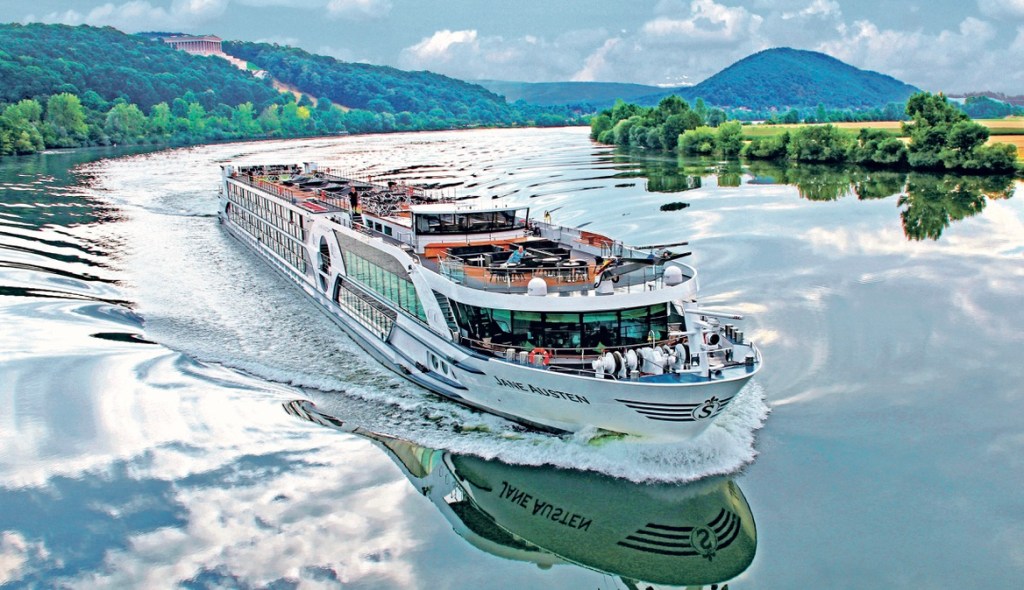
River cruises, which combine adventure and ‘slow luxury’ with an ever-changing landscape, are the fastest-growing sector of leisure travel. I took a trip on the Seine aboard the MS Jane Austen to see what the attraction is and was won over on day one.

Riviera Travel’s Seine Discovery cruise begins and ends in Paris

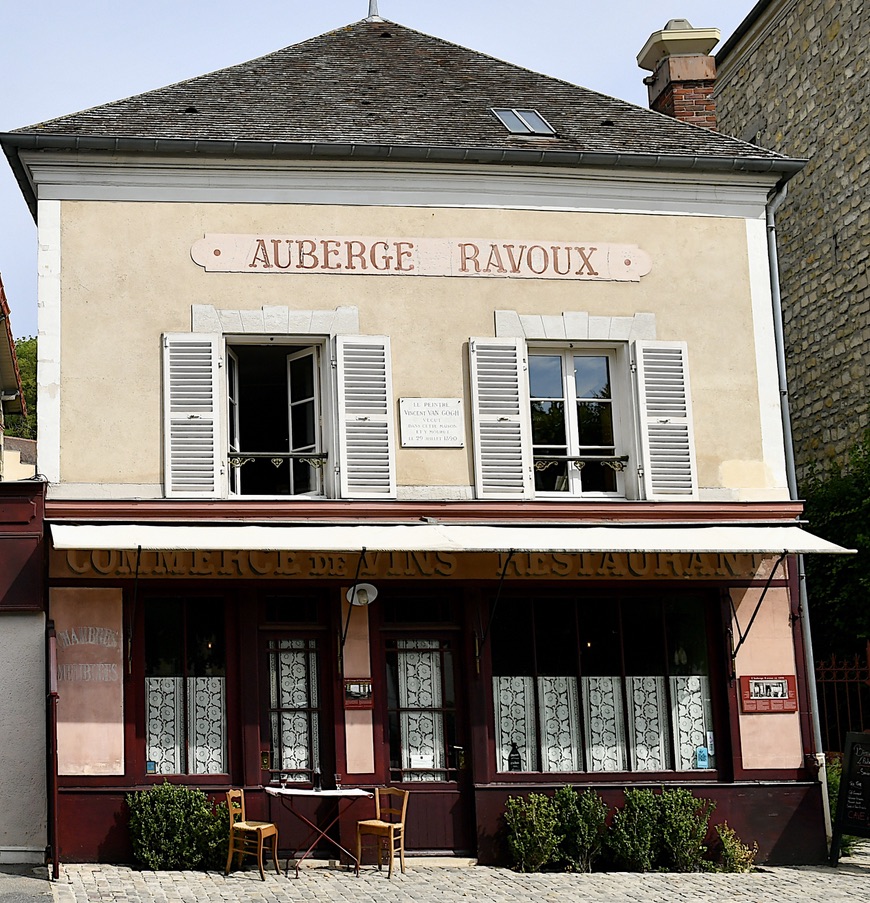
In a dimly lit corner of bar-restaurant Auberge Ravoux in Auvers-sur-Oise, 30km north-west of Paris, a young woman dressed in black sits alone at a small, darkwood table and takes a sip from a glass of Grande Absente 69.

From her brief conversation with the dicky-bowed barman, I know she’s from Amsterdam and has just come from saying a prayer at the grave of her hero in Auvers’ hilltop cemetery.

His simple, weather-worn headstone bears the inscription: “Ici repose Vincent Van Gogh 1853-1890.”

Next to it is an identical marker that reads: “Ici repose Theodore Van Gogh 1857-1891.”

Fittingly, the brothers, who were devoted to each other in life, sleep side by side in death.

The graves of brothers Vincent and Theodore Van Gogh in Auvers-sur-Oise
Auberge Ravoux, in Auvers-sur-Oise, where Vincent Van Gogh boarded and died

“I’m an art student. I love Vincent,” the young woman says with a catch in her voice. It’s an emotional moment for her, as she’s sitting at the table where the Dutch impressionist spent many a starry, starry night battling the demons that tortured him.

Upstairs is the small attic room where he died on July 29, 1890, two days after shooting himself in the chest in a nearby field. Theo was at his bedside, holding his hand, when he drew his last breath.

The art student on a poignant pilgrimage has travelled from the Netherlands by train, but I’ve arrived in Auvers by coach from Conflans-Sainte-Honorine on a half-day Van Gogh excursion from the river cruise ship MS Jane Austen.

MS Jane Austen comfortably accommodates 140 passengers and 36 crew

River cruises are becoming increasingly popular with Irish holidaymakers, and the award-winning Riviera Travel’s four-day Seine Discovery itinerary, which begins and ends in Paris, provides first-timers with a taste of what longer voyages have to offer.

Brian and Paula Gourley, from Downpatrick, Co Down, fit that profile perfectly – they’re newcomers to this most leisurely of mini breaks, and felt it might be the ideal way to celebrate their 25th wedding anniversary.

“We wanted to do something different,” says Brian, “and saw an ad for river cruises on the TV. Paula said it looked nice and relaxing, so we did a bit of googling, and that very same evening we booked the Seine Discovery cruise.

“It was a smart move. Everything’s been perfect, from the flights from Dublin and the airport transfers, the lovely cabin, a big bottle of complimentary champagne in the mini bar, great excursions.

“There’s a maximum of 140 guests, so it never feels crowded, and there are 36 crew who couldn’t be more helpful if they tried, so everyone’s very well looked after. It’s an easy 10 out of 10 all round – especially the food.”

The Eiffel Tower lit up at night

We’re standing at the bow of the newly refurbished Jane Austen after dinner on our last night on board, waiting for the not-too-distant and illuminated Eiffel Tower to start sparkling, which it does for five minutes every hour on the hour once dusk descends.

On cue, and to a chorus of oohs and aahs from the assembled guests on deck, cocktails in hand, 20,000 gold-coloured lightbulbs begin to twinkle while the rotating search beam at the top of the tower sweeps the night sky.

“You don’t get that in Downpatrick,” says Brian, who has been great craic since we shared a minibus from Charles de Gaulle airport to the ship on day one.

Among those enjoying the Eiffel eyeful are a party of 22 family and friends from London, celebrating one of their number’s 50th birthday. They, too, are new to river cruising, trying “something different” to mark a special occasion and clearly having a ball.

The most senior member of the group is 88-year-old Duracell bunny Betty, a dedicated follower of fashion who’s always first on the dance floor when musician Jose strikes up post-dessert and last to bed after the younger crowd have collapsed into theirs.

Earlier, they had opted for a three-hour guided sightseeing coach tour of Paris as Betty said her bunions were playing up after all that boogeying the night before.

The photo I’ve been waiting years to take – the lunchpack of Notre-Dame

I chose to do my own thing, and took a taxi to Notre-Dame Cathedral, whose restoration is still a work in progress after the devastating fire of April 15, 2019.

Any hope I had of seeing inside evaporated when I clapped eyes on the queues – it was Saturday afternoon and it appeared all of Paris wanted a look, with waiting times of an hour or more, even for those armed with free online tickets booked weeks before.

Out, but not down, I got someone to take a photo of me in front of the main doors with a Subway sandwich in my hand and posted it on Facebook. I could almost hear the groans when my friends read the caption: “The lunchpack of Notre-Dame.”

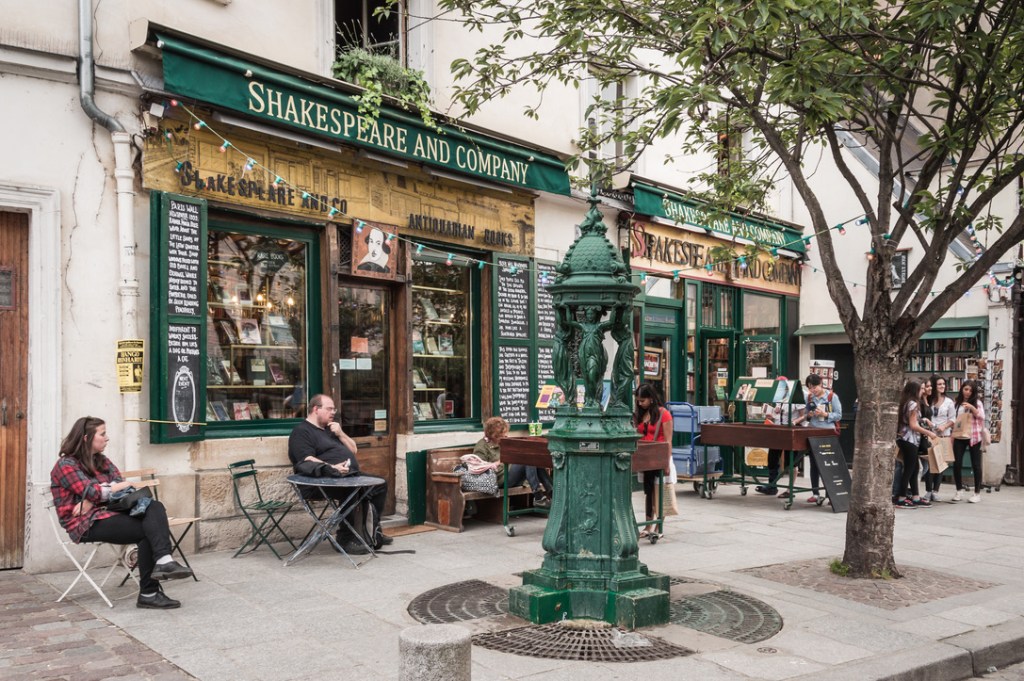
The famed Shakespeare and Company bookshop, close to Notre-Dame Cathedral

The queue outside the nearby Shakespeare and Company – the most famous English-language bookshop in the world – was nowhere near as long, and after 10 minutes of shuffling along in the sunshine with fellow bibliophiles I was browsing the shelves.

The shop, which opened in 1951, is the successor to the one previously run by American-born bookseller Sylvia Beach, who in 1921 defiantly printed and issued James Joyce’s Ulysses when no other publisher dared touch it.

I could have stayed there all day, but after a couple of hours I headed back to the ship in good time for executive chef Dimitar’s special farewell dinner.

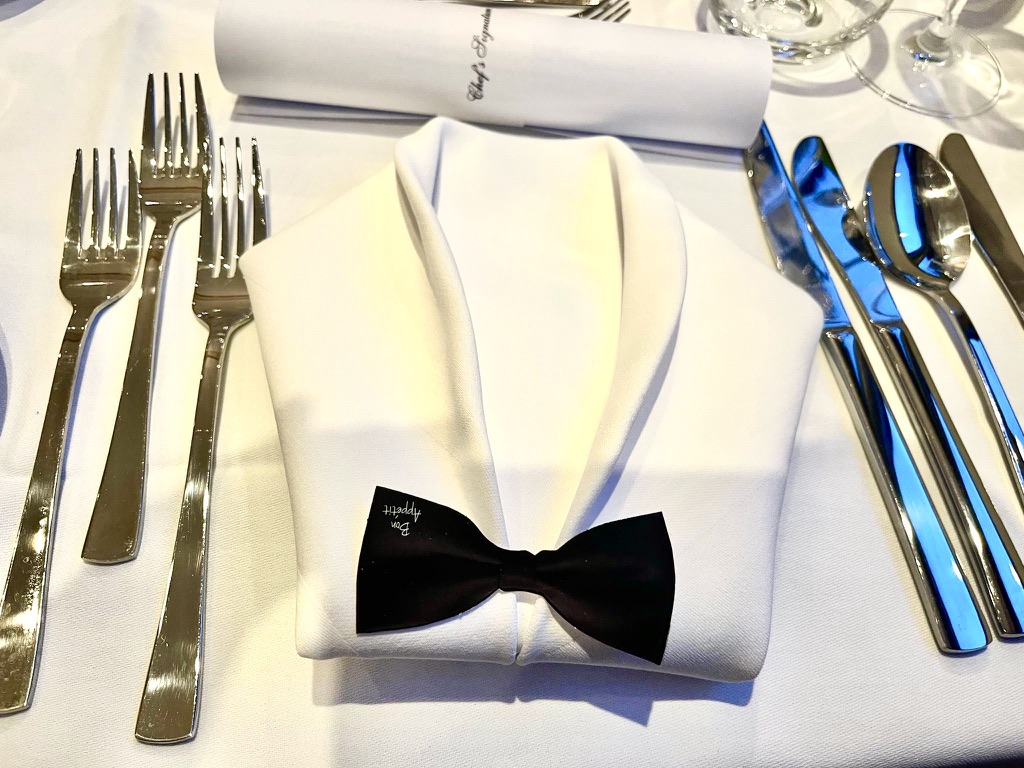
Table set for the chef’s signature dinner

Unlike on ocean cruises, where help-yourself food is available from buffets around the clock and diets are thrown overboard, dining on the Jane Austen is a more civilised affair.

Three-course lunches and dinners with wine or beer and port and brandy to follow are served at set times, with guests mingling and making friends over meals. The dress code is casual, though everybody made an effort to look smart in the evening.

Of course, Betty went the extra mile, in a trouser suit that would have made Joseph’s amazing Technicolor dreamcoat look drab, and the birthday girl wore an ankle-length gold-sequinned gown that was even sparklier than the Eiffel Tower.

Dimitar was delighted to learn there were half-a-dozen people from Ireland on board, and stopped by our table for a chat.

“Ireland has a special place in my heart,” he said. “My teenage son was conceived in Crosshaven, down there in Cork, and I always have Pogues songs and Christy Moore on in my car.

“I love The Corrs as well, and The Dubliners, John Spillane, Sinéad O’Connor and The Cranberries.”

While his taste in music can’t be faulted, Guinness drinkers will be appalled to learn he drinks his pint with the juice of half-a-lemon.

Before he could make any more terrible admissions, waitress Amanda – the youngest person on the ship at a mere 24 – said he was needed in the galley, and he took his leave with a cheery: “Sláinte!”

Passengers dine in comfort aboard the MS Jane Austen

Dimitar’s signature menu offered starters of smoked duck prosciutto, porcini cappuccino and poached scallop mousse; mains were herb filet mignon and wild forest mushroom wellington; and desserts were strawberry and chocolate mousse and pralines.

The white wine was Cotes du Rhone Pas de la Beaume, described as having “light, floral notes with a touch of zingy acidity”, and the red was a Pas de la Beaume, too, with “a pleasant nose of red fruits, garrigue and spices”. And quite right, too.

It was a memorable meal to round off an unforgettable four days on the Seine, and if that didn’t give the first-timers a taste for longer river cruises, nothing will.

GET THERE I was a guest of Riviera Travel (see rivieratravel.ie), whose four-day, full-board Seine Discovery cruise, including return flights from Dublin, airport transfers, two shore excursions, free drinks with lunch and from 6pm to midnight and free on-board wifi costs from €1,099 per person sharing a standard cabin. Crew gratuities, at a suggested €10 a day, are extra.

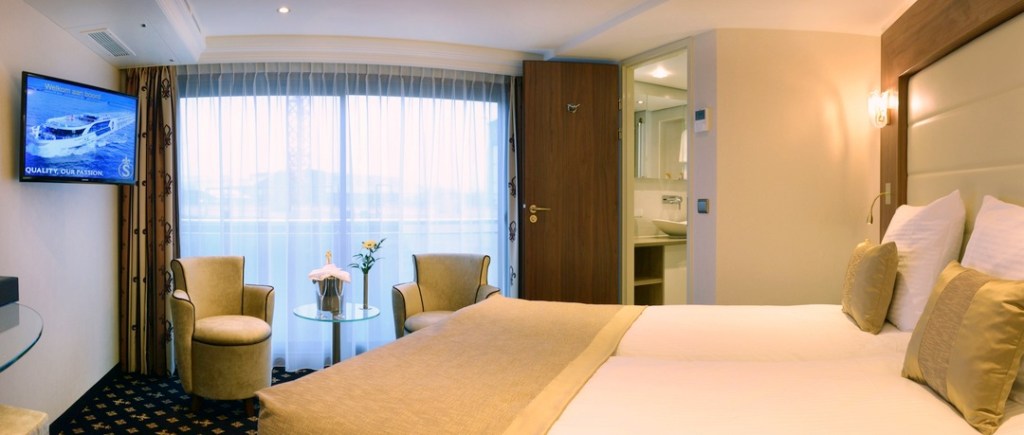
Spacious cabin on the MS Jane Austen

European Green Capital Valencia is a breath of fresh air

Communities worldwide long to be like Spain’s third-biggest city, where citizens take their eco-conscious credentials seriously – and it shows.

Turia Garden, which runs through the centre of Valencia, occupies the former course of the Turia river

Travel agent Ciara Mooney visited Valencia for a long weekend nearly four years ago, fell in love with the place and decided to split her time between there and Celbridge, Co Kildare.

The beauty of working remotely from her sunny terrace in Spain’s third-biggest city isn’t lost on Ciara, the founder and managing director of Freedom Travel and Solo Travel.

“I consider myself the luckiest girl in the world,” she says. “I can just pack some clothes and my laptop and nip to and fro. I have to pinch myself sometimes – it’s like living a dream.”

With 12 return flights a week to Valencia from Ireland – six from Dublin, four from Cork and two from Belfast – Ciara can hop on a plane at the drop of a sombrero if she’s needed back in the office.

However, for the foreseeable future she’s more than happy to spend a few weeks at a time in this year’s European Green Capital, where Malvarrosa beach is a 10-minute walk from her house.

The golden sands of Malvarrosa beach stretch for two kilometres

Close, too, is the Turia Garden, a 9km traffic-free park that occupies the former bed of the diverted Turia river and is the envy of city-dwellers worldwide.

When local authorities from Alaska to Adelaide look for ways to improve life for their citizens, they send delegations to Valencia to see what can be achieved, and they leave mightily impressed.

On Sundays, Ciara might cycle the 10km to El Palmar, the little town at the heart of Albufera Natural Park, where the freshwater lake is the biggest in Spain at 27 square kilometres, yet only 1.5 metres deep.

All of the dozen or so restaurants in El Palmar take pride in serving authentic paella, which originates there and contains five simple ingredients – rice, chicken, rabbit, green beans and snails.

Authentic Valencian paella contains five simple ingredients, with not a shrimp in sight

The dish dates from the 18th century and was the main meal of the day back then for the families of eel fishermen and those who worked in the rice fields that are irrigated by the lake and cover 7,400 acres – nearly three times the size of Dublin Airport.

While the photogenic seafood and shellfish paella served throughout the rest of Spain is a tasty TikTok and Instagram star, Valencians look on it with disdain, dismissing it as “arroz con cosas” – “rice with stuff”.

El Palmar is a popular bus excursion from the city, with visitors boarding small passenger boats for a glide along the channels that are lined by tall rushes and lead to the lake, which is separated from the sea by a massive sandbar.

Tourists enjoy a boat trip along the channels of Albufera Natural Park

The natural park is home to more than 300 resident and migratory bird species, including flamingos. While pretty, they’ve become a bit of a pest by trampling newly sown rice fields.

As the pink-plumaged waders are protected, there’s little the farmers can do but fire blank shotgun cartridges into the air to scare them off while seeking compensation from the local government for their losses.

Birds of a different colour of feather flock together in the city centre, where squadrons of squawking green monk parakeets flit between the orange trees.

Unlike other monks, this lot – the descendants of released or escaped pets – have never heard of a vow of silence and keep up a cacophony from dawn to dusk that amuses tourists but drives night-shift workers nuts when they’re trying to sleep.

Valencia is known as the City of Oranges, and for good reason

There are 10,000 orange trees in Valencia’s streets, squares and parks, and they produce 400 tonnes of fruit every year, but don’t be tempted to try one that has fallen to the ground – they’re bitter and good only for marmalade and fertiliser.

In late January, children delight in watching tractors with special attachments shaking the tree trunks, which causes the fully ripe oranges to drop into huge upside-down umbrella contraptions.

This not only keeps the streets free of a mushy mess, it greatly reduces the number or personal injury claims from people who come a cropper by slipping and breaking their wrists.

The sweet oranges for which the city is famed are grown on the outskirts, and it’s from these that the freshly squeezed juice that goes in to agua de Valencia is made.

Cafe de Las Horas serves the best agua de Valencia in the city

As well as the juice, the city’s favourite fruity concoction with a kick contains vodka, gin, cava and sugar, and the best by far is served in Cafe de Las Horas, in a side street off Plaza de La Virgen in the old town.

Owned and run by long-time Valencia resident Marc Insanally, from English-speaking Guyana on the north coast of South America, it’s Valencia’s most eye-poppingly ornate bar and Ciara’s favourite spot to take visitors from home.

“When I was still new in town, a Spanish friend introduced me to Cafe de Las Horas one night and I couldn’t believe how beautiful it was, all red velvet drapes and chandeliers and artworks on the walls and a starry sky painted on the ceiling,” she says.

“We were sitting chatting with Marc – he’s an absolute dote – and the bar was packed, but it went all quiet when this young guy stood up and started to sing an aria from Carmen. What a voice – by the time he finished, I was in tears.

“Another night, a classical guitarist began playing and blew everybody away. Tears again! You just never know what’s going to happen in there. I can’t wait to show the place to my team in Celbridge when they come over for our Christmas party.”

Ciara has already booked a couple of tables to avoid the long queue that starts to form outside in the early evening, such is Las Horas’ popularity.

“I think we’ve become a victim of our own success,” says Marc. “It’s a bit like that line from Jaws – we’re going to need a bigger bar.”

Horchata, made from ground tigernuts, is a protein-rich pick-me-up

While agua de Valencia is the city’s cocktail of choice, horchata is the sweet, non-alcoholic drink on which every local was weaned.

Available in most cafes and from street carts in the old town, this milky-white and protein-rich beverage is made from ground tigernuts and served ice-cold with a long, sugar-coated sponge cake finger for dipping.

Horchata is the perfect pick-me-up when energy levels start to sap while walking or cycling around in the sunshine – Valencia gets 300 blue-sky days a year and mid-afternoon temperatures reach 30C-plus in July and August.

There are plenty of places of interest in which to escape the heat, though.

The magnificent ceiling fresco in the parish church of St Nicholas

In the 13th-century parish church of St Nicholas, visitors risk cricking their necks while marvelling at the baroque fresco on the ceiling, which depicts the life of the saint and has earned comparisons with the Sistine Chapel.

Nearby, in one of the chapels of the Cathedral-Basilica of the Assumption, which also dates from the 13th century, a chalice reputed to be the Holy Grail has been used during masses celebrated there by Popes Saint John Paul II and Benedict XVI.

The Hortensia Herrero Art Centre in the renovated 17th-century Valeriola Palace is home to more than 100 contemporary works by four dozen world-renowned artists, including David Hockney, Roy Lichtenstein and Dublin-born Sean Scully.

This is the private collection of billionaire philanthropist Herrero, the vice-president of supermarkets chain Mercadona, which grew from a neighbourhood butcher’s shop that opened in Valencia in 1977 and now operates 1,600 stores all over Spain and Portugal.

Touch the figures and they start knocking lumps out of each other. Keep touching and war will break out

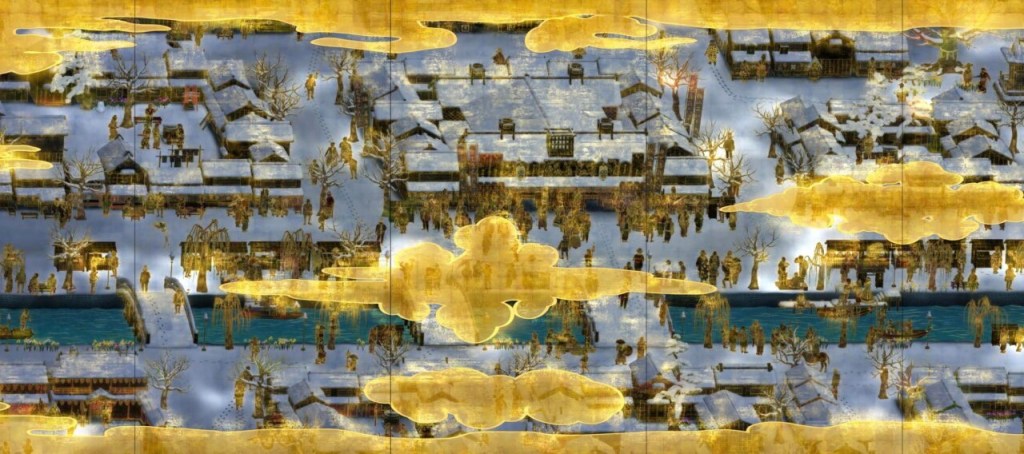
Among the art on view is teamLab’s The World of Irreversible Change (2022), a remarkable interactive digital installation depicting everyday life a long time ago in an unidentified Oriental city.

The wall-mounted work is populated by hundreds of animated figures going peacefully about their business, but wave a hand in front of a small group and they begin arguing for a few seconds.

The fun doesn’t stop there. Touch the figures and they start knocking lumps out of each other. Keep touching (which is frowned upon) and the fighting will spread, a lengthy war will break out, the city will burn down and no one will be left alive.

That installation alone is worth every cent of the €9 entrance fee, but I would gladly pay €90 to watch the security staff having nervous breakdowns trying to prevent a visiting class of junior infants from poking the little people on the screens.

Detail from The World of Irreversible Change in the Hortensia Herrero Art Centre

But those three must-sees are indoor attractions. 

Valencians love to live their lives outdoors (there are 200km of cycle paths), and they take climate awareness seriously, down to the smallest detail – when offered a business card, they snap a quick photo of it and hand it back, to reduce waste.

Most street lighting is solar-powered, and many kerbside lamp-posts also serve as electric vehicle charging points. There’s even a catchy song about what goes in to which coloured bin that children learn in pre-school and then teach to their parents.

Far from being a Johnny-come-lately, Valencia has for decades been a front-runner in promoting a clean and healthy environment, but those eco-conscious credentials were born out of catastrophe.

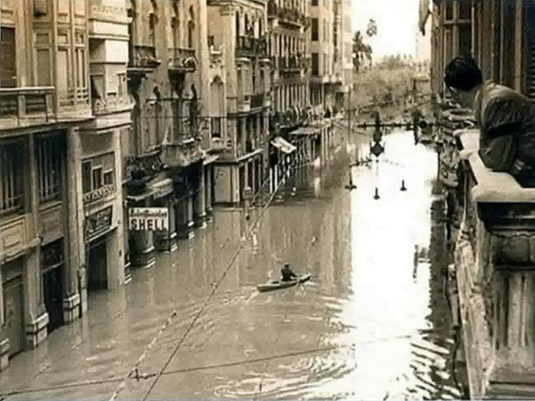
The catastrophic flood of October 1957 left 75pc of Valencia under water

On October 14, 1957, the Turia, which flowed through the centre to the sea, burst its banks after three days of torrential rain, leaving 75pc of the city under water (five metres deep in some areas), destroying 6,000 homes and killing at least 80 people.

In 1964, work began on a massive project to divert the river around the western outskirts, and it was completed nine years later.

The authorities drew up plans to turn the dry riverbed into a motorway system, but outraged citizens protested under the rallying cry “We want green!” and people power eventually won the day.

It was a long and hard-fought battle, but by the end of the 1970s, legislation to create a park was passed and Turia Garden opened to a jubilant public in 1986. They’ve been making full use of it – and making other cities jealous – ever since.


GET THERE

Ryanair flies from Dublin, Cork and Belfast to Valencia Manises airport, from where buses, taxis and Metro trains connect with the city centre, 8km away.

STAY

The SH Colon hotel in the city centre has room rates from €185 a night B&B for two people sharing, depending on the season. See hotelcolonvalencia.com

For further information, see visitvalencia.com and spain.info

Irish travel agent Ciara Mooney at the City of Arts and Sciences, at the sea end of Turia Garden