The Belgian towns of Ypres and Passchendaele and the fields that surround them were the scenes of the bloodiest battles of World War I and are at the heart of Western Front tourism.
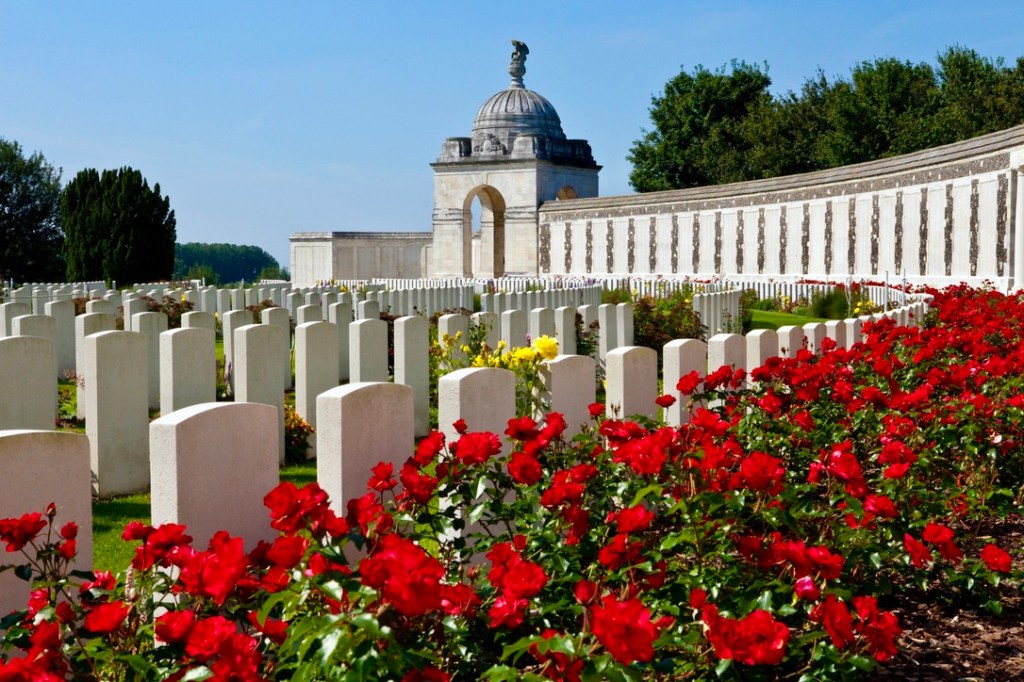
“I’m all right, Mother. Cheerio.”
Of all the inscriptions on the thousands of headstones of British, Commonwealth and Irish soldiers in West Flanders, none perhaps is more poignant than those last words written by Lieutenant Harold Rowland Hill in a letter home from the front.
By the time it reached Mrs Margaret Hill in Sydney, she had already been informed that her son was dead. He was 22.
Lt Hill, of the 25th Battalion Australian Infantry, was mortally wounded by an exploding German shell in the town of Zonnebeke on October 4, 1917, during the Third Battle of Ypres, also known as the Battle of Passchendaele.
He drew his last breath as stretcher-bearers carried him to a first-aid post.
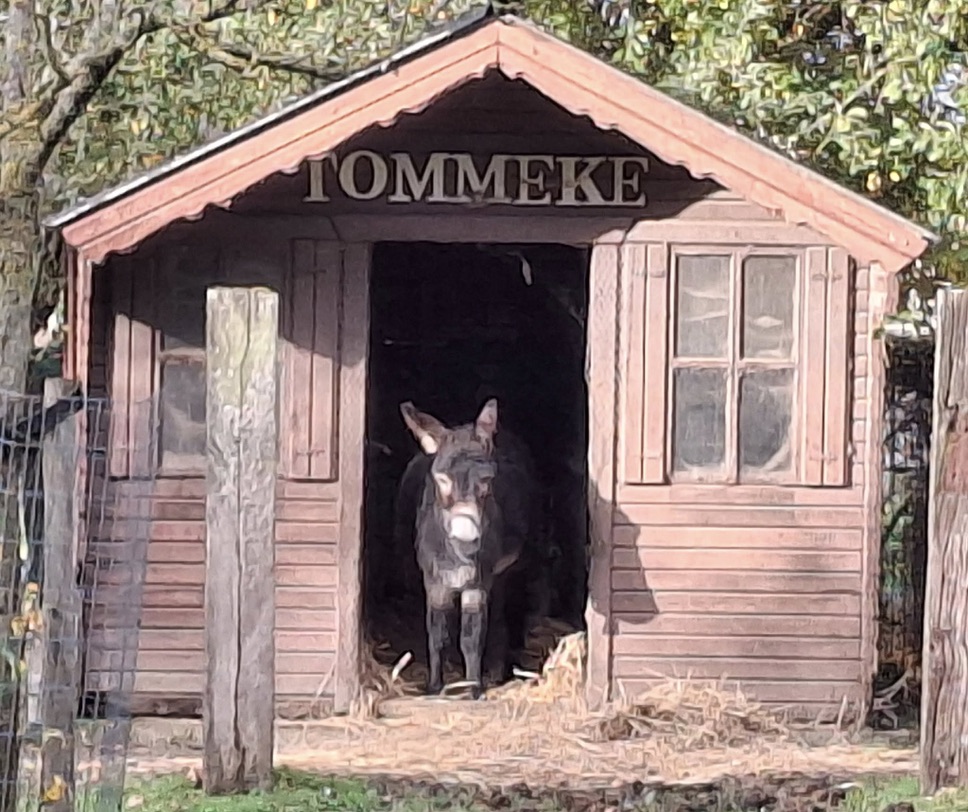
Every ANZAC Day (April 25), as the sun rises over Buttes New British Cemetery, where Lt Hill is buried, a little black donkey named Tommeke is being hand-fed carrots in his nearby paddock to stop him braying while the Last Post is sounded.
Experience of the last few years has taught the organisers of the dawn service commemorating Australians and New Zealanders who gave their lives for their countries that Tommeke isn’t a big fan of bugles and has a powerful pair of lungs.
Buttes, which is close to Zonnebeke and Ypres, contains the graves of 2,108 Commonwealth servicemen; 1,677 are unidentified, and their headstones, like so many throughout Belgium and France, bear the words: “Known unto God.”
Tommeke’s paddock and stable are directly across the road, next to the smaller Polygon Wood cemetery where 107 soldiers, just over half of them from New Zealand, lie at rest, as does one German teenager.
Standing on its own as if ostracised, but actually marking the spot where he died, is the headstone of Corporal Hans Bogner, a 19-year-old machine-gunner from Bavaria who was killed on September 28, 1918, as he covered his comrades’ retreat.
Like Lt Hill and all the other conscripts, volunteers, reservists and regulars from both sides of the conflict whose lives were ended by bullets, bombs, bayonets or gas, or by drowning in water-filled shell craters, Cpl Bogner was some mother’s son.
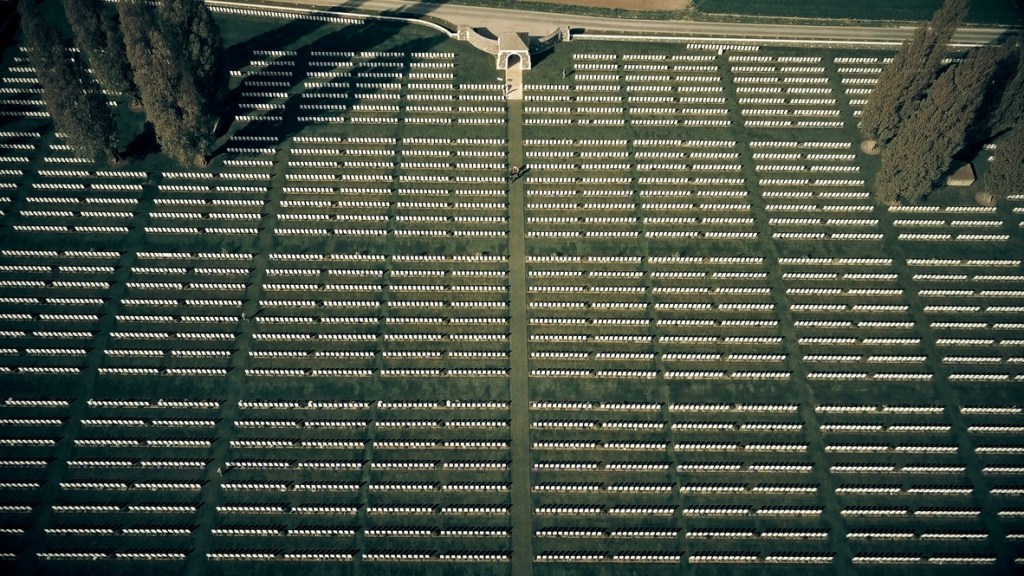
Buttes and Polygon Wood are among the more than 200 World War I military cemeteries in West Flanders that are cared for by the Commonwealth War Graves Commission and receive hundreds of thousands of visitors every year.
Tyne Cot, also close to Ypres, is the biggest, with 11,968 graves, of which 8,373 are unidentified. A memorial that forms the site’s rear boundary wall contains the names of nearly 35,000 men whose remains were never recovered.
It was in Tyne Cot, after pedalling the 3km from the Passchendaele Museum in Zonnebeke, that I took a photo of a headstone bearing the words: “A soldier of the Great War. Royal Dublin Fusiliers. Known unto God.”
At a nearby grave, three generations of a Canadian family stood, heads bowed in silent prayer.
None of them was old enough to have met the young man in uniform whose faded photo, embossed against the elements, they had pinned to a wreath of blood-red paper poppies.
In Flanders Fields the poppies blow
Between the crosses, row on row
That mark our place; and in the sky
The larks still bravely singing, fly
Scarce heard amid the guns below.
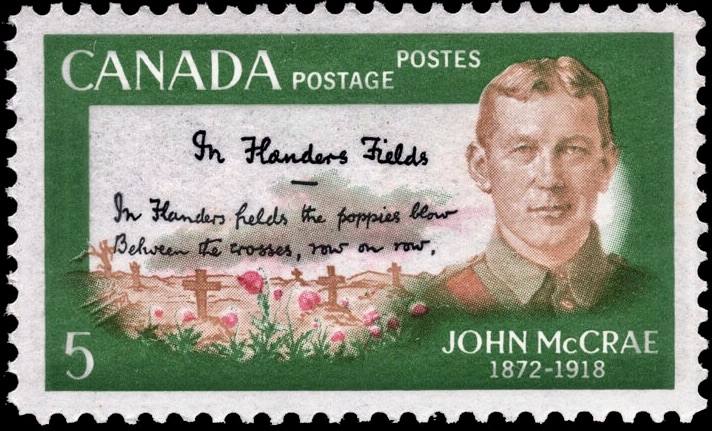
Canadian soldier, surgeon and poet Lt Col John McCrae, who survived the fighting in Belgium, wrote In Flanders Fields after presiding at the battlefield burial of his student, 22-year-old Lt Alexis Helmer, who was killed at Ypres in May, 1915. It continues:
We are the Dead. Short days ago
We lived, felt dawn, saw sunset glow,
Loved and were loved, and now we lie
In Flanders Fields.
Lt Helmer was laid hastily in the waterlogged earth, with the intention of exhuming his remains later for permanent burial elsewhere, but when the opportunity arose, his makeshift grave had been obliterated by shelling, leaving no trace.
Lt Col McCrae’s poem is the best known of World War I and is reproduced on monuments, at cemetery entrances and in museums and churches throughout West Flanders.
It’s there, too, on the wall of the foyer of the Novotel hotel in Ypres, where I stayed during my three-day cycling tour of the surrounding area where so many men, with an average age of 23, died. It concludes:
Take up our quarrel with the foe;
To you from failing hands we throw
The torch; be yours to hold it high,
If ye break faith with us who die
We shall not sleep, though poppies grow
In Flanders Fields.
From the Novotel, it’s a short walk to the Menin Gate Memorial to the Missing, where the names of more than 54,500 soldiers who gave their lives fighting the Germans and have no known graves are inscribed. Lt Helmer’s is among them.
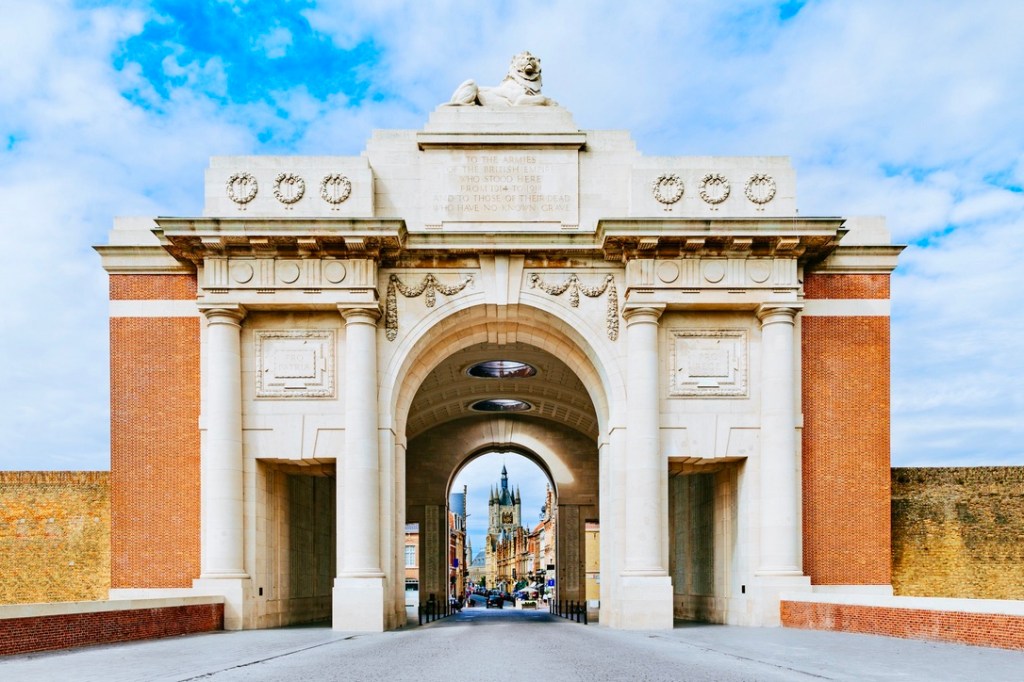
So, too, is the name of Irish rugby international Captain Basil Maclear, who was killed in action, aged 34, on May 24, 1915, while serving with the Royal Dublin Fusiliers during the Second Battle of Ypres.
English-born Capt Maclear, whose grandfathers were Irish, one from Dublin, the other from Tyrone, was stationed in Fermoy, Co Cork, when he was sent to the Western Front.
He had already lost a brother, Percy (39), also of the Royal Dublin Fusiliers, who was killed in action in the German colony of Kamerun (Cameroon) in August, 1914. Another, Harry (44), of the Royal Scots, died in northern France in March, 1916.
Of the five Maclear brothers who fought in World War I, only Ronald and Arthur survived.
The Menin Gate, which is the size of an aircraft hangar and incorporates the 36-metres-long Hall of Memory, took four years to complete and was inaugurated in July, 1927.
It stands on the spot where the road out of Ypres towards Menin on the border with France passed through the old defensive wall, from where tens of thousands of soldiers marched to the front line and to their fate.
Twelve months after it opened, the daily ritual of closing the gate to traffic for half-an-hour and sounding the Last Post at 8pm began. Interrupted only by the Nazi occupation of Belgium in World War II, the ceremony has been observed nearly 34,000 times.
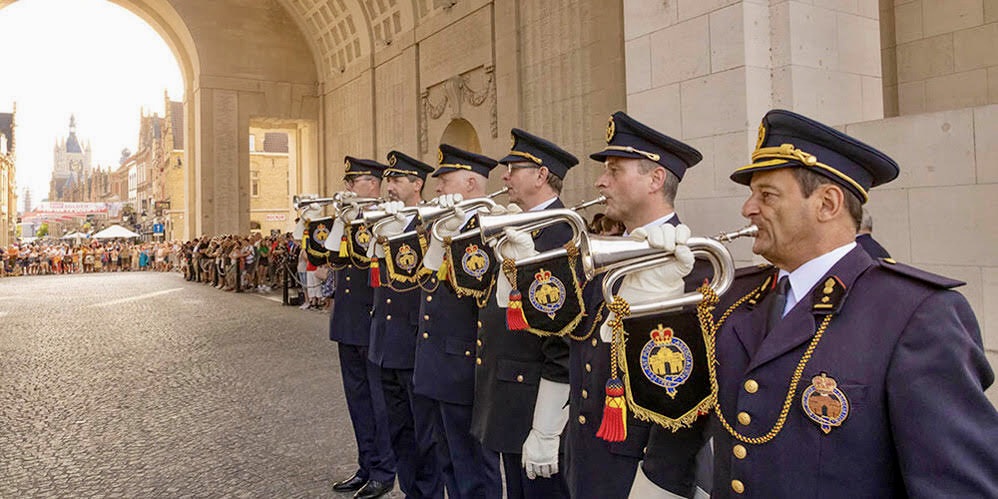
It’s attended each evening by hundreds of people, including descendants of the fallen from all over the world, schoolchildren and university students, members of history societies, tourists and ex-servicemen and women.
When the lingering final note of the Last Post fades away and the buglers in the uniform of the local volunteer fire brigade lower their instruments, the Exhortation is read.
The words are taken from For the Fallen, written by English poet Laurence Binyon, which was first published in The Times on September 21, 1914, seven weeks after the beginning of the war.
They shall grow not old, as we that are left grow old,
Age shall not weary them, nor the years condemn.
At the going down of the sun, and in the morning,
We will remember them.
There follows a minute’s silence, then wreaths are placed, Reveille is sounded by the buglers and the crowd disperses as normal daily life resumes.
For the fighting men in the stinking, rat-infested trenches of the Western Front, what passed as normal daily life is depicted in the In Flanders Fields Museum in the centre of Ypres and in the nearby Passchendaele Museum.
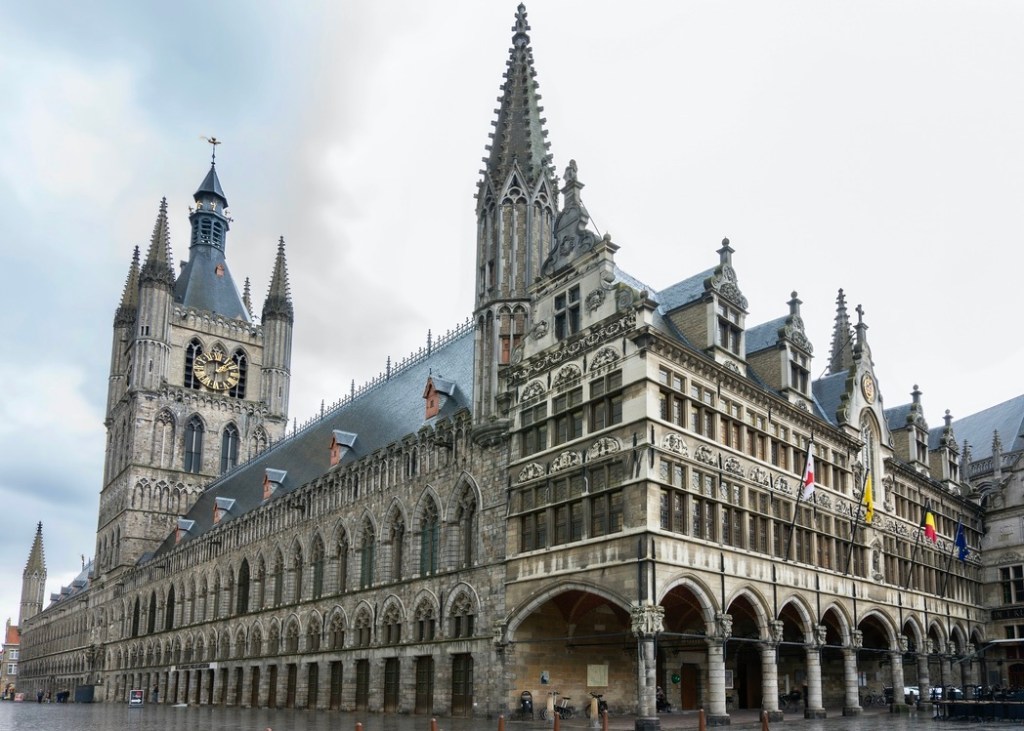
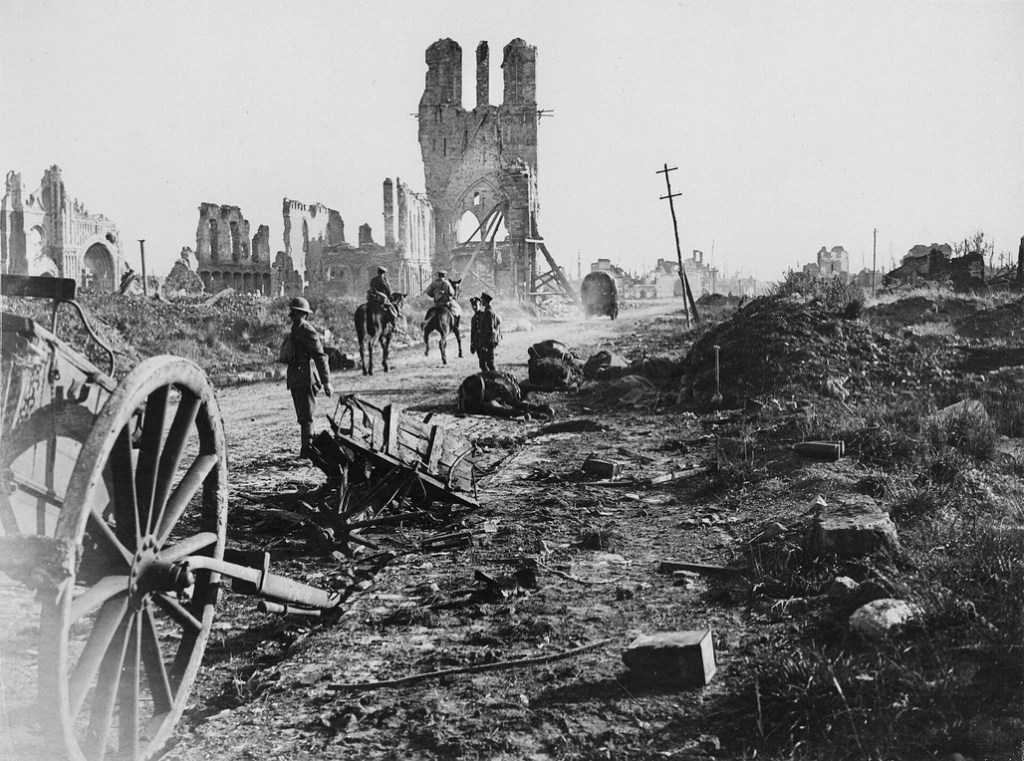
The In Flanders Fields Museum is housed in the rebuilt 13th-century Cloth Hall, a grand Gothic former market and warehouse, which, like every other structure in Ypres, was reduced to rubble by the near-constant artillery fire of the war.
Nothing escaped the shelling: homes, shops, schools, hospitals, churches, the cathedral, power plants, water and sewerage systems, roads and railways were destroyed. All that remained of the flattened town was its name.
It took 50 years after the war ended, on November 11, 1918, to resurrect the historical centre of Ypres, using salvaged stone, bricks and timber and working from original plans and photos of how it looked before it was pulverised.
Much of the reconstruction was financed with money paid in reparations by Germany.
Today, Ypres is home to 35,000 people and one of the prettiest places in Flanders, full of buildings that appear to have been there since medieval times, yet nothing that visitors see is more than 108 years old, because in 1918 there was nothing.
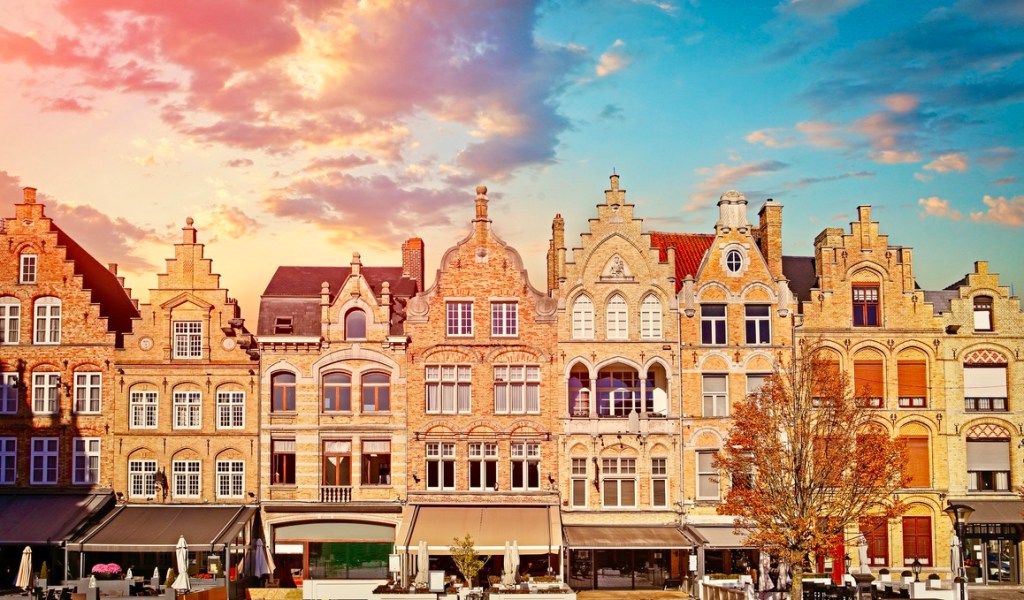
While it’s a well-to-do town, it’s unlikely to again know the wealth that was generated from the 11th to the 13th centuries by the linen trade with England, unless it strikes oil.
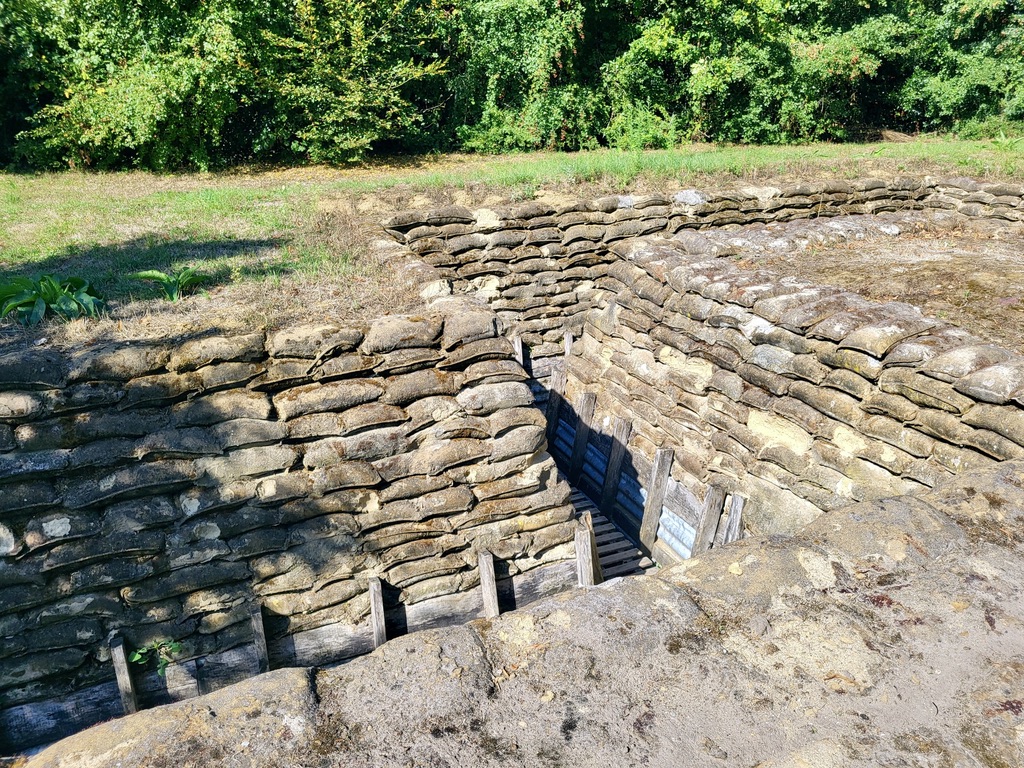
Local farmers today are more likely to strike unexploded munitions while ploughing their fields. Every year, the region’s full-time bomb disposal squads are called on to remove about 200 tonnes of live shells, a haul known as the “metal harvest”.
It’s not uncommon for human remains to be discovered, too, as thousands of missing servicemen still lie beneath the earth.
Last April, Belgian archaeologists carrying out excavations near the Palingbeek Golf Club in Ypres – land that was on the front line – found the remains of 22 soldiers, most of them German, but including some Commonwealth and French combatants.
They died when the trenches and bunkers they were sheltering in collapsed under heavy bombardment, entombing them.
Those who were identified using DNA or simply by their dog tags were given a military burial and a headstone bearing their name, regiment and age in nearby war grave cemeteries. The others remain “Known unto God”.
Poet soldier John McCrae died in northern France in January, 1918, after contracting pneumonia while treating the wounded of both sides, but the words he wrote while serving in Flanders’ fields live on.
The daily Last Post ceremony at the Menin Gate is over in 10 minutes. The war that people believed, at the outbreak on July 28, 1914, would be over by Christmas lasted four years, three months and 14 days and resulted in the deaths of 17 million soldiers and civilians.
That’s why people remember.
GET THERE Fly to Brussels. From the railway station beneath the airport, take a train to Ghent and change for Ypres.
STAY I stayed at the Novotel Ieper Centrum Flanders Fields in Ypres (novotel.accor.com) and was a guest of the Visit Flanders tourism board.
For bicycle hire, including electric bikes, see bikingbox.be
To search for a World War I grave or name on a memorial to the missing in Flanders, see cwgc.org
For further information on Western Front cycling and walking routes and visitor attractions, see visitflanders.com











 Tom Sweeney Travel Writer