Clyde and bonnie: Glasgow offers attractions and laughs galore

The city where a trunk and disorderly elephant was executed by firing squad hits the target for a fun-filled long weekend

Glasgow is noted for its red sandstone buildings and murals, like this modern take by artist Smug on the city’s patron, Saint Mungo, on High Street

An Irishman walks into a pub in Glasgow and orders a glass of Jameson, and the barman says: “Ah, the top-selling Irish whiskey in the world. Ye know, of course, it was invented by a Scotsman.”

“Ah, here, leave it out, will ya,” says the Irishman.

“It’s true,” says the barman. “Everything worth inventing was invented by the Scots. Take the television. John Logie Baird, from Helensburgh. The telephone? Alexander Graham Bell, from Edinburgh. The steam engine? James Watt, from Greenock.

“And that whiskey ye’re holding was first distilled in Dublin in 1780 by John Jameson, from Alloa.”

The Irishman is just getting over the shock when the barman adds insult to injury by asking: “D’ye want a wee splash of Irn-Bru in that?”

The pub was The Horse Shoe, near Central Station, and the customer, a music-loving pal of mine from Dublin, was on a tour of the venues where Glasgow bands and singers who hit the big time played their earliest gigs.

One of Glasgow’s most famous pubs, The Horse Shoe (try a pie and a pint)

Travis and Franz Ferdinand started out in a room above The Horse Shoe, while in other poky and once smoky spaces around town, Texas, Simple Minds, Deacon Blue, Paolo Nutini and Lewis Capaldi introduced their talents to appreciative audiences.

In a way, every successful band and solo artist in the world can thank John Jameson for the airplay that propelled them to stardom, as he was the great-grandfather of Guglielmo Marconi, who invented wireless telegraphy, which evolved into radio.

And everyone who enjoys Indian food can thank a grumpy bus driver, a tin of tomato soup and a restaurant owner with a dodgy stomach for chicken tikka masala, the curry invented in a hurry – in Glasgow.

It was a wet winter night in 1971 when the driver finished his shift and went into the Shish Mahal in Gibson Street (it later moved the short distance to Park Road) for a sit-down meal. After two bites, he sent it back.

Asif Ali, whose late father Ali Ahmed Aslam opened the restaurant in 1964, says: “Dad was in the kitchen having some Campbell’s tomato soup because he had an ulcer, and the chef told him the guy was moaning that his chicken was a bit dry.

“Dad said, ‘Make a sauce with tomato soup and some spices and pour it over the meat’. The bus driver loved it and came back again and again for the same dish. Dad called it tikka masala and put it on the menu, and a star was born.”

Bite in to a deep-fried battered Mars Bar and you’re asking for trouble

For those who aren’t too keen on curry, the half-dozen fish and chip shops run by the Varese family in the city centre are the best by far.

Italian-born Ersilio Varese and his wife Edda opened their first Blue Lagoon, an 80-seater, in Sauchiehall Street in 1975 and it immediately took off, thanks in large part to its staying open well past midnight when the pubs and clubs spilled out.

There are now 16 Blue Lagoons throughout Scotland and, naturally, they all serve deep-fried battered Mars Bars.

Visitors brave enough to try this gooey gunk, which was invented in 1990 in a fish and chip shop in Aberdeenshire, will quickly find out why so many Glaswegians have a dimple in their chin.

It’s because one bite releases a lava-like flow of molten chocolate and caramel that inflicts third-degree burns and leaves a lasting scar (in the weeks leading up to Easter, it’s deep-fried Cadbury’s Creme Eggs that do the damage).

Kelvingrove Art Gallery and Museum is a must-visit

From the Blue Lagoon branch in Dumbarton Road, it’s a 15-minute walk to Kelvingrove Art Gallery and Museum, one of Scotland’s favourite free attractions and alone worth the trip to Glasgow.

Among the most popular of the 8,000 exhibits on display are Spitfire LA198, which is suspended from the ceiling; a fibreglass caricature sculpture of a fat Elvis Presley in a blue jumpsuit; and Salvador Dali’s Christ of St John of the Cross.

The 1951 painting depicts the crucifixion from above, and for his Christ model, Dali spotted muscular Hollywood stuntman Russ Saunders on a beach in Los Angeles and flew him to his studio in Catalonia.

There, a rope attached to a roof beam was looped around his chest, he was hoisted into the air and told to stretch out his arms, and Dali sketched him through an open skylight while himself attached by a rope to the chimney as he was afraid of heights.

Sir Roger the elephant and Spitfire LA198 in Kelvingrove Art Gallery and Museum

Then there’s stuffed Asian elephant Sir Roger, who has stood on the same spot in Kelvingrove’s West Court gallery for more than 120 years.

Poor Sir Roger. The gentle giant toured Scotland with the Bostock and Wombwell Menagerie before retiring in 1897 at the age of 24 to Glasgow Zoo (which closed in 2003), where he soon turned nasty and attacked anyone who went near him.

In October, 1900, zoo owner Edward Bostock gave the order for Sir Roger to be put down, and four soldiers formed a firing squad and shot him dead as he ate his breakfast.

It was a dirty rotten trick, not least because he wasn’t offered a blindfold, and it left a bullet hole in his forehead that can still be seen.

Glasgow subway trains stop at 15 stations on a circular route

To get to Kelvingrove from the city centre, take the subway, which opened in 1896 and is known as the Clockwork Orange after the colour of the original carriages, and get off at Kelvin Hall, an ideal starting point for exploring the West End.

There are 15 stations on the circular route, and it’s a handy way of getting around, but for many decades it was a bit of a nausea-inducing ride, especially for passengers who had to stand when all the seats were taken.

The introduction of new trains in December 2023 was supposed to provide a more comfortable experience, but many passengers complained that the “shoogle” – the swaying and juddering when going round bends – was even shooglier than before.

So the transport authority spent £100,000 retrofitting the suspension, and all was well for a while until older citizens said they missed being thrown about the carriages and getting bruised. There’s no pleasing some people.

Like much of this largely Victorian city, which is home to some of the best 19th-century architecture in the world, the West End is full of red-sandstone buildings, with Kelvingrove and Glasgow University among the finest examples.

Glaswegians and tourists stood behind lines of New York yellow taxis and watched Tom Holland web-slinging around George Square while filming ‘Spider-Man: Brand New Day’

Most of the stone came from a cluster of quarries near Dumfries, which, at their peak, extracted 200,000 tons every year for use at home and abroad – it’s there in the steps of the Statue of Liberty and in many of New York’s brownstone buildings.

Because of its grid system of streets and resemblance to older parts of the Big Apple, Glasgow has often been the go-to location when Hollywood needed a stand-in.

It also doubled in 2012 as Philadelphia in World War Z, starring Brad Pitt; in 2020 as Gotham City in The Batman, starring Robert Pattinson; and in 2021 as Manhattan in Indiana Jones and the Dial of Destiny, starring Harrison Ford.

A few months ago, crowds of thrilled Glaswegians and tourists stood behind lines of New York yellow taxis and watched Tom Holland web-slinging around George Square while filming Spider-Man: Brand New Day, which will be released next July.

The best and most entertaining way to visit Glasgow’s top attractions is to take the hop-on, hop-off sightseeing bus

On a day off, a dozen members of the cast and crew joined other sightseers on an open-top bus for a 90-minute hop-on, hop-off tour of the city and were treated to an unexpected comedy routine.

Not only do the on-board guides know Glasgow’s history inside out, they’re great craic and keep passengers informed and entertained with fun facts and figures, jokes galore and the occasional sing-along song. It’s a laugh from start to finish.

The buses, which run on two routes, leave every 15 minutes from outside Costa Coffee on the Queen Street station side of George Square, and the £20 one-day adult ticket (£27 for two days) is a steal.

The yellow route operates from April to September and has 24 stops that include the indoor and outdoor weekend market The Barras, which is always worth a wander around, especially for the Del Boy banter from many of the stallholders.

Scotland were so confident of winning the football World Cup in Argentina that designs for celebratory postage stamps were prepared

This route also takes in Celtic Park and Ibrox Stadium, but to get to the Scottish Football Museum at Hampden requires a 15-minute ride on the number 31 city bus from St Enoch Square.

When I last toured the museum, the most-photographed exhibit was a set of giant ­postage stamp designs celebrating Scotland’s winning the 1978 World Cup in Argentina – remember Archie Gemmill’s wonder goal against the Netherlands?

Sadly (or inevitably), the stamps never went into production and the designs were put away a couple of years ago because English visitors kept sniggering while taking selfies, but there’s plenty more on show to keep football fans fascinated.

Buses on the red hop-on, hop-off route, which is the more popular, operate year round and stop at 21 tourist attractions that include Kelvingrove, the Riverside Museum and the Science Centre.

The Riverside incorporates the Transport Museum with its collection of old cars, trams and steam locomotives, and a walk-through reproduction of a cobbled street with shops and houses from the 1890s to the 1930s.

The record shop in the Riverside Museum focuses on Scottish bands and singers

There’s also a more recent record shop full of vinyl, cassettes, CDs, gold discs, posters and concert merchandise dating from 1980 to 1995, with the focus exclusively on Scottish bands and singers.

It’s so mesmerising that visitors like my pal from Dublin who nip in for a quick look around find they’re still riffling through records an hour later and tapping their toes to hits from the period that play all day on a loop.

There are more tunes back on the bus, where passengers can alternate between chuckling at the guide’s gags and listening on earphones to singer-songwriter Eddi Reader telling the story of her home city’s rich musical heritage.

There’s no more knowledgeable narrator than Reader, who plays several sell-out gigs every year in and around Dublin and whose former band Fairground Attraction’s single, Perfect, got to number one in the Irish and UK charts in March 1988.

Her commentary on Glasgow’s musicians and music venues past and present is a joy to listen to, and the playlist she compiled to accompany it can be downloaded on Spotify.

Irn-Bru is guaranteed to cure the hangover from hell

Curiosity got the better of my buddy from Dublin, who felt he couldn’t end his visit to Clydeside without trying Irn-Bru, which outsells Coca-Cola from the Shetlands to the Lowlands, with 20 cans and bottles bought every second. I’m happy to report he liked it.

While penicillin, which was discovered in 1928 by microbiologist Alexander Fleming, from Ayrshire, continues to save countless lives, many a person has been cured of the hangover from hell thanks to the soft drink known as the fizzy defibrillator.

It’s Scotland’s second-greatest gift to humanity and was invented in 1946 in Glasgow, where it’s the mixer of choice with vodka. But don’t put it in Jameson, no matter which pub you walk into.

GET THERE A frequent bus service connects Glasgow airport with the city centre. For details of hop-on, hop-off bus tours, see citysightseeingglasgow.co.uk

For more information, see visitglasgow.com and visitscotland.com

Estonia’s got Tallinn – and they know how to sing

Enjoy a long weekend in the capital of a country that joined its Baltic neighbours in singing their way to freedom after decades of Soviet occupation
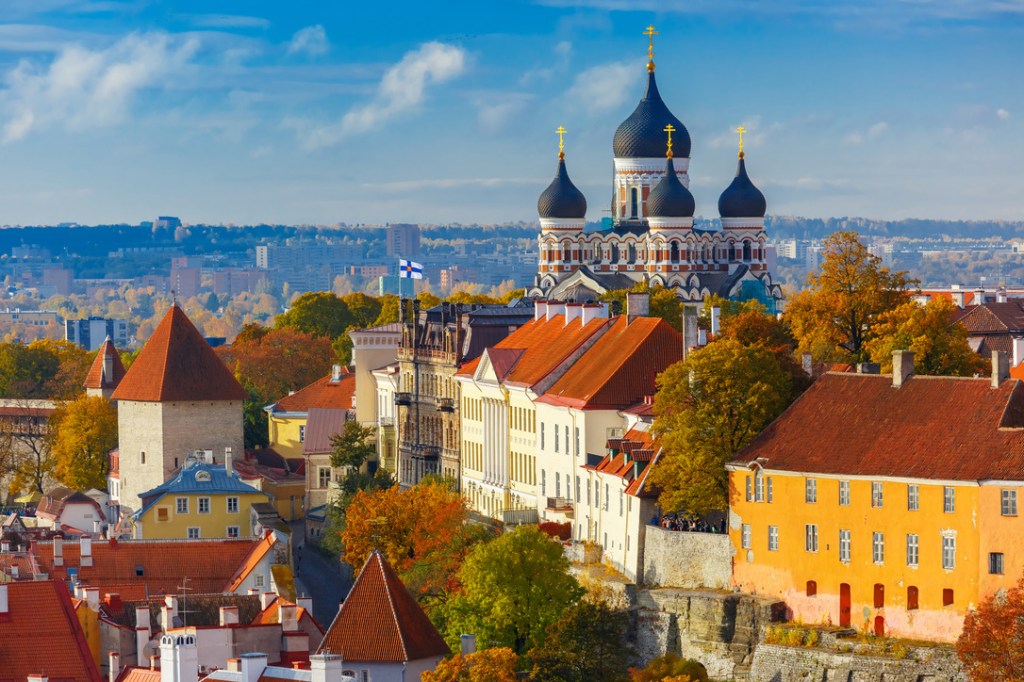
Toompea Hill and the Russian Orthodox Alexander Nevsky Cathedral

It was during a visit to the medieval Lutheran Church of the Holy Spirit in Tallinn’s old town that I lost my faith – in Shazam.

The usually reliable music recognition app is handy for cheating in a pub quiz, but it failed spectacularly to identify Bach’s Toccata and Fugue in D Minor when the daily 3pm organ recital began.

Instead, it told me I was listening to Dead or Alive’s You Spin Me Round (Like a Record), a No 1 hit in Ireland and the UK in March 1985. All together now:

All I know is that to me / You look like you’re lots of fun / Open up your lovin’ arms / Watch out here I come. / You spin me right round, baby, right round…

Tour guide Stanislav Lomunov stifled a chuckle and whispered: “I’d just like to point out that the Estonians invented Skype, not Shazam.”

Stan majored in thermal engineering at Tallinn University, which is handy in a city on the Baltic where temperatures in January often plunge to minus 20C, turning the bay into a massive grey Slush Puppy.

In summer, the weather is much the same as in Dublin.

In winter, falling icicles pose a danger to passing pedestrians

Fifteen years ago on a dead-of-winter weekend trip to the Estonian capital, I stumbled across what appeared to be a taped-off crime scene near the Schlossle Hotel and had to walk on the road.

When I asked a police officer what had happened, she pointed to the roof, where metre-long icicles hung from the gutter. If the pavement hadn’t been out of bounds and one of those frozen spears had fallen, I might have been skewered.

Notable guests who have checked in to the Schlossle include Queen Elizabeth, King Charles, Sting, Pet Shop Boys, Duran Duran and Colin Griffiths.

Colin who? He’s an Englishman who loves Tallinn and has stayed in the hotel more than 500 times, a record acknowledged with a plaque on the wall in reception.

Englishman Colin Griffiths can’t get enough of the Schlossle Hotel

Maybe he appreciates Estonia’s fresh air, which is regularly ranked among the cleanest in the world, though it can have a whiff of kippers about it, thanks to the national obsession with smoke saunas.

Estonians are so devoted to stripping off and sweating their worries away that director Anna Hints’s documentary, Smoke Sauna Sisterhood, was the country’s submission for Best International Feature Film in the 2024 Academy Awards.

It wasn’t nominated, but the fact it was put forward encouraged even more people to beat the bejaysus out of each other with leafy birch twigs.

That’s probably why everyone has such glowing, youthful skin – Stan is in his mid-40s, but could easily pass for his early 30s.

Still image from the documentary film ‘Smoke Sauna Sisterhood

I don’t know what age the air-traffic controllers are at Tallinn airport, but I hope to God they’re older than the kindergarten kid on the PA system who advises passengers not to leave their schoolbags – sorry, their luggage – unattended.

Psychologists say a child’s voice has a calming effect on nervous flyers, but for those who have watched too many episodes of Air Crash Investigation it could easily cause a hasty U-turn at the boarding gates.

Talking of childish – well, infantile – things, there’s a 15th-century round tower in the old town called Kiek in de Kok, and stag parties can’t resist getting their photo taken next to the sign while pretending they’ve just received a boot in the you-know-what.

The tower, which houses a museum and the entrance to the bastion tunnels, still has cannonballs from a 1577 Russian assault embedded in its four-metre-thick walls and is one of 26 formidable defensive structures still standing from an original 46.

The Kiek in de Koek (Peek in the Kitchen) tower

Estonia, which was annexed by Stalin in August 1940, declared its independence from the crumbling Soviet Union on August 20, 1991, and the last of Boris Yeltsin’s troops went home three years later.

Five decades of occupation have left an indelible legacy, and nearly a quarter of the 1.37 million population are Russian, while many more, like Stan, speak Russian as a second language.

The quirkiest tourist attraction in Tallinn is the KGB Museum on the ‘non-existent’ 23rd floor of the Hotel Viru. Opened in 1972, the hotel officially stopped at the 22nd floor where a sign on a staircase leading up read: “No entry. There is nothing here.”

But there was something there – the secret control centre from which KGB operatives spied on foreign guests through tiny microphones and cameras hidden in every room. There were even concealed mics in the bar and restaurant tables.
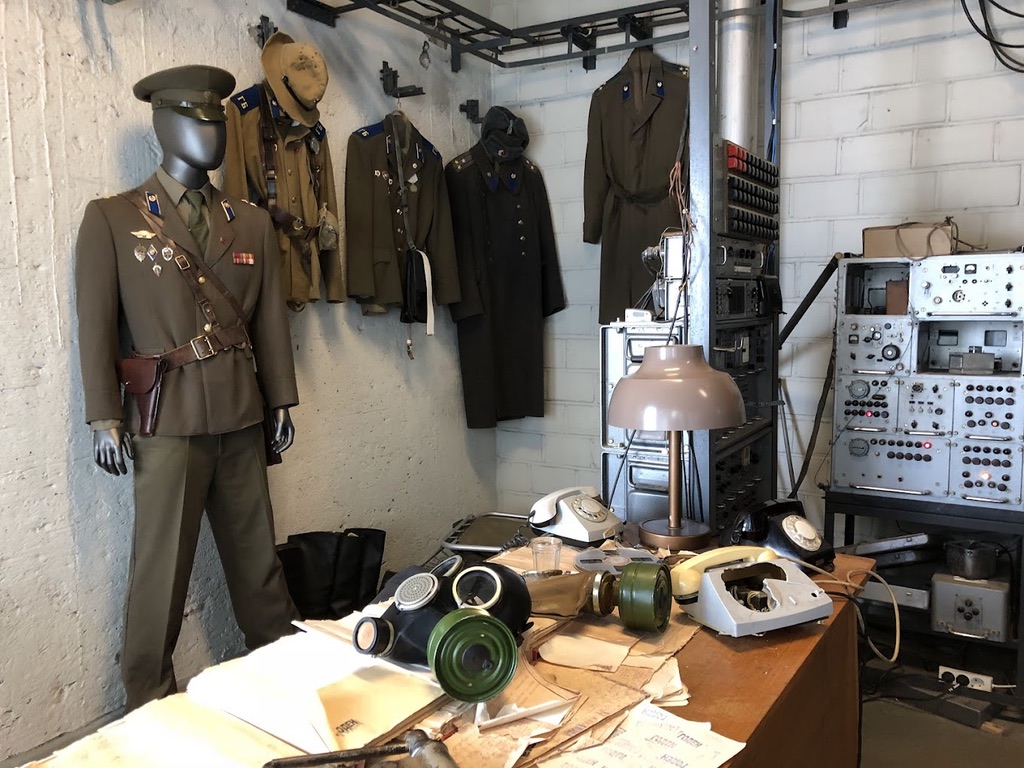
Eavesdropping equipment and other spying paraphernalia in the KGB Museum

Hotel staff discovered the centre after the Kremlin eavesdroppers scarpered, leaving behind all their equipment, including ranks of tape recorders and a phone without a dial – there was no need for one as calls went straight through to Moscow.

The room is preserved just as it was found, overflowing ashtrays and all, and the guided tours are hugely entertaining and dripping with anti-Soviet sarcasm. If you thought the Irish were masters at slagging, you should hear the Estonians on their former occupiers.

There’s no record of Colin Griffiths having stayed in the Viru, but Margaret Thatcher did – at least that’s what I thought when I saw her leering out from the gallery of photos of celebrity guests. I nearly fainted with the fright.

“Don’t worry – that’s not who you imagine,” said the museum guide, who should carry smelling salts in her handbag. “That’s cosmonaut Valentina Tereshkova. In June, 1963, she was the first woman in space.”

Now aged 88, Tereshkova was decorated so many times during her long career as a space pioneer (a crater on the moon is named after her), air force officer and pro-Putin politician that if she wore all her medals at once she would fall flat on her face.

Despite her high standing among the comrades, her room in the Hotel Viru was bugged, too.

Among the ancient remedies on display in the Raeapteek pharmacy are stallion hooves, mummy fragments and smoked hedgehogs

Bugs were common ingredients in medieval medicine in Tallinn, as visitors will learn in the small museum attached to the Raeapteek pharmacy in Town Hall Square, which began dispensing weird and wonderful remedies in 1422.

Earthworms, cockroaches and woodlice were added to lotions and potions, as were wolf guts, rabbit ears, viper fat, dried toads, billy goat blood, frogspawn, smoked hedgehogs and mummy fragments.

There was even an early version of Viagra, purportedly containing powdered unicorn horn; and bees were prescribed for a variety of skin ailments, which probably included hives.

Competitors in the annual World Wife-Carrying Championships, a sport in which Estonians excel

As a small country, Estonia hasn’t produced many big-league sports stars, though Ragnar Klavan, the former Liverpool FC centre-back (2016-2018) and national team captain, is still fondly remembered at Anfield.

However, if the retired footballer were to stroll through the streets of Tallinn with Margo Uusorg, it’s the latter – a fella, despite his first name – who would be mobbed by selfie-seekers and autograph hunters.

Uusorg is a god in Estonia, the man who for 19 years has held the global record with teammate Sandra Kullas (a woman) for the fastest time in the World Wife-Carrying Championships, held each summer in Sonkajarvi in Finland.

On July 1, 2006, Uusorg, with eight-stone Kullas clinging upside down to his back and with her thighs wrapped around his neck, crossed the finishing line in 56.9 seconds after negotiating the 254-metre obstacle course that included muddy puddles and hurdles.

It wasn’t the most graceful of athletic achievements, but it earned the pair hero status back home, a place in the Guinness records book, a laptop each and Kullas’s weight in beer.
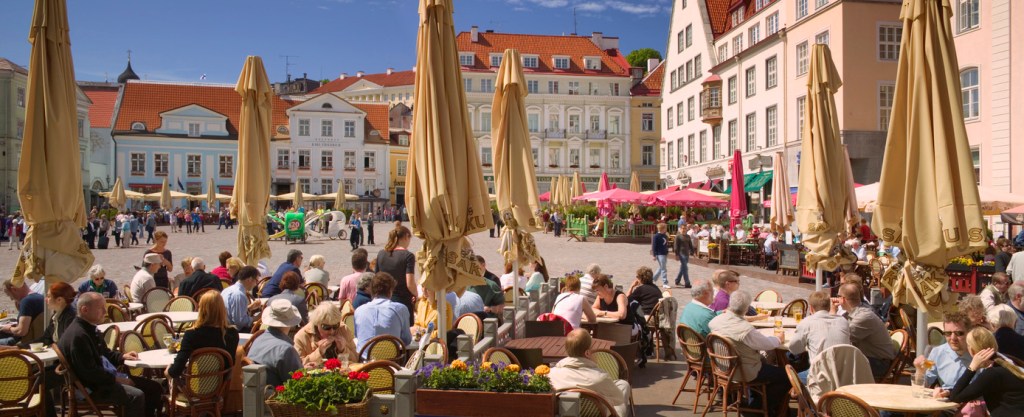
Busy outdoor cafes in the Town Hall Square on a fine summer day

You’ll pay an average of a fiver for a pint in Tallinn (the best-selling brand is Saku Originaal), though it costs as little as €3.50 in less-touristy bars and cafes, which are usually full of Finnish day-trippers at the weekend.

From Helsinki, where I recently paid €13.40 for a 400cl glass of lager in a hotel and nursed it for an hour while I recovered from the shock, it’s only two hours by ferry or a 20-minute flight to Tallinn.

If you were to stand down at the port on a Saturday morning as the convoy of boats arrives, it would look like the D-Day landings.

There’s a great camaraderie between the Estonians and Finns, whose countries border big bad Russia and are separated by just 76km of sea.

Of course, as in any setting where like-minded souls with a common foe gather and the drink flows, sing-songs break out – and that’s when the Estonians look with pity on their near neighbours.

Members of a female choir take part in the Estonian Song Festival, held every five years in Tallinn

The Finns aren’t known for hitting the high notes, but that didn’t prevent them winning the Eurovision in 2006 with a heavy-metal anthem, Hard Rock Hallelujah, performed by a bunch of screaming Klingons under the name Lordi. It was their only victory in the contest.

Estonia has also won the contest just once, in 2001, with catchy party anthem Everybody, even though it’s a nation of nightingales where small children are enrolled in choir school before their parents even think about a creche.

On August 23, 1989, a remarkable demonstration took place that showed the power of music to change the world for the better.

That was the day when 2.2 million people in Estonia, Latvia and Lithuania joined hands in an unbroken 670km chain from Tallinn, through Riga to Vilnius and raised their voices in tuneful protest at Soviet occupation.

Two years later, all three countries had waved good riddance to Russian rule – they had sung their way to freedom.

There’s a handful of party bars in and around the old town that run karaoke competitions at the weekend, and it’s all great craic, like the warm and welcoming citizens themselves.

But don’t think you can take on the locals at their own game and win – Estonia’s got Tallinn, and they know how to sing.
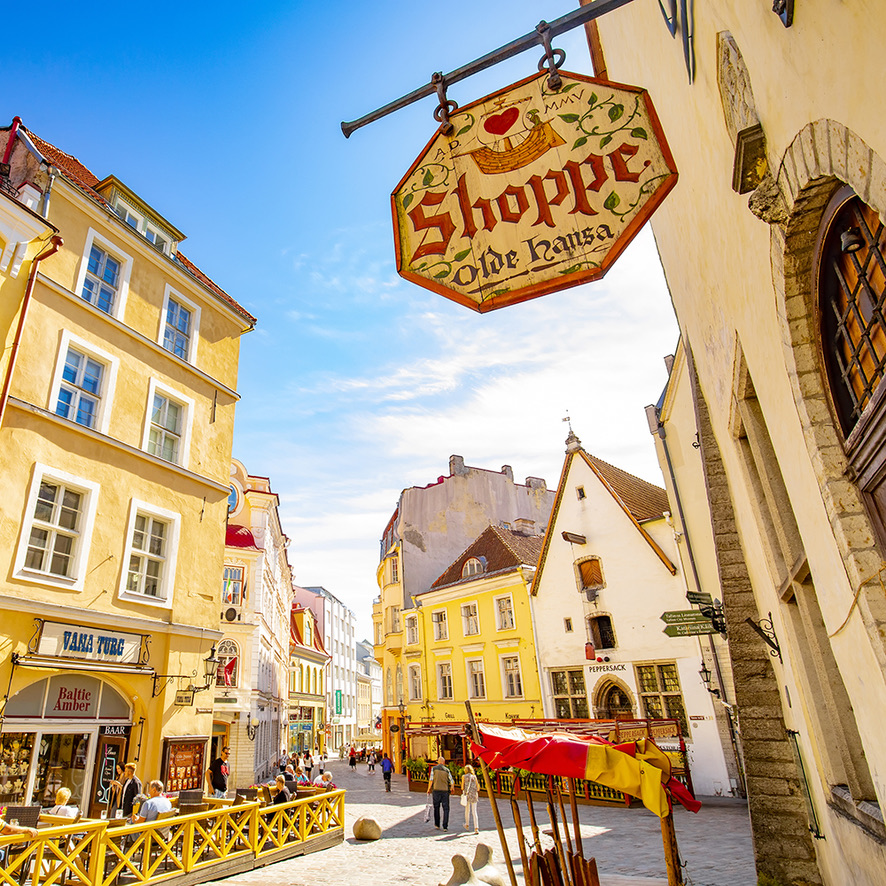
Shop sign in the old town – the ‘shoppe’ is attached to the Olde Hansa restaurant, which specialises in medieval-themed banquets

GET THERE I was a guest of Finnair, which flies daily from Dublin to Helsinki with connections to Tallinn. See finnair.com

The centrally located four-star Nordic Hotel Forum, a 10-minute drive from Tallinn airport and only 150 metres from the old town, offers B&B from around €200 a night in a standard double or twin room. See nordichotels.eu

For more information on the destination and its many attractions, see visittallinn.ee and visitestonia.com
Antwerp gets my stoemp of approval

Good things – like Belgium’s second city and its colcannon equivalent, stoemp – come to those who wait, but they come a lot quicker when you’re travelling with an EU passport

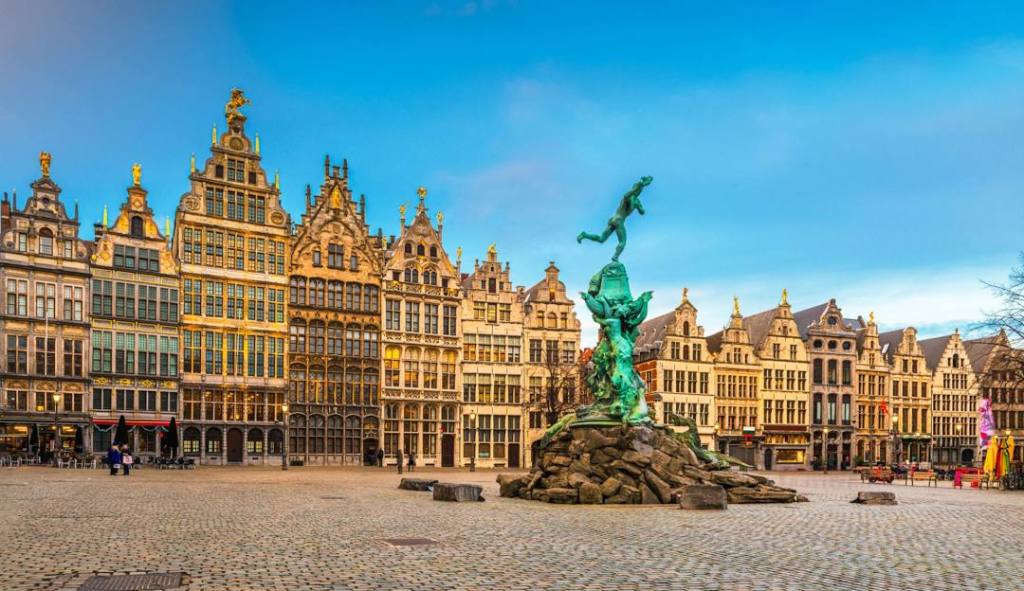
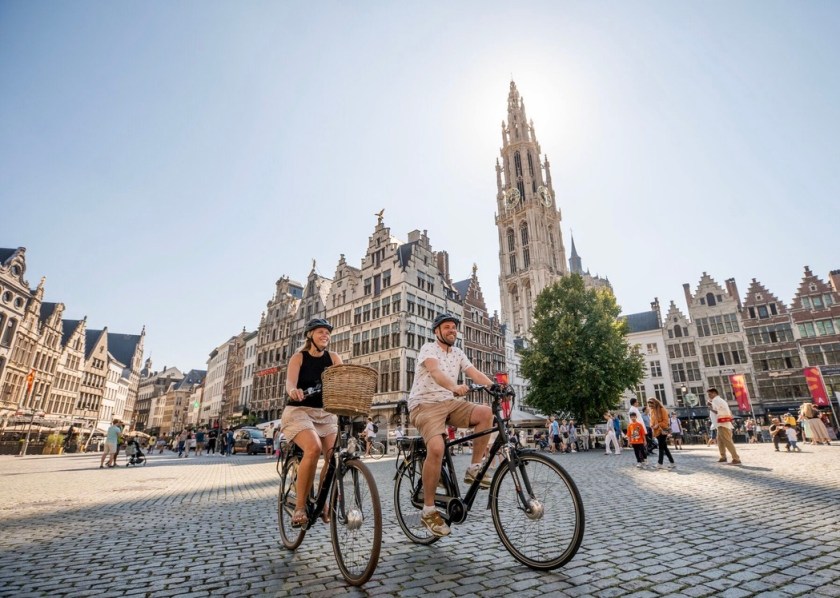
Antwerp’s splendid main square, Grote Markt

British passengers landing at Brussels Zaventem airport must have been cursing the day the UK voted for Brexit.

The passport queue for EU citizens was two-dozen people long and they were sailing through, while the non-EU line stretched for more than 100 metres and was barely moving.

In the train station below, an Englishman complained loudly into his phone: “An hour and 40 minutes to get your passport stamped? Bloody disgrace. I just hope Antwerp’s worth it.”

Antwerp is well worth it, if only to listen to the Cathedral of Our Lady’s carillon, which has a historical link to Cobh and the Belgian bell player who reduced Laurel and Hardy to tears when they visited Ireland 71 years ago.

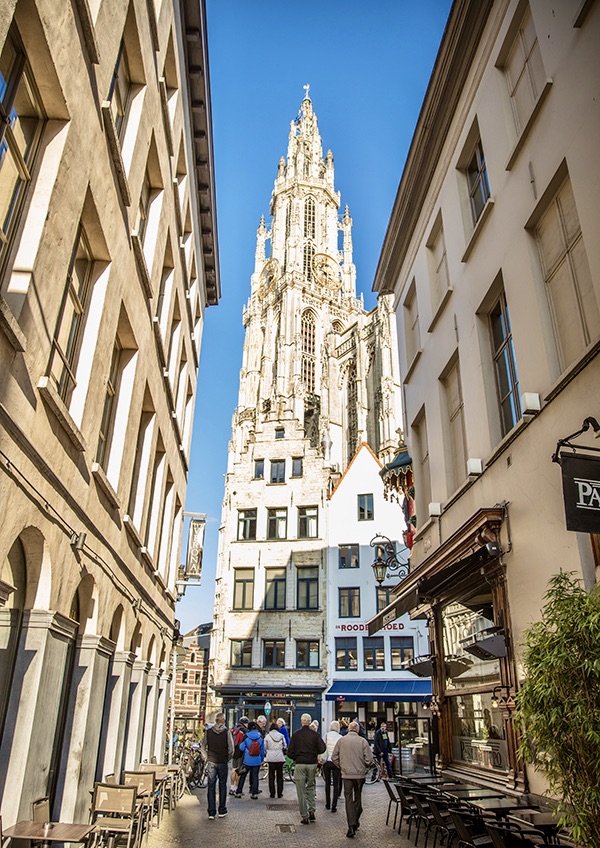
Our Lady’s Cathedral, viewed from one of Antwerp’s many narrow streets

Known as the “highest jukebox in town” because the carillonneurs in the belfry play requests during regular recitals, it rings out a repertoire of popular hits that includes Bohemian Rhapsody, Dancing Queen and Metallica’s Nothing Else Matters.

On January 11, 2016 – the day after David Bowie died – the bells of Our Lady’s paid tribute with a rendition of Space Oddity.

However, on September 9, 1953, long before all those songs were written, it was Stan and Ollie’s instantly recognisable signature tune that sounded from the bells of St Colman’s Cathedral in Cobh to greet them off the SS America from New York.

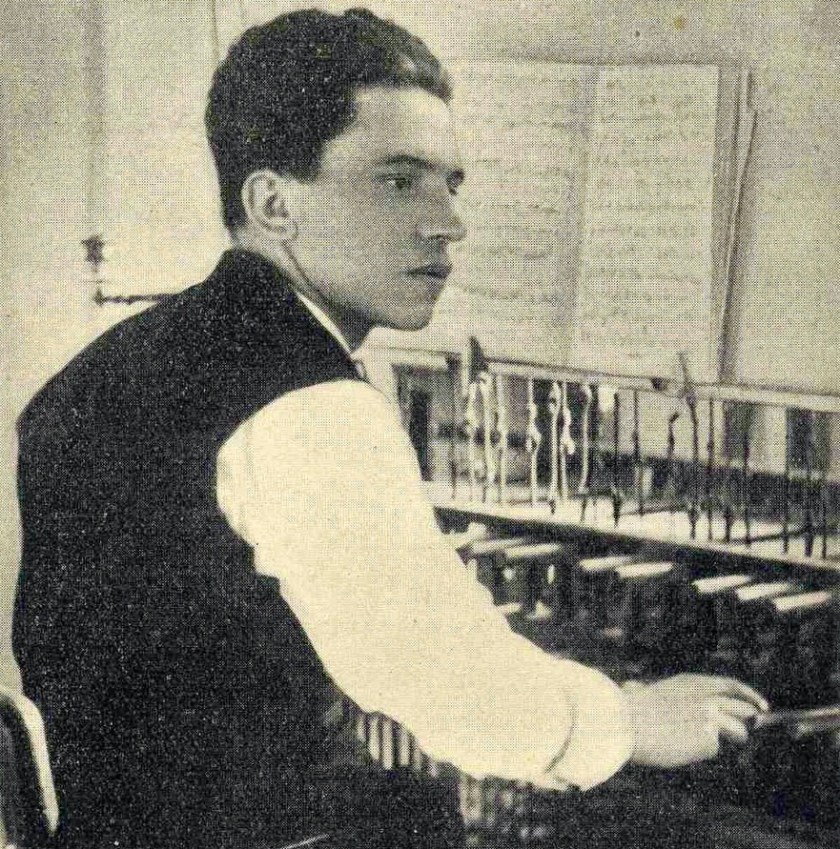
Playing Dance of the Cuckoos that day, 221 steps up in the tower overlooking Cork Harbour, was Antwerp-born Staf Gebruers, who was appointed carillonneur of St Colman’s in 1924 and held the post for 46 years.

A young Staf Gebruers plays the carillon in Our Lady’s Cathedral. Photo courtesy of Adrian Gebruers

As I sat sipping a beer in the afternoon sunshine outside Den Engel (The Angel) bar in the de facto Flemish capital’s medieval main square, Grote Markt, I googled an article about Gebruers’ son that I remembered having read.

Adrian Gebruers, who’s 81, became carillonneur of St Colman’s on his dad’s death in 1970 and is still there. He was 10 when Laurel and Hardy stepped ashore in Cobh, and recalled their hugging and thanking his father for the warm musical welcome.

Some years later, Stan told an interviewer about the scene that day on the quayside.

“There were hundreds of boats blowing whistles and thousands of people screaming,” he said. “And then the church bells started to ring out our theme tune, and Ollie looked at me and we cried. I’ve never forgotten that day.”

Two messers in Dublin GAA tops had clearly forgotten their manners as they plonked themselves down at a table on the Den Engel terrace and sniggered like Beavis and Butthead when one ordered “a pair of bollocks” from a waiter.

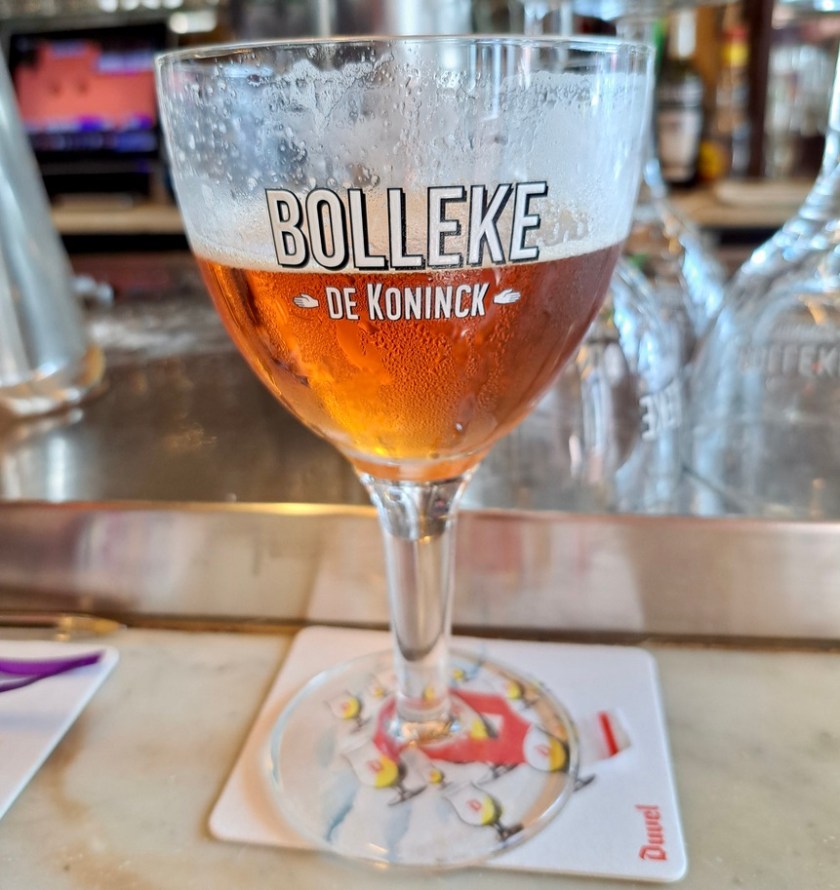
Antwerp’s favourite beer, Bolleke

Top-selling local beer Bolleke is known as “the taste of Antwerp”, and very tasty it is too – slightly hoppy, a tad malty and with a hint of the caramel that gives it its amber colour.

Such nuances were lost on the Dubs, who were more interested in taking photos of the name on the chalice-like glasses to share with their pals than in drinking what was in them.

It was time to take my own photos of a city where the lamp-posts should be padded to prevent visitors doing themselves an injury as there’s as much historical architecture to see and admire by looking up as looking around.

What you won’t see, no matter where you look and despite so many people walking about with cartons of chips – the Belgian snack of choice – is squadrons of dive-bombing, thieving gulls. Maybe they don’t like mayonnaise.

Statue of Antwerp hero Brabo in Grote Markt

Flemish Dutch is the first language of most Antwerp citizens, who slip seamlessly in and out of English, and it’s from an amalgam of two Dutch words, hand (hand) and werpen (throwing), that the city gets its name.

Legend has it that a local giant, Druon Antigoon, demanded an exorbitant toll from anyone who wanted to sail past his fortress on the River Scheldt. If they couldn’t or wouldn’t pay, he chopped off their right hand and chucked it into the water.

Antigoon met his match when Roman soldier Silvius Brabo told him where to stick his toll and engaged him in battle. Brabo won, hacked off the giant’s hand and flung it to the fishes.

That heroic act, which allowed river traffic to flourish and Antwerp to prosper, is commemorated in Grote Markt with a monumental fountain on which stands a bronze statue of Brabo, turned green by the elements, in mid-throw.

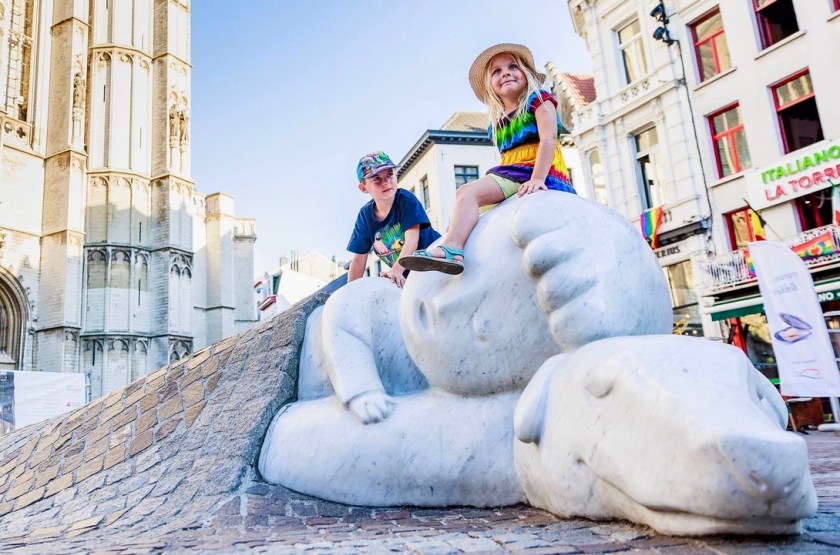
Children play on the Nello and Patrasche statue outside the cathedral

Another statue with a story is that of penniless little orphan boy Nello and his dog Patrasche, cuddled up under a blanket of cobblestones in front of the entrance to Our Lady’s in Handschoenmarkt (Glove Market).

In her 1872 novel, A Dog of Flanders, English author Maria Louise Rame tells how aspiring artist Nello longs to enter the cathedral to see Rubens’ The Descent from the Cross, but it’s on view only to paying visitors.

One snowy Christmas Eve night, he discovers the cathedral doors have been left unlocked and finally gets to marvel at the Antwerp artist’s masterpiece.

However, when the caretaker arrives in the morning, he finds Nello and Patrasche lying together in front of the altar, not asleep but dead, having succumbed to the icy temperature on the coldest night the city has ever known.

The statue is the cutest ever, and if you loiter for a few minutes while tourists listen to the story on their earphones, it’s almost guaranteed you’ll spot someone wiping away a tear, and it’s a good bet they’ll be Dutch.

The magnificent main concourse of Antwerp Central Station, known as the Railroad Cathedral

Antwerp, which is 90 minutes down the track from Amsterdam, attracts nearly two million day-trippers from the Netherlands every year, and those who arrive by train start ooh-ing and aah-ing the second they set foot in the main station’s concourse.

Known as the Railroad Cathedral for its grandiose architecture and exquisite decoration inspired by the Pantheon in Rome, Antwerp Central, which opened in 1905, is considered one of the world’s most beautiful railway stations.

Contemporary English architect Jonathan Tuckey, who once missed his train there and had to wait an hour for the next, which he missed as well as he was so enchanted by his surroundings, described it as “a temple to transport”.

It was while standing under its huge glass dome that I overheard a bubbly tour guide tell her party of Swedish seniors: “The conservative Protestant Dutch love visiting Antwerp because the crazy Catholic Belgians are party animals, ha-ha.”

Far from the chorus of guffaws she was clearly expecting, there was an awkward silence, then a stern-looking woman said: “Excuse me, young lady, but Sweden is a Protestant country – I am a Lutheran minister – and we also are the party animals.”

“Ja, ja – parties with the crayfish,” said her jolly husband, who appeared to be bare-chested and covered in tattoos, until I put on my glasses and saw he was wearing a Paisley shirt.

The fantastical chocolate-making machine in the Chocolate Nation museum

I wandered off and nipped into the Chocolate Nation museum, just across the street, for a quick nosey, but was still there 90 minutes later – it’s great fun.

The main draw, apart from stuffing your face, is a fantastical chocolate-making machine that looks like a cross between a pipe organ and the innards of a giant watch retrieved from a skip.

It reminded me of those ridiculously complicated contraptions dreamed up by cartoonist Heath Robinson to carry out simple tasks like pouring tea or pulling a tooth using pulleys, steam-train whistles and lengths of string.

Belgium is the world’s second-biggest producer of chocolate, exporting nearly €3bn worth every year (Germany is first with €4.5bn), but it’s way down the list when it comes to consumption.

In the top 10, the Swiss are champs, chomping their way through an average of 8.8kg per person per year, the Irish are in third place with 8.3kg and the Belgians are bottom with 6.8kg, probably because they haven’t heard of Fredos.

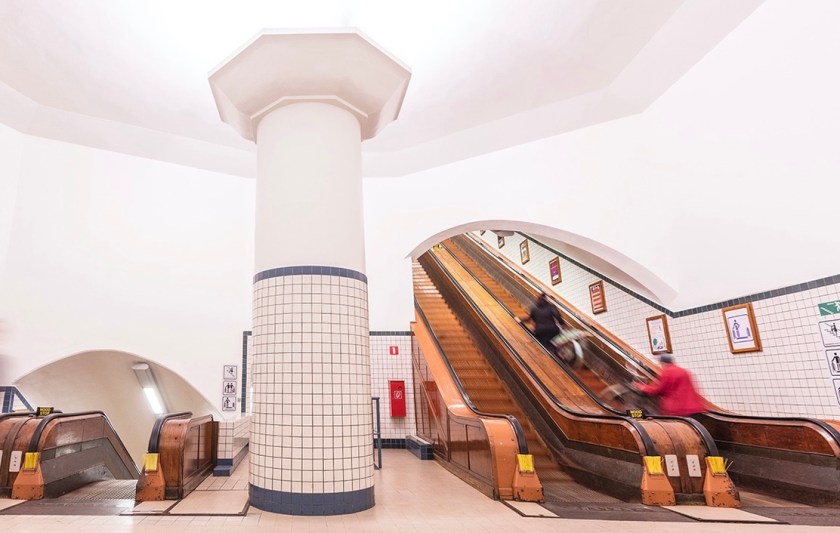
The wooden escalators that lead to the under-river St Anna tunnel that opened in 1933

It’s a 15-minute stroll from Chocolate Nation to one of Europe’s most unlikely visitor attractions. The St Anna pedestrian and cycle tunnel that runs under the Scheldt opened in 1933 and records up to four million crossings every year, an average of nearly 11,000 a day.

But it’s not the tunnel itself that interests tourists – walking 572 metres from one end of a white-tiled tube to the other, just to do it again in the opposite direction, would be high on my list of “Ten boring things to do before you die”.

Rather, it’s the chance to take a leisurely ride on one of the few remaining sets of wooden escalators in the world, which descend 32 metres from street level to the tunnel entrance, where you can simply about turn and go back up.

It’s nowhere near as exciting – or bruising – as that bone-rattling wooden roller coaster in Emerald Park in Co Meath, but it’s quaintly rickety and takes only a few minutes. I had time to kill, so I did it twice, then hopped on a tram and went to see some art.

Antwerp’s Royal Museum of Fine Arts exhibits an eclectic mix of centuries-old paintings and modern art

I spent an hour stroking my chin and cocking my head while looking at the paintings and sculptures on level one of the Royal Museum of Fine Arts Antwerp (KMSKA) and 20 minutes looking for the lift.

In the end, I gave up the ghost and nearly became one while climbing the 142 steep steps to the upper level. Of course, when I got to the top I heard a familiar “Ting!”, and there was the lift, and next to it on the wall was a defibrillator. Handy, that.

Allow at least two hours to view KMSKA’s treasures, which span seven centuries and include works by Van Dyck, Van Eyck, Titian and Rodin and Ostend artist James Ensor.

Modigliani is there, too, as is René Magritte, the Belgian surrealist whose 1954 oil on canvas L’empire des lumieres sold last month for $120 million at a Christie’s auction in New York.

But it’s Rubens’ paintings, some massive, from biblical scenes to landscapes to portraits, that most visitors come to see. The Prado has the biggest collection of his works, but those in KMSKA’s Rubens Gallery show best the range of his genius.

For an insight on his life, head to the nearby Rubenshuis. While the artist’s palazzo-style residence and his studio are closed for renovation, you can enjoy the interactive Rubens Experience and wander in the Baroque garden.

Visit the Rubenshuis to learn about the artist’s life and work and enjoy a stroll in the garden

There are flowers, shrubs and trees galore in Rubens’ garden, but no vegetable patch, so no ingredients to make stoemp, the Flemish cousin of colcannon, England’s bubble and squeak and Scotland’s wonderfully named rumbledethumps.

Steamed mussels is the Belgian national dish, but stoemp is the national passion on a plate, the comfort food Antwerpers abroad miss if they’re away from home for more than a week, like the craving that Ostenders in exile have for shrimp croquettes.

At its simplest, stoemp is a mix of mashed potatoes and bits of boiled carrot (wortelstoemp), often with some fried onion. The ‘busier’ version includes egg yolk and butter, along with leeks, Brussels sprouts, turnip greens, kale and celery. It’s delicious.

Two big dollops of that lot would be a filling meal for a vegetarian, but for meat eaters it’s most commonly an accompaniment for two or three big fat sausages or thick rashers, though many have it with steak or stew.

Beavis and Butthead were well stewed when I spotted them later, criss-crossing Grote Markt like a couple of crabs. I didn’t see the grumpy Englishman from the airport train station again, but I’d say he found Antwerp to his satisfaction.

What he thought of the snack locals love is anybody’s guess, but my money would be on: “Chips with mayonnaise? Bloody disgrace.”

GET THERE

Ryanair and Aer Lingus fly from Dublin to Brussels Zaventem airport, from where it’s a 40-minute train journey to Antwerp Central Station.

STAY

I visited Antwerp as a guest of the Flanders tourism authority (visitflanders.com) and stayed at the Rubens Hotel, behind Grote Markt (hotelrubensantwerp.be).

For more information on the city’s visitor attractions, hotels, restaurants and bars, see visitantwerpen.be

Rubens’ masterpiece ‘The Descent from the Cross’ in Our Lady’s Cathedral

10 things about Belfast that make me smile – and one that makes me mad

Belfast surprises first-time visitors with its wealth of world-class attractions, but as with any city that welcomes tourists, it’s the people who make the place buzz. A little bit of inside information helps to make the experience all the more enjoyable, so here are 10 things (of many) you might not know about the Northern Ireland capital that make me smile – and one that makes my blood boil.

1. Celebrity barman Mick

Michael Cosgrove at work in The Crown on Great Victoria Street

In the 37 years he’s been pulling pints in Belfast’s most famous and beautifully ornate pub, The Crown, barman to the stars Michael Cosgrove has become friends with some of the biggest names in film, TV, music and sport.

Not that he’s given to bragging about his multi-millionaire mates, but he usually starts conversations with: “As I was saying to Brad / Bruce / Shania / Ringo / Rod / Sir Alex just last week…”

A few years ago, Michael, whose favourite film is A Fistful of Dollars, thought it would be a good idea to get gold caps on his eye teeth. He should have known better – by teatime the next day, the regulars had nicknamed him A Mouthful of Money.

The Crown, which dates from 1826 and is owned by the National Trust, is a listed building inside and out, so not one bit of its historical frontage or fittings can be altered – they can’t even change a lightbulb without permission.

There’s talk of sticking a preservation order on Michael too, because the place wouldn’t be the same without the nicest, smiliest barman you could ever wish to meet.

The magnificent and lovingly preserved interior of The Crown in a rare quiet moment

2. What about ye?

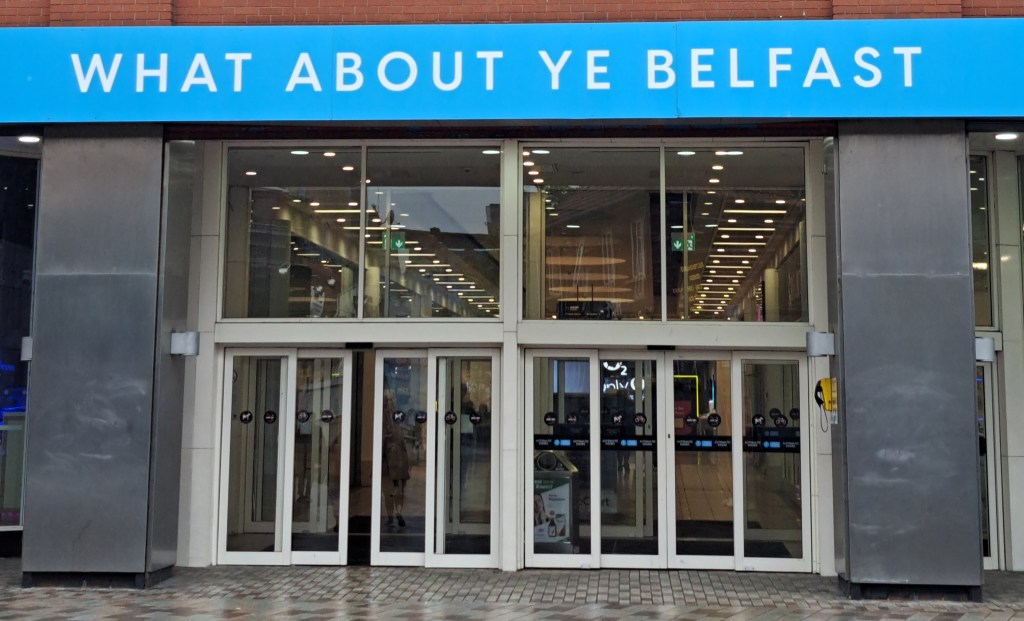
You won’t hear anyone saying “How do you do?” in Belfast, it’s always “What about ye?”

This is the Belfast version of Dublin’s “Howya?” and “Story, bud?” and is usually followed by “mucker” when a man is being addressed and “love” when it’s a woman. (A contrary individual I know refuses to say “Peace be with you” to his neighbours in mass – he says “What about ye?” instead.)

Other everyday Belfast phrases include “Wind yer neck in” (shut up), “Catch yerself on” (stop acting the eejit), “Here’s me – wha’?” (an expression of shocked disbelief) and “Ats us nai” (job done, time for a pint).

Statements always end in “So I am”, “So it is”, “So we are” or something similar, as in: “I’m foundered [freezing] waiting for that bus, so I am, it’s Baltic, so it is, we’re away, so we are – mon love, we’ll get a black cab, so we will.”

By the way, Belfast people really do say: “Whit’s the sichee-ayshin?”

3. Wee this, wee that and wee the other

On the left is a wee pint in Belfast, while on the right is a wee pint in Dublin

Everything in Belfast, no matter the size, is wee, including aged parents – it’s utterly endearing to hear a man in his 50s refer to his minuscule mother as “My wee mummy” and his six-foot-four father as “My wee daddy”.

I once heard a woman in CastleCourt shopping centre ask her little granddaughter: “D’ye need a wee wee-wee, wee love?”

If you return from Santa Ponsa with a bit of a tan, you’ll be asked: “Were ye away on yer wee holidays?”

“Wee buns” has nothing to do with scones, it means easy-peasy, as in: “That crossword in the Belfast Telegraph this mornin’ was wee buns, so it was.”

Sometimes “wee” backfires. I know a barman in Dublin who, when asked by a visitor from Belfast for a “wee pinta Guinness”, presented him with a shot glass of the black stuff with a perfectly formed head and said: “There ye are, now – a wee pint.”

4. Bittles bar

Soon-to-retire bar owner John Bittles is very particular about who and what he will serve in his pub on Upper Church Lane

Owner John Bittles has been described as the grumpiest man in Belfast (even grumpier than Van Morrison) and is often compared with Basil Fawlty, but those who know him well put his bluster down to mischief. Others aren’t so sure.

If you want to see a human volcano erupting, ask Mr Bittles for a pint of tap water – and stand well back.

“They’re walking in – complete strangers, randomers – and telling me they want a pint of water,” he rants. “Then there’s the coffee drinkers and the Coke drinkers and the half-pint drinkers. Well, I’ve had enough. I can’t take it any more. I’m retiring.”

After 50 years in the bar trade, he’s moving at the end of the year to Donegal, where a shopkeeper recently got a taste of what’s to come. John was in buying groceries and remarked to the girl behind the counter that the windows could do with a wipe. “Oh, really? Well, wipe them yourself,” she said, and that’s exactly what he did – there’s a video of him busy with a soapy sponge to prove it.

5. It’s the way they tell them

Belfast-born Frank Carson put his home city on the comedy map

My all-time favourite Belfast joke, told by the late, great Frank Carson (see No 8, below), is about two ducks flying over the city, and one says: “Quack, quack.” And the other says: “I’m going as quack as I can.”

My second-favourite concerns the family taking their new infant to be christened, and the priest asks the daddy: “And what are ye going to call this beautiful baby boy?” And the daddy says: “Nathan.” And the priest says: “Ah, now, ye’ll have to call him somethin’.”

And then, of course, there’s the auto­matic response from every Belfast person when asked about the ill-fated ‘unsinkable’ Titanic, which was built by Harland & Wolff: “Well, it was all right when it left here.”

Speaking of Harland & Wolff, the shipyard’s two giant yellow cranes, Samson and Goliath, bear the big black initials “H & W” on their gantries. All over the world, gullible people who have visited Belfast believe the letters stand for “Hello & Welcome”, because that’s what they were told, probably in a pub.

The “H & W” initials on the Samson and Goliath cranes stand for Harland & Wolff – or do they?

6. Billy Scott’s black-cab tours

Billy Scott takes visitors on magical history tours (touringaroundbelfast.com)

Billy is a natural storyteller, and half the stories he tells are true. The other half should be taken with a pinch of salt, but they aren’t half entertaining.

No visit to Belfast is complete without a magical history tour in the back of Billy’s black cab, where passengers learn that everything that was worth inventing – including Milk of Magnesia – was invented in the city by the Lagan.

His most popular yet poignant itinerary (no tall tales on this one) takes in the loyalist and nationalist neighbourhoods that witnessed some of the worst atrocities of the Troubles.

But even as Billy recounts the horrors that were inflicted on both communities during 30 years of murderous sectarian violence, there’s still time for a welcome moment of Belfast humour to lighten the mood, if only for a few seconds.

As he drives past the Cupar Way peace wall (you can get out and write a message on it) after visiting the loyalist Shankill Road, he tells his passengers: “Now folks, we’re about to enter the nationalist Falls Road and I’m a Protestant, so for the next hour don’t call me Billy, call me Liam. OK?”

7. Sawers deli

Sawers deli on College Street has become a visitor attraction

When you’re running low on caviar, the hottest sauce on earth or Italian Drunken Bastard cheese, this Aladdin’s Cave of exotic foodstuffs is the place to stock up.

If Mrs Bucket lived in Belfast (on Malone Road, of course), she would buy all the charcuterie, cheeses, quiches, chutneys and pickles for her candlelight suppers from Sawers and make sure the neighbours knew where she’d been shopping.

The deli counters leave customers wide-eyed and slavering, such is the mind-boggling and mouth-watering array of locally produced and imported foodstuffs on display.

If it’s a nice day, Sawers has everything you’ll need for a picnic in Botanic Gardens, or if you just want to sit outside the shop and watch the world go by, the freshly made sandwiches are the best on this island.

My favourite is the cheese and onion ciabatta stuffed with shredded Irish BBQ roast beef, mature Irish cheddar, rocket and red onions dribbled with spicy chipotle sauce. It’s called the Belfast Alligator, but don’t be tempted to say “And make it snappy” when you order one – they’ve heard it a million times.

8. The Executive Barbers

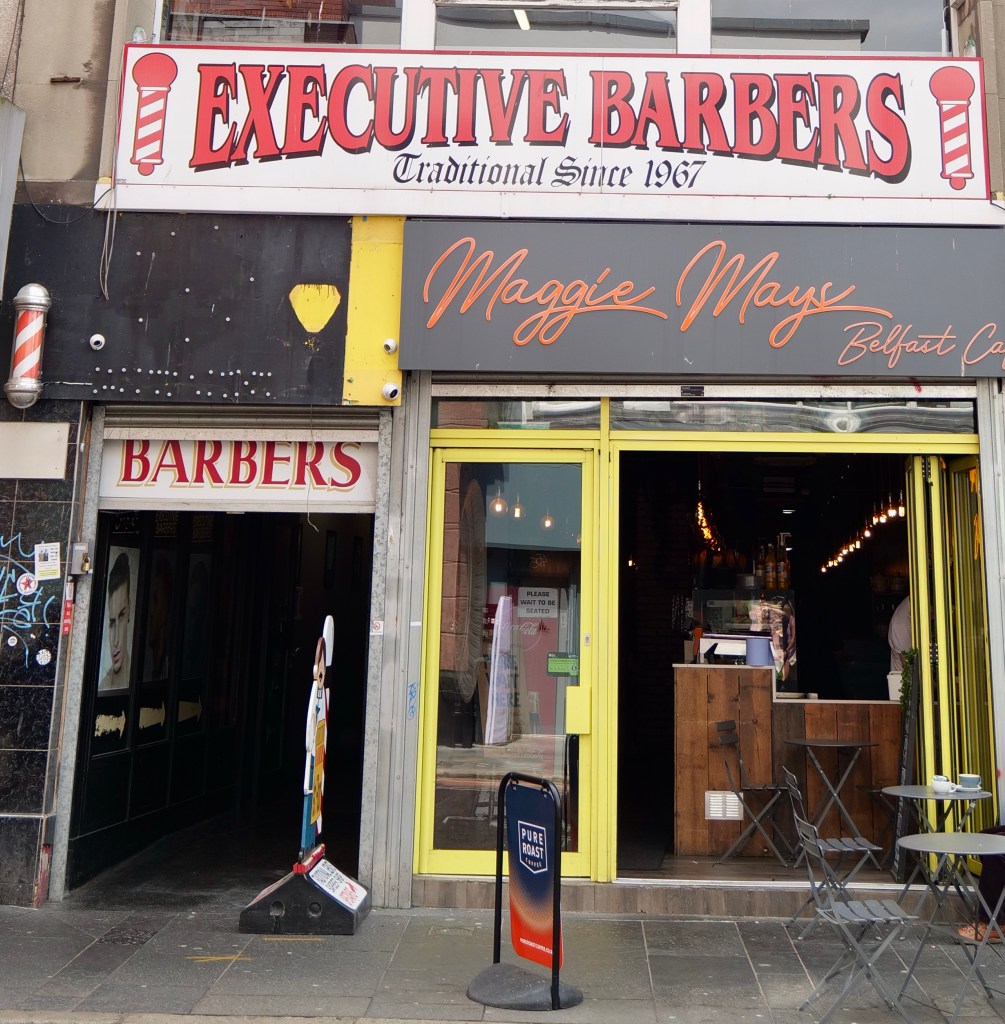
Jokes and gossip are guaranteed when you visit the Executive Barbers on Castle Street

Frank Carson (see No 5, above), who lived in England for decades, was a regular customer on his trips back home to Belfast, and the barbers will tell you he borrowed all his best gags from them.

One of the lads said: “Frank would come in for a haircut, which should be a 15-minute job, but he’d still be here an hour later, doing his sit-down comedy routine, and we’d all be in stitches. His ears were nearly in stitches a few times as well – you shouldn’t make people laugh when they’ve got scissors in their hand.”

Established in 1967, this is a no-nonsense traditional gents’ barbers where a short back and sides costs £17 (€20), which includes all the latest Belfast gossip and at least half-a-dozen jokes.

Here’s one I came away with when I went in for my two-monthly trim the other week. A guy’s strapped to the electric chair and the prison officer asks him if he has any last requests before he throws the switch, and the guy says: “Aye, I’m scared, will ye hold my hand?”

9. The Ulster fry

You’ve heard of the Bermuda Triangle – well, that’s the Belfast potato bread triangle

This is the Northern Ireland version of the full Irish, but to bean, or not to bean, that is the question. No way, I say, and last year’s Ulster Fry world champion Stephen McDonald, the head chef at McKee’s Country Store and Restaurant in Newtownards, agrees, so there.

Both cooked breakfasts-cum-hang­over cures appear very similar – there’s the fried egg (never scrambled or poached), sausages, bacon, white pudding, black pudding, half a grilled tomato, maybe some mushrooms and optional baked beans, plus toast on the side.

But look again and you’ll see the magic ingredient that lifts the Ulster fry head and shoulders above its southern cousin – potato bread triangles. When manna from heaven rained on Moses and the Israelites in the desert, it was only because God had run out of potato bread.

The best Ulster fry in Belfast is served in the three Maggie May’s cafes – on Castle Street, Botanic Avenue and Malone Road – and Graffiti on Ormeau Road.

10. Belfast Grand Central Station

The new £340 million Belfast Grand Central Station opens in autumn 2024

The Enterprise train from Dublin Connolly used to arrive at Belfast Central, which was a bit of a misnomer as you then had to walk 20 minutes into town or jump on a bus, so after years of complaints from passengers it was renamed Belfast Lanyon Place.

The new Belfast Grand Central Station, which is only weeks away from completion, really is central, so there will be no excuse for moaning when you step off the train from Dublin in future.

Meanwhile, and until “early autumn”, when the new rail and bus hub opens, the Newry-Belfast-Newry leg of the journey between Connolly and Lanyon Place on the Enterprise will be covered by a substitute coach service.

That’s a short-term inconvenience, but you can’t please everybody. A wag who spends half his days in The Crown bar and the other half in McLean’s bookies next door doesn’t like the name of the fancy new transport facility: “Belfast Grand Central, ye say? If ye ask me, they’re getting ideas above their station, so they are.”

…and one thing about Belfast that makes me mad

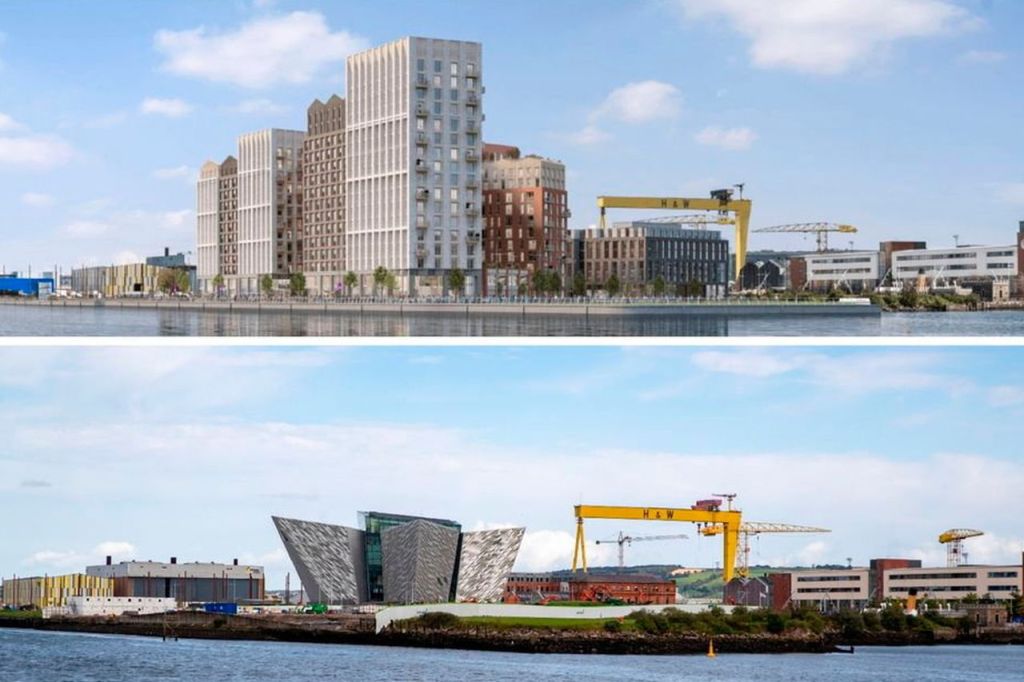
Above is how Titanic Belfast used to look from across the river. The top image shows how the currently under-construction development will obscure it from view

Titanoraks (brilliant name) come from all over the world to visit the multi-award-winning Titanic Belfast visitor attraction. Its exterior is fantastically futuristic and the experience inside is fascinating.

However, somebody thought it would be a good idea to build a massive apartments complex on land right beside it, meaning the view of the city’s No 1 tourist draw from across the river will soon be obscured.

The new waterside development will include 627 build-to-rent and 151 affordable homes across three towers of between 11 and 17 storeys high. Titanic Belfast is six storeys.

The city is growing and new homes are, of course, badly needed, so in that respect the new project is a good thing. However, there’s plenty of development land in Belfast – couldn’t they have found somewhere else?

I saw Titanic Belfast taking shape from when it was just a huge hole in the ground until it opened on March 31, 2012. It was, and has remained, a sight to behold, and it will be a shame to see it disappear.

*For more information on Belfast’s visitor attractions, hotels, restaurants and bars, see visitbelfast.com and discovernorthernireland.com

European Green Capital Valencia is a breath of fresh air

Communities worldwide long to be like Spain’s third-biggest city, where citizens take their eco-conscious credentials seriously – and it shows.

Turia Garden, which runs through the centre of Valencia, occupies the former course of the Turia river

Travel agent Ciara Mooney visited Valencia for a long weekend nearly four years ago, fell in love with the place and decided to split her time between there and Celbridge, Co Kildare.

The beauty of working remotely from her sunny terrace in Spain’s third-biggest city isn’t lost on Ciara, the founder and managing director of Freedom Travel and Solo Travel.

“I consider myself the luckiest girl in the world,” she says. “I can just pack some clothes and my laptop and nip to and fro. I have to pinch myself sometimes – it’s like living a dream.”

With 12 return flights a week to Valencia from Ireland – six from Dublin, four from Cork and two from Belfast – Ciara can hop on a plane at the drop of a sombrero if she’s needed back in the office.

However, for the foreseeable future she’s more than happy to spend a few weeks at a time in this year’s European Green Capital, where Malvarrosa beach is a 10-minute walk from her house.

The golden sands of Malvarrosa beach stretch for two kilometres

Close, too, is the Turia Garden, a 9km traffic-free park that occupies the former bed of the diverted Turia river and is the envy of city-dwellers worldwide.

When local authorities from Alaska to Adelaide look for ways to improve life for their citizens, they send delegations to Valencia to see what can be achieved, and they leave mightily impressed.

On Sundays, Ciara might cycle the 10km to El Palmar, the little town at the heart of Albufera Natural Park, where the freshwater lake is the biggest in Spain at 27 square kilometres, yet only 1.5 metres deep.

All of the dozen or so restaurants in El Palmar take pride in serving authentic paella, which originates there and contains five simple ingredients – rice, chicken, rabbit, green beans and snails.

Authentic Valencian paella contains five simple ingredients, with not a shrimp in sight

The dish dates from the 18th century and was the main meal of the day back then for the families of eel fishermen and those who worked in the rice fields that are irrigated by the lake and cover 7,400 acres – nearly three times the size of Dublin Airport.

While the photogenic seafood and shellfish paella served throughout the rest of Spain is a tasty TikTok and Instagram star, Valencians look on it with disdain, dismissing it as “arroz con cosas” – “rice with stuff”.

El Palmar is a popular bus excursion from the city, with visitors boarding small passenger boats for a glide along the channels that are lined by tall rushes and lead to the lake, which is separated from the sea by a massive sandbar.

Tourists enjoy a boat trip along the channels of Albufera Natural Park

The natural park is home to more than 300 resident and migratory bird species, including flamingos. While pretty, they’ve become a bit of a pest by trampling newly sown rice fields.

As the pink-plumaged waders are protected, there’s little the farmers can do but fire blank shotgun cartridges into the air to scare them off while seeking compensation from the local government for their losses.

Birds of a different colour of feather flock together in the city centre, where squadrons of squawking green monk parakeets flit between the orange trees.

Unlike other monks, this lot – the descendants of released or escaped pets – have never heard of a vow of silence and keep up a cacophony from dawn to dusk that amuses tourists but drives night-shift workers nuts when they’re trying to sleep.

Valencia is known as the City of Oranges, and for good reason

There are 10,000 orange trees in Valencia’s streets, squares and parks, and they produce 400 tonnes of fruit every year, but don’t be tempted to try one that has fallen to the ground – they’re bitter and good only for marmalade and fertiliser.

In late January, children delight in watching tractors with special attachments shaking the tree trunks, which causes the fully ripe oranges to drop into huge upside-down umbrella contraptions.

This not only keeps the streets free of a mushy mess, it greatly reduces the number or personal injury claims from people who come a cropper by slipping and breaking their wrists.

The sweet oranges for which the city is famed are grown on the outskirts, and it’s from these that the freshly squeezed juice that goes in to agua de Valencia is made.

Cafe de Las Horas serves the best agua de Valencia in the city

As well as the juice, the city’s favourite fruity concoction with a kick contains vodka, gin, cava and sugar, and the best by far is served in Cafe de Las Horas, in a side street off Plaza de La Virgen in the old town.

Owned and run by long-time Valencia resident Marc Insanally, from English-speaking Guyana on the north coast of South America, it’s Valencia’s most eye-poppingly ornate bar and Ciara’s favourite spot to take visitors from home.

“When I was still new in town, a Spanish friend introduced me to Cafe de Las Horas one night and I couldn’t believe how beautiful it was, all red velvet drapes and chandeliers and artworks on the walls and a starry sky painted on the ceiling,” she says.

“We were sitting chatting with Marc – he’s an absolute dote – and the bar was packed, but it went all quiet when this young guy stood up and started to sing an aria from Carmen. What a voice – by the time he finished, I was in tears.

“Another night, a classical guitarist began playing and blew everybody away. Tears again! You just never know what’s going to happen in there. I can’t wait to show the place to my team in Celbridge when they come over for our Christmas party.”

Ciara has already booked a couple of tables to avoid the long queue that starts to form outside in the early evening, such is Las Horas’ popularity.

“I think we’ve become a victim of our own success,” says Marc. “It’s a bit like that line from Jaws – we’re going to need a bigger bar.”

Horchata, made from ground tigernuts, is a protein-rich pick-me-up

While agua de Valencia is the city’s cocktail of choice, horchata is the sweet, non-alcoholic drink on which every local was weaned.

Available in most cafes and from street carts in the old town, this milky-white and protein-rich beverage is made from ground tigernuts and served ice-cold with a long, sugar-coated sponge cake finger for dipping.

Horchata is the perfect pick-me-up when energy levels start to sap while walking or cycling around in the sunshine – Valencia gets 300 blue-sky days a year and mid-afternoon temperatures reach 30C-plus in July and August.

There are plenty of places of interest in which to escape the heat, though.

The magnificent ceiling fresco in the parish church of St Nicholas

In the 13th-century parish church of St Nicholas, visitors risk cricking their necks while marvelling at the baroque fresco on the ceiling, which depicts the life of the saint and has earned comparisons with the Sistine Chapel.

Nearby, in one of the chapels of the Cathedral-Basilica of the Assumption, which also dates from the 13th century, a chalice reputed to be the Holy Grail has been used during masses celebrated there by Popes Saint John Paul II and Benedict XVI.

The Hortensia Herrero Art Centre in the renovated 17th-century Valeriola Palace is home to more than 100 contemporary works by four dozen world-renowned artists, including David Hockney, Roy Lichtenstein and Dublin-born Sean Scully.

This is the private collection of billionaire philanthropist Herrero, the vice-president of supermarkets chain Mercadona, which grew from a neighbourhood butcher’s shop that opened in Valencia in 1977 and now operates 1,600 stores all over Spain and Portugal.

Touch the figures and they start knocking lumps out of each other. Keep touching and war will break out

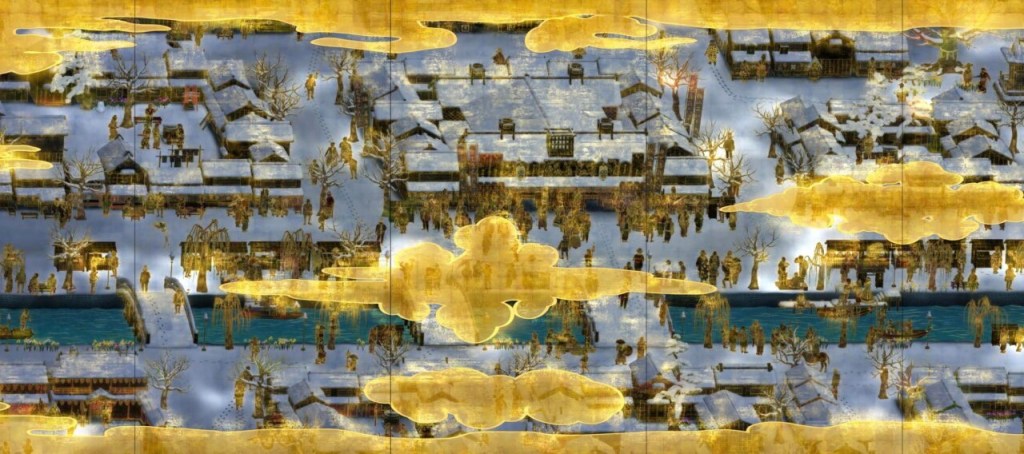
Among the art on view is teamLab’s The World of Irreversible Change (2022), a remarkable interactive digital installation depicting everyday life a long time ago in an unidentified Oriental city.

The wall-mounted work is populated by hundreds of animated figures going peacefully about their business, but wave a hand in front of a small group and they begin arguing for a few seconds.

The fun doesn’t stop there. Touch the figures and they start knocking lumps out of each other. Keep touching (which is frowned upon) and the fighting will spread, a lengthy war will break out, the city will burn down and no one will be left alive.

That installation alone is worth every cent of the €9 entrance fee, but I would gladly pay €90 to watch the security staff having nervous breakdowns trying to prevent a visiting class of junior infants from poking the little people on the screens.

Detail from The World of Irreversible Change in the Hortensia Herrero Art Centre

But those three must-sees are indoor attractions. 

Valencians love to live their lives outdoors (there are 200km of cycle paths), and they take climate awareness seriously, down to the smallest detail – when offered a business card, they snap a quick photo of it and hand it back, to reduce waste.

Most street lighting is solar-powered, and many kerbside lamp-posts also serve as electric vehicle charging points. There’s even a catchy song about what goes in to which coloured bin that children learn in pre-school and then teach to their parents.

Far from being a Johnny-come-lately, Valencia has for decades been a front-runner in promoting a clean and healthy environment, but those eco-conscious credentials were born out of catastrophe.

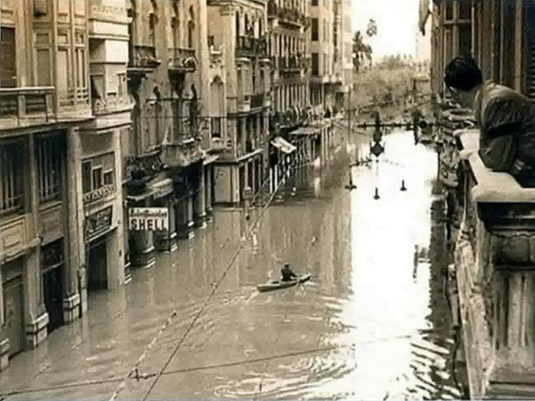
The catastrophic flood of October 1957 left 75pc of Valencia under water

On October 14, 1957, the Turia, which flowed through the centre to the sea, burst its banks after three days of torrential rain, leaving 75pc of the city under water (five metres deep in some areas), destroying 6,000 homes and killing at least 80 people.

In 1964, work began on a massive project to divert the river around the western outskirts, and it was completed nine years later.

The authorities drew up plans to turn the dry riverbed into a motorway system, but outraged citizens protested under the rallying cry “We want green!” and people power eventually won the day.

It was a long and hard-fought battle, but by the end of the 1970s, legislation to create a park was passed and Turia Garden opened to a jubilant public in 1986. They’ve been making full use of it – and making other cities jealous – ever since.


GET THERE

Ryanair flies from Dublin, Cork and Belfast to Valencia Manises airport, from where buses, taxis and Metro trains connect with the city centre, 8km away.

STAY

The SH Colon hotel in the city centre has room rates from €185 a night B&B for two people sharing, depending on the season. See hotelcolonvalencia.com
For further information, see visitvalencia.com and spain.info
Irish travel agent Ciara Mooney at the City of Arts and Sciences, at the sea end of Turia Garden

Cycling in Amsterdam is a Dutch of class

The captivating capital of the Netherlands is a joy to behold, whether you do your sightseeing by boat or bus – but a bike is best

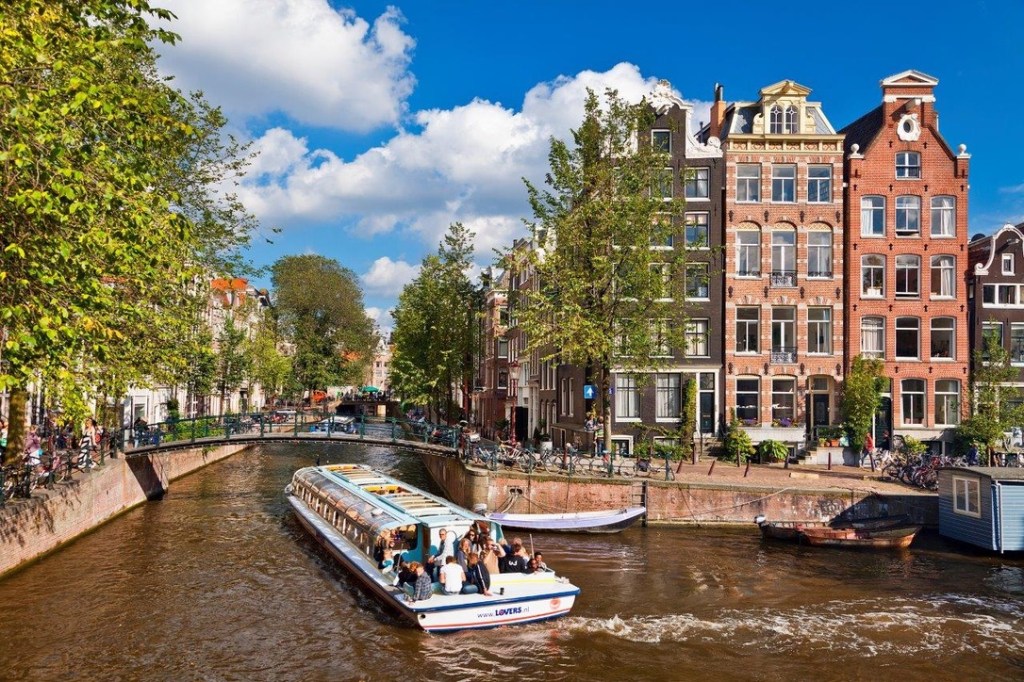
Amsterdam’s canalside scenery is a photographer’s dream

On the menus in Amsterdam’s so-called coffee shops, the many types of wacky baccy are graded for strength from “Pleasant buzz” to “Knocks you out”.

But nothing on the Richter scale for reefers – not even the super-potent Puff Puff Pass Out – is as intoxicating as the city’s canalside scenery. It’s eye candy.

Cannabis lollipops, however, aren’t get-you-high candy – they’re quirky, drug-free souvenirs, as any honest local who isn’t flogging them from a market stall will tell you, so save your money and don’t be a sucker.

Just about everybody in the Netherlands can speak English before the stabilisers come off their bikes, but visitors without a word of Dutch will find the language easy to understand in certain situations.

On trams, passengers press their travel cards against a reader that bears the instruction “Houd je kaart hier”. If someone’s talking too much, they’re told to “Houd je tong”. Feeling frightened? “Houd mijn hand”. Romantic? “Geef mi een kus”. More than romantic? “Waar is de rood licht district?”

‘Coffee shops’ offer a dizzying selection of cannabis

It’s hard to rile the laid-back Amsterdammers unless you commit the mortal sin of stepping into a cycle lane without looking both ways first.

At worst, you might get a belt off a bike, but usually you’ll get a tirade of abuse along the lines of “Ga uit de weg, idioot!” to add to your collection of useful everyday phrases.

Everywhere you go, you’ll hear a ringing in your ears – it’s not tinnitus, it’s the incessant sound of cyclists ting-tinging their bells, warning you to get back on to the pavement where you belong.

Traffic-slowing bumps on the road are considered hills in Amsterdam, which is home to 814,000 people who between them own 881,000 bikes – four times the number of cars – and cycle two million kilometres every day.

That’s the equivalent of two-and-a-half return trips to the moon, to which many coffee shop customers appear wired.

If you hire a bike, you’d better remember where you parked it

Anyone keen on seeing the city’s sights from a saddle should note that cycling is not without incident: every year, 13,000 bikes are fished out of the canals and 100,000 are reported stolen.

When the Nazis began their retreat from the Netherlands in May 1945, German soldiers jumped on the first set of wheels they could find and pedalled furiously back to the fatherland.

This gave rise to the popular chant still heard at football matches between Dutch and German teams: “My granny wants her bicycle back!”

Modern-day thieves apparently don’t stop there – during my visit a few weeks ago, I nearly rode into a lamppost when I spotted a Zimmer frame padlocked to the railings outside a church.

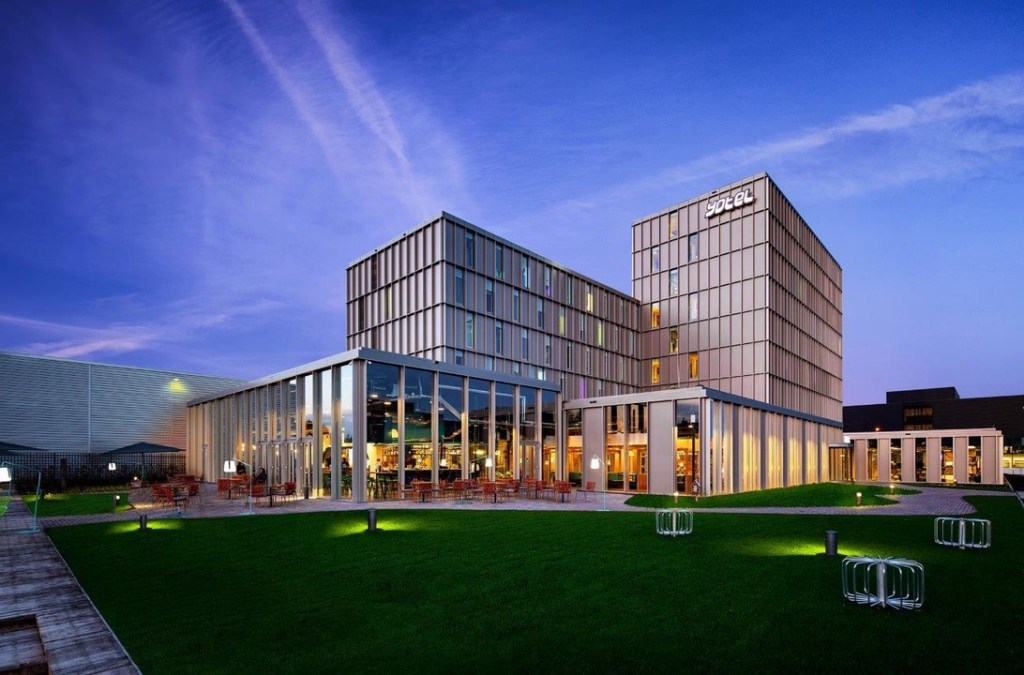
Yotel Amsterdam, where the happy staff mean guests are happy too

My bike came courtesy of the new four-star Yotel Amsterdam beside the Tolhuis canal where I stayed and will do so again thanks to many factors, foremost being the charming multinational and multilingual young staff who clearly love their work. A happy team means happy guests.

To get to Yotel, hop off the airport train at Central Station, step out the back and on to the free ferry to Buiksloterweg (four minutes across the water) and it’s a 15-minute stroll or a five-minute cycle from there.

The hotel is in the trendy Amsterdam North district, near enough to the city centre for convenience, but in a quiet spot with no hordes of half-cut hens and stags to disturb your sleep.

Importantly for someone like me who gags at the slightest whiff of ganja, Yotel is close to plenty of craft ale and cocktail bars and cosy restaurants and cafes, many with waterside terraces where dope is a big nope.

When you’re heading into town to see the sights, park your bike at the ferry and collect it on the way back, or wheel it on board and cycle along the tree-lined canals, shouting “Ga uit de weg, idioot!” at tourists who dare to cross your path.

A boat tour of Amsterdam’s canals can be the highlight of a visit to the city

Amsterdammers take exception to their city being described as the “Venice of the north” when it has umpteen more waterways and four times as many bridges – 160 and 1,700 respectively.

“No, no – Venice is the Amsterdam of the south,” said the skipper of one of the scores of sightseeing boats that leave from outside Central Station and ply the canals from early morning until dusk, except during especially harsh winters when they freeze over and people go ice skating.

Three million boat tour tickets are sold each year, and they’re worth every cent of the average €16 price.

The operators have had decades to get the formula right – route, sights, informative and entertaining commentary – and a 75-minute cruise, especially on a sunny day, can be the highlight of a long weekend.

It’s the best way by far to view the lovingly preserved historical and colourful buildings for which Amsterdam is famous and which have made millionaires out of fridge magnet manufacturers.

Most of the canalside streets have knee-high metal barriers at the water’s edge to prevent cars from toppling in. A smart move by the city authorities, you might think, but no: the barriers are installed and maintained by shrewd motor insurance companies that believe prevention is better than a payout.

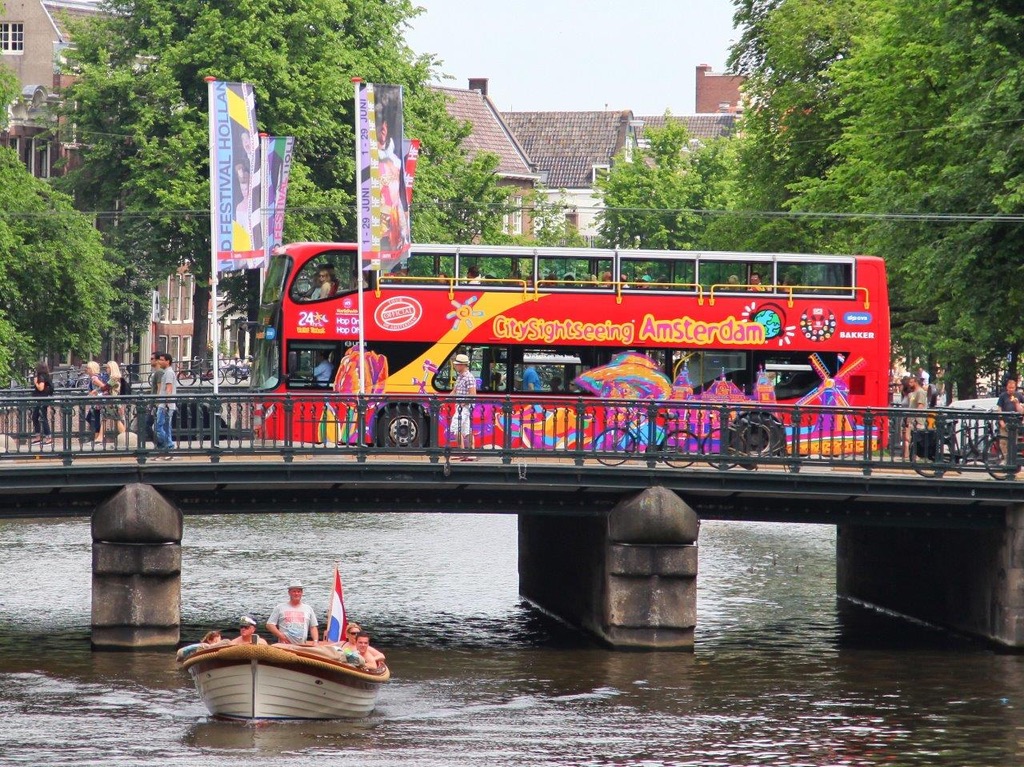
Tour the city on a hop-on, hop-off bus

For those who aren’t happy on the water, the hop-on, hop-off tour buses that drop and pick up passengers at all the main attractions provide an ideal sightseeing alternative – it’s like having your own private driver on call.

The buses have to skirt the Red Light District, which is in De Wallen, the city’s oldest neighbourhood and mostly a maze of narrow streets and alleys.

Women have been selling sex here since the 14th century, but prostitution didn’t become legal until 2000. Today, prostitutes have the same employment rights and protections as any other worker in the Netherlands and since 2011 have paid tax on their income.

However, there’s incontrovertible evidence that many of the young foreign women engaged in the sex industry are the victims of trafficking and do it under threat of violence from the criminals who control them.

That’s a sobering thought for anyone tempted to avail of their services.

The Red Light District

Eighty-one-year-old identical twins and former prostitutes Martine and Louise Fokkens, who are local celebrities, reckon they entertained around 355,000 men between them during the 50 years they worked in the Red Light District.

The sisters, known affectionately as De Ouwe Hoeren (The Old Whores), retired in 2013. In an interview, Louise said arthritis forced her to call it a day “because I couldn’t get one leg over the other”.

The delightful pair have seen it all and often appear on TV chat shows to share saucy and sometimes heartbreakingly sad stories of life on the game and all the dangers it involves.

While they will obligingly pose for pictures during their occasional strolls through De Wallen with their little dogs, taking photos of the scantily-clad women in the red-lit windows is strictly forbidden.

Anyone caught sneaking a snap will be asked by burly security guards to delete the offending images from their phones or cameras. Protest too much and those devices might ‘accidentally’ end up in the canal.

The Red Light District’s days may be numbered because of increasing complaints from neighbours fed up with the late-night rowdy behaviour of tourists.

In response, the city council has proposed developing an out-of-town “Erotica Centre” with 100 hotel-type rooms, communal rest areas and clinical facilities for sex workers.

“People come to Amsterdam to see the Red Light District – but you wouldn’t catch me there”

The plan has widespread support, but not everyone is convinced, as I learned when I watched the All-Ireland hurling final in The Blarney Stone (a sign outside reads “This pub may contain nuts”).

“It’s typical of the council, moving a problem from one place to another,” said a Dutch customer who was shouting for Kilkenny, simply because he likes the ale.

An Englishman who wanted to watch the cricket but was soon won over by the action from Croke Park disagreed, saying: “Nah, mate, it’s a tourist attraction. People come to Amsterdam to see the Red Light District – but you wouldn’t catch me there.”

The pub quickly filled up with Irish visitors and expats and I quickly filled up with Dutch courage, so much so that near the end of the game when one big guy stood up and blocked my view of the telly, I nearly shouted: “Ga uit de weg, idioot!”

That’s when I remembered my bike was chained up outside and decided it would be wise to leave it there and collect it in the morning – I didn’t want it to be one of the 13,000 that are fished out of the canals every year.

Five fab attractions

Daredevils can have a go on the Over The Edge Swing

Over The Edge Swing: On the roof of the A’Dam Lookout tower, 100 metres up, is a seat that swings out over the edge. It’s scary, but great fun. For €24.50 you can visit the 360-degree observation deck, have a go on the swing (if you dare) and enjoy a virtual rollercoaster adventure on the Amsterdam VR Ride. See adamlookout.com

Heineken Experience: Various tours of Heineken’s old HQ are available, but go for the interactive Heineken Tour + Rooftop option (€27.50). See heinekenexperience.com

Anne Frank House: A visit to the canalside house where Jewish teenager Anne and her family hid for two years before being betrayed to the Nazis is a sobering experience, but one of those things you feel you have to do. Online tickets only (€16), which are sold by specific time slots. See annefrank.org

Van Gogh Museum: See many of the artist’s best-known masterpieces and learn about the life of this troubled genius. A fascinating attraction. Entry €20. See vangoghmuseum.nl

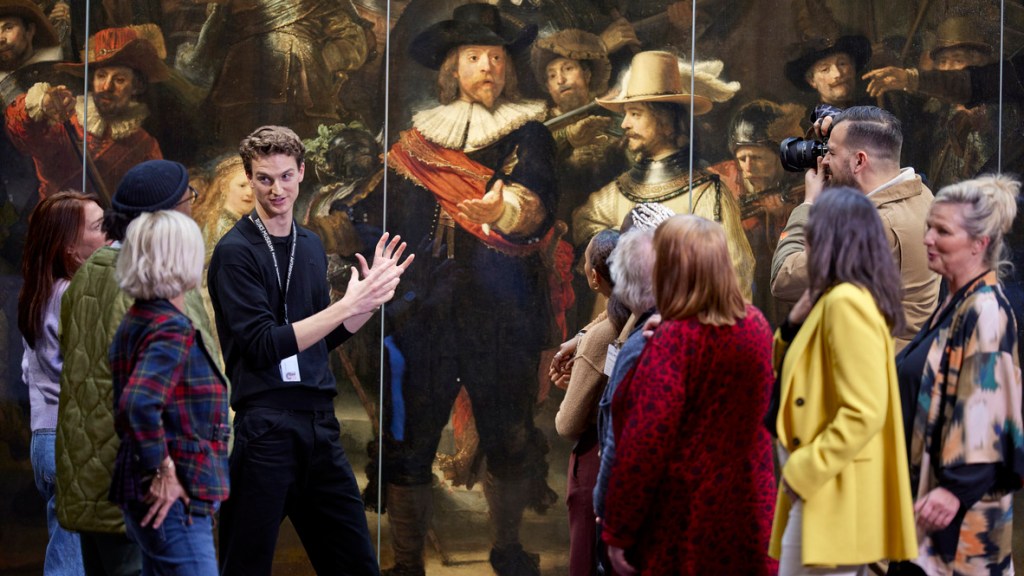
Rijksmuseum: There are thousands of wonderful works of art in the Rijksmuseum, but the one visitors flock to see is Rembrandt’s The Night Watch, and it alone is worth the €22.50 entrance fee. See rijksmuseum.nl

Rembrandt’s ‘The Night Watch’ is the main attraction at the Rijksmuseum

GET THERE

Aer Lingus and Ryanair fly several times a day from Dublin to Amsterdam Schipol, from where trains depart every 15 minutes for Central Station. The journey takes around 17 minutes and a one-way adult ticket costs €5.90.

STAY

Yotel Amsterdam offers considerable savings when you make your reservation directly with yotel.com

GET AROUND

Buy a city card for free public transport and free admission to many attractions – it will quickly pay for itself. For more on visiting Amsterdam and buying a city card, see iamsterdam.com

Malta, the tiny island that promises fun in the sun for all ages

Far from being the pensioners’ paradise many people believe them to be, the sun-kissed and fun-packed Maltese islands are popular with everyone from toddlers to former Taoiseach Bertie Ahern
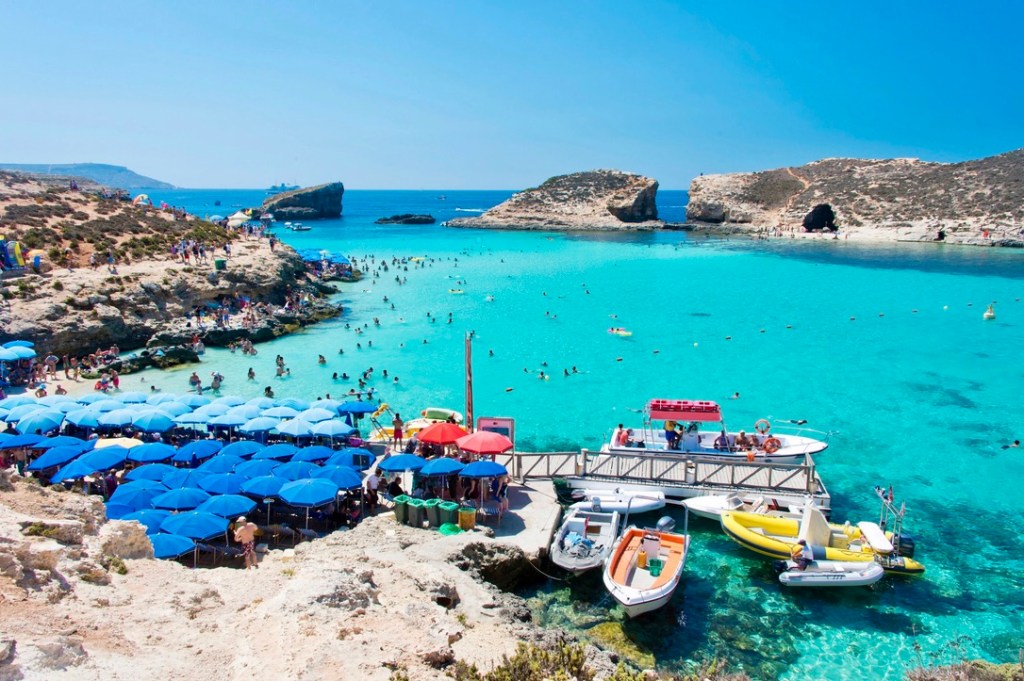
The Blue Lagoon on the island of Comino is a popular swimming and scuba diving spot

When Ireland beat Malta 2-0 in the Ta’ Qali Stadium on November 15, 1989 to qualify for the 1990 World Cup finals in Italy, the 5,000-strong Green Army celebrated by drinking the island dry.

Tour guide Darrell Azzopardi, who was in his 20s at the time and attended the match, has bitter-sweet memories of the all-night hooley that resulted in many fans missing their flights home.

“Losing 2-0 wasn’t a huge shock, and we were happy to party with our Irish friends afterwards,” he said. “The Maltese are very fond of the Irish, they’re such good fun. But the next day, when reality sunk in, we were upset that we couldn’t cry into our beer – they’d drunk it all.”

Fortunately, bars and restaurants have since restocked, and a pint of top-selling Cisk lager can be had for as little as €3.50.

The Dubliner in St Julian’s, where the prices are right and the pub grub is great

A few weeks ago in The Dubliner, looking out on Spinola Bay in St Julian’s, I paid just €13.40 for two pints and a Gordon’s gin and tonic, served with a smile by Stacey, from Finglas, Dublin. At those prices, which are common throughout Malta and neighbouring Gozo, she wasn’t the only one smiling.

“I came on holiday, fell in love with the place and decided this is where I wanted to live,” said Stacey. “I’m here 11 years now. It’s fantastic. I wouldn’t want to be anywhere else.”

There are those who wouldn’t want to spend their summer fortnight anywhere else, which explains the high number of year-after-year repeat visitors. They’d be quick to tell you Malta is a family-friendly destination and not the “pensioners’ paradise” that people who haven’t been there believe it to be.

The Maltese capital Valletta, viewed from a sightseeing boat in the Grand Harbour
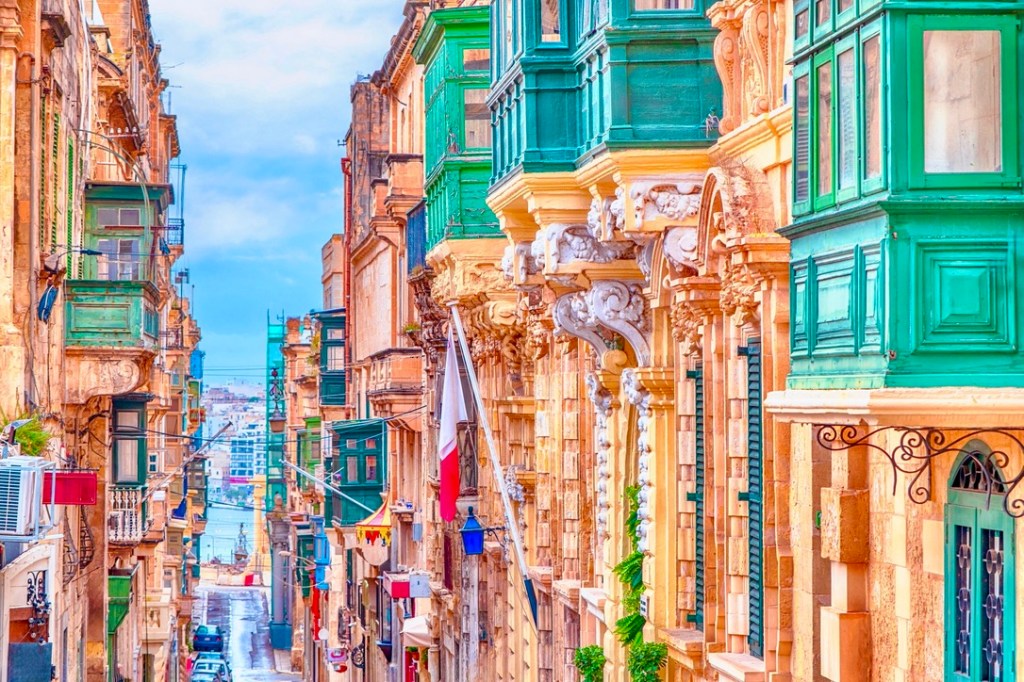
Ornate and colourful balconies are a feature of Valletta’s centuries-old streets

Bertie Ahern is a pensioner, and at 71 was easily the oldest person on my early morning Ryanair flight from Dublin to Valletta. The youngest was a baby screaming blue murder two rows behind the former Taoiseach, who’s probably dropping heavy hints to his grandkids about noise-cancelling headphones for his birthday in September.

Most passengers, however, were aged from their mid-20s to 50s, and many had small or teenage children with them – the Maltese islands have attractions and activities galore for all ages.

There are four flights a week from Dublin and two from Shannon, and next month a lot of the seats will be occupied by hip young things heading to Europe’s biggest free music festival, Isle of MTV (July 18-23, isleofmtv.com), which will be headlined this year by US pop rock outfit OneRepublic.

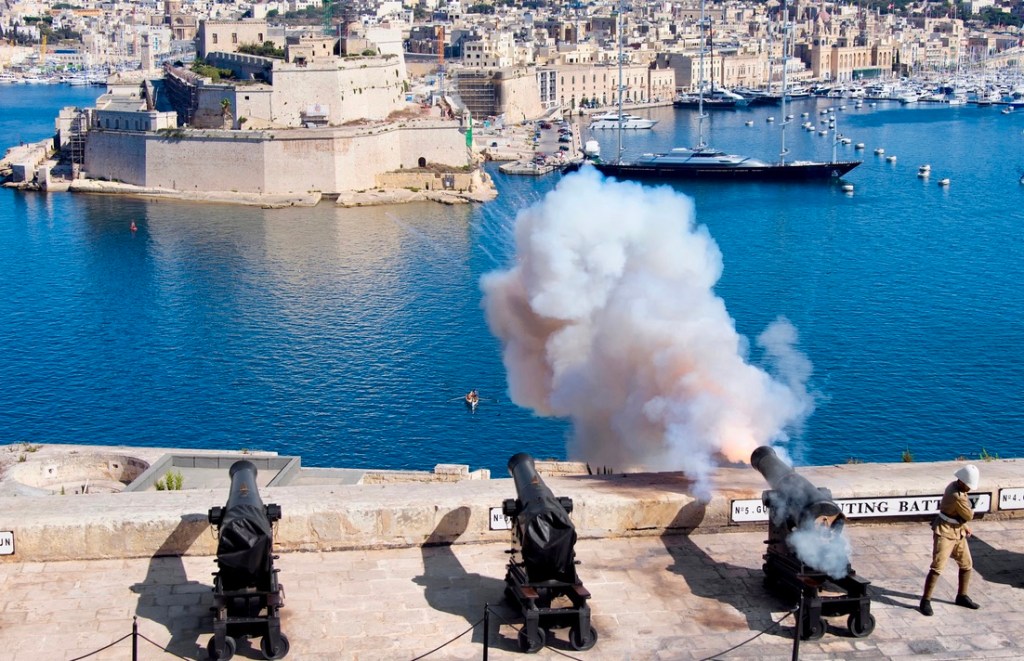
Midday firing of the ceremonial cannon just below Valletta’s Upper Barrakka Gardens
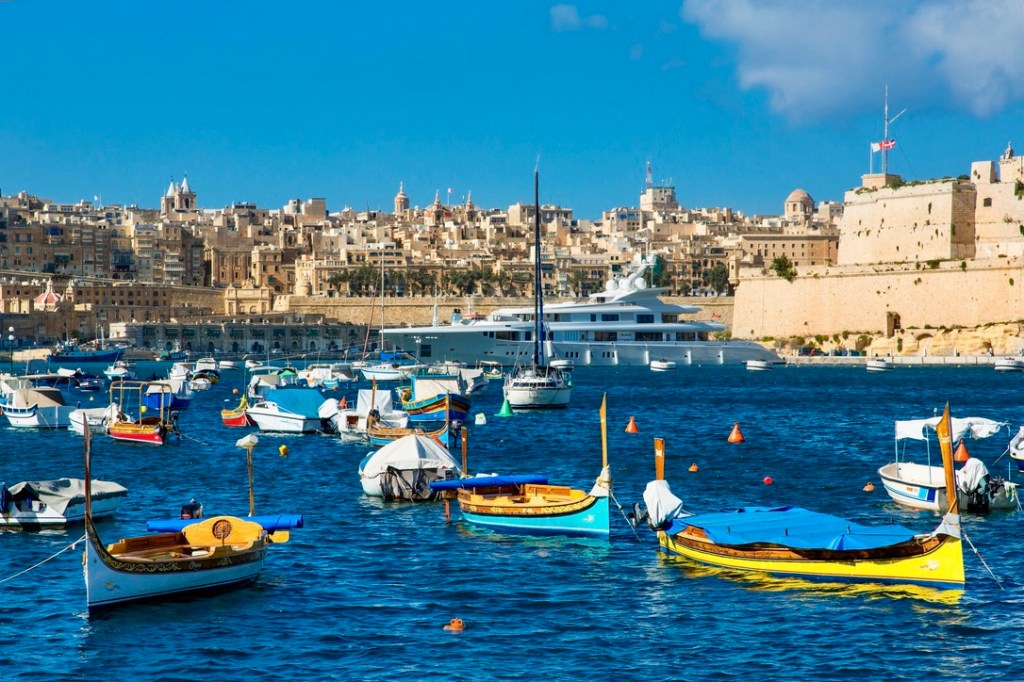
Skyline of the Three Cities of Vittoriosa, Senglea and Cospicua from the sea on a sunny afternoon in May

Being creatures of the night, it’s unlikely the music lovers will be up and about to video the ceremonial firing of the cannons from the 16th-century Saluting Battery just below Valletta’s Upper Barrakka Gardens.

It’s a twice-daily event, at noon and 4pm, and makes one hell of a racket, but the views from the gardens across the Grand Harbour to Fort St Angelo and the Three Cities of Vittoriosa, Senglea and Cospicua are well worth the assault on the eardrums.

Festival-goers tend to get by on burgers, which is their loss, because Maltese cuisine, heavily influenced by nearby Sicily with a dash of north Africa to spice things up, is a treat for the taste buds.

Among the traditional dishes holidaymakers should try are pastizzi (little puff pastry snacks filled with ricotta cheese or mushy peas), aljotta (fish stew), spinach and tuna pie, spaghetti with sea urchins and baked stuffed aubergines.

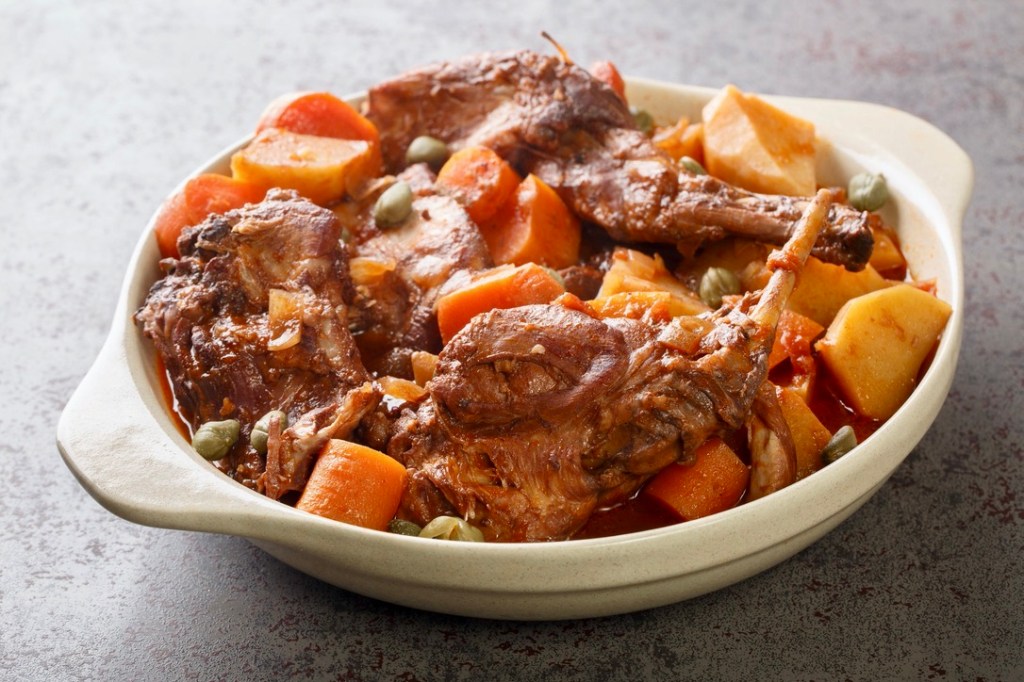
Tuck into a bowl of rabbit stew, stuffat tal-fenek, which is available in most restaurants

Rabbit features on just about every menu (sneaky parents tell their little ones it’s chicken) and comes either fried with spaghetti or in a hearty stew, stuffat tal-fenek, with red wine and garlic sauce. 

Punters who have never visited the payout window in a Paddy Power shop can get their own back by tucking into horse pie at Nenu the Artisan Baker in Valletta’s St Dominic Street. The high-protein meat is slow-cooked overnight in Red Rum – sorry, red wine – and tastes like braised steak.

Local soft drink Kinnie, which has a bitter orange flavour, is to Malta what McDaid’s Football Special is to Donegal.

Years ago, a Maltese waiter named Joe who worked in the Europa Hotel in Belfast looked forward with great excitement to visits from his relatives back home. He was happy to see them, of course, but happier still that they always brought a dozen bottles of Kinnie, which he would ration until the next time they came.

Joe said it was the one thing above all others that reminded him of his childhood (it reminds me of cough medicine, but don’t knock it until you’ve tried it).

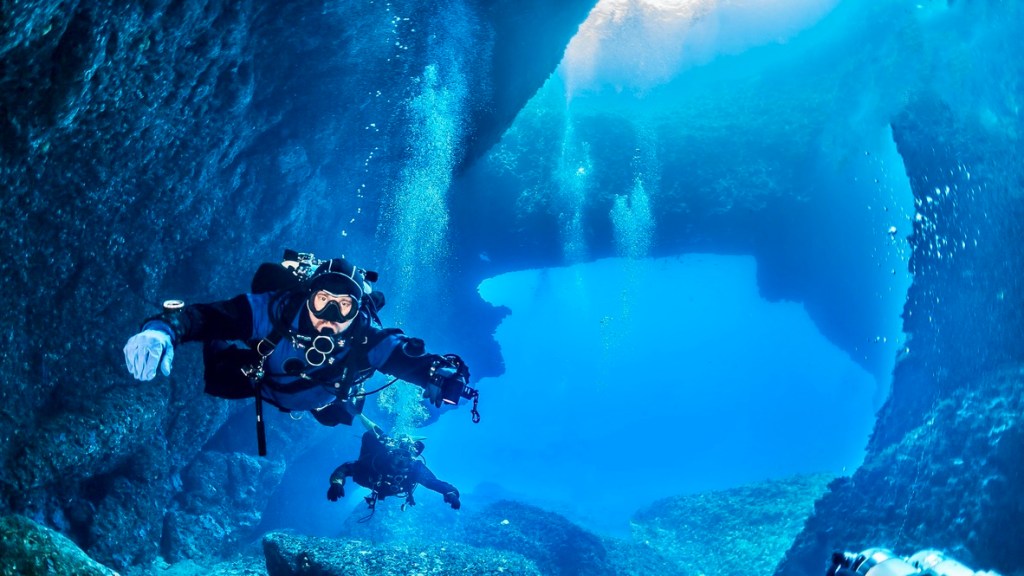
Scuba diving in the Blue Lagoon off Comino

At a mere 27km by 14km, Malta is minuscule. When you include Gozo and the even tinier Comino (population: two), whose Blue Lagoon is a popular swimming and scuba diving spot, the islands would fit three times into Co Dublin.

The Maltese all speak English, use the euro and three-pronged plugs like ours and drive on the same side of the road as in Ireland, so hiring a car to get around is stress-free if you avoid peak hours, which would try the patience of a saint.

Take Paul, for example, who was shipwrecked off what is now the touristy St Paul’s Bay in 60AD. He was being taken to Rome to be tried as a political upstart, but a storm washed the boat on to rocks. All 270 people on board managed to get to shore, and were treated well by the hospitable islanders.

Paul introduced Christianity to Malta, which is 85pc Catholic (Ireland is 69pc) and has 365 churches – one for every day of a non-leap year, so there’s no excuse for missing mass. When he eventually got to Rome and was hauled up before Nero in 68AD, he was found guilty and put to death, but at least he has a holiday resort named after him, which is more than the nutty emperor can say.

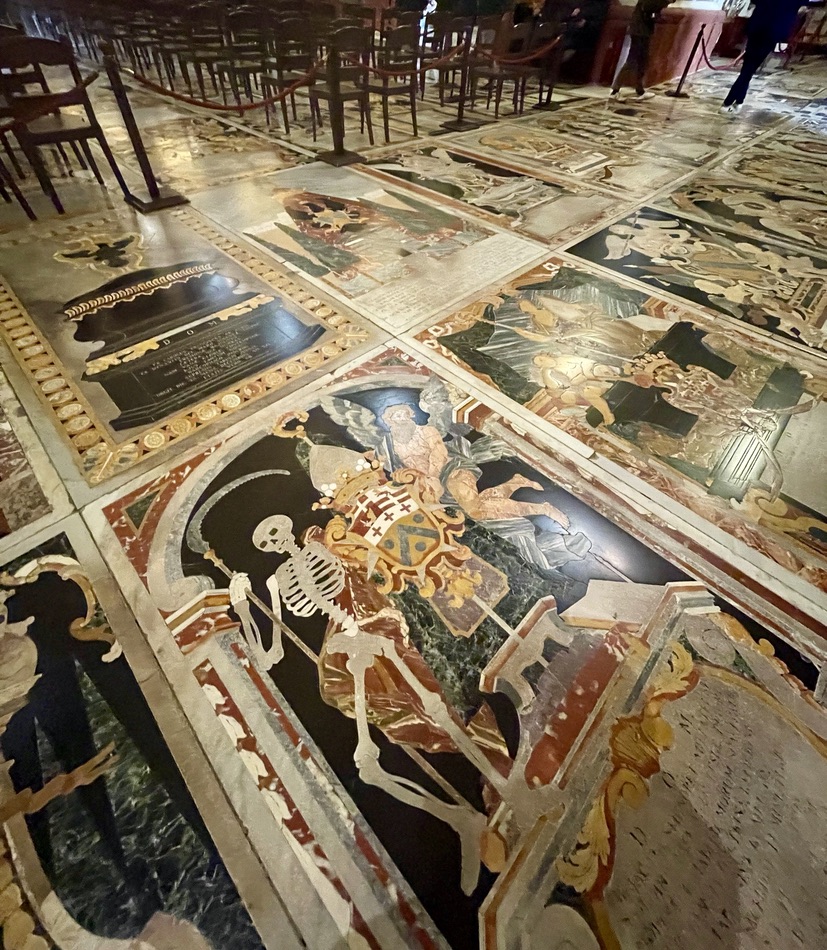
Tombstones of the Knights of Malta cover the floor in Valletta’s St John’s Co-Cathedral
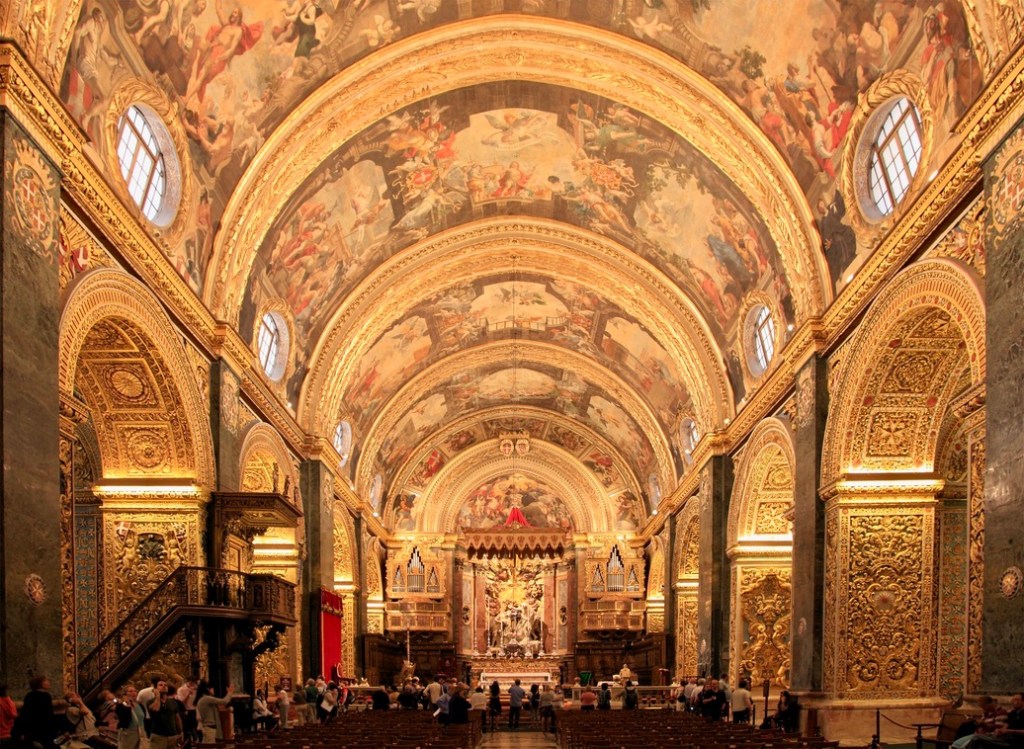
The magnificent interior of St John’s Co-Cathedral, Valletta’s top visitor attraction

St Julian’s, where I stayed at the Marriott Hotel and Spa, is named after the fourth-century patron of fiddlers, circus clowns and murderers, so an eclectic clientele.

Julian died of natural causes, unlike his parents – he killed them in their bed, thinking they were his wife and a lover – and John the Baptist, whose beheading is depicted in Caravaggio’s massive masterpiece in St John’s Co-Cathedral in Valletta.

The cathedral, built by the military and charitable Order of the Knights of St John (also known as the Knights of Malta) and completed in 1577, is perhaps the most magnificently adorned place of worship in all of Christendom and an absolute must-see. For those who are superstitious about stepping on graves, a visit could pose a problem – the entire floor is covered with nearly 400 ornate marble tombstones commemorating knights and officers.

The remarkable story of the order and the history of often-besieged and bombarded Valletta and of the islands as a whole is told in author Nicholas Monsarrat’s The Kappillan of Malta.

This wonderful work of fiction that’s also packed full of fascinating facts is my all-time favourite novel and I can’t recommend it highly enough. Mind you, at 500 pages it would be wise to start reading now if you’re planning a holiday in September, when the temperatures are more bearable – they often reach 32C in high summer (the hottest day on record was 43.8C in August 1999).

The blanket is set for a memorable picnic lunch overlooking Mgarr port on the island of Gozo
On Gozo, the ancient Ggantija temples are the oldest man-made structure in the world

My week-long stay in mid-May was blessed with fine weather – a bit overcast at breakfast, clearing by late morning and 22C come lunchtime, which proved perfect for a picnic one afternoon on a tree-shaded hillside overlooking Mgarr port on Gozo.

Ana Kisling, from Ukraine, who used to work in aviation in Malta, has lived on Gozo since 2008, and proved the perfect picnic host. An accomplished cook, she set up her catering business (see Gozo Picnic on Facebook for details and bookings) after becoming a mum, and it has attracted nothing but 5-star reviews.

Her clients range from families to tour groups, and quite a few fellas have taken advantage of the romantic set-up to propose to their girlfriends.

“I even had one guy who turned up with two beautiful young women and proposed to them both,” said Ana. “I didn’t know where to look!”

Ferries go back and forward all day long between Cirkewwa on the northernmost tip of Malta and Mgarr (a 20-minute crossing), where buses, taxis and tuk-tuks wait to collect passengers for a tour of the island.

The top sights for day-trippers on Gozo include the medieval citadel overlooking the capital, Victoria, and the Ggantija temples – the oldest man-made structure in the world – which date from 3600BC, making them older than Newgrange by 400 years and the pyramids at Giza by 1,000 years.

Children’s eyes will pop when they see the ramshackle Popeye Village
Mdina’s ornamental gate was the entrance to King’s Landing in Game of Thrones

Back on Malta, and not far from Cirkewwa, is the higgledy-piggledy seaside Popeye Village, which was built as a film set for the 1980 musical comedy Popeye, starring Robin Williams. Instead of being dismantled after the cast and crew headed home to Hollywood, it was preserved and turned into a tourist attraction that’s especially popular with children.

Another filming location is the walled former capital, Mdina, whose monumental carved gateway will be familiar to Game of Thrones fans as the entrance to King’s Landing.

Guide Darrell’s colleague and actress Audrey Marie Bartolo knows more about the HBO blockbuster series than anyone else on Malta – she played a Dothraki – and tickets for her GoT tours are in big demand. Audrey is also a professional singer and competed in the 1990 Maltese heats of the 2010 Eurovision, which was won by Italy, with Ireland’s Liam Reilly a close joint-second with Somewhere in Europe.

The poor old Malta fans had nothing to sing about after that match in 1989 when John Aldridge bagged both goals and forced the Cisk brewery to work overtime for a week, but Darrell said the Irish will always be welcome on his beautiful home island.

“As long as they leave some beer for the rest of us,” he added.

The 5-star Malta Marriott Hotel and Spa in St Julian’s

GET THERE

Ryanair flies from Dublin and Shannon to Valletta. Travel agents Sunway (sunway.ie), Cassidy Travel (cassidytravel.ie) and Click&Go (clickandgo.com) offer package holidays to Malta.

STAY

The Malta Marriott Hotel and Spa (marriott.com) overlooking Balluta Bay in St Julian’s offers all the top-class dining and leisure facilities you would expect from a 5-star establishment. But the icing on the cake for a traveller like me, whose idea of packing is to throw a pile of clean but creased clothes into a bag, is that there’s an iron and ironing board in each room and suite. It’s a simple amenity that too many hotels neglect to provide – don’t they realise it’s a godsend?

GET A GUIDE

Tour guide Darrell Azzopardi can be contacted on darrellazzopardi@gmail.com and Audrey Marie Bartolo on audreymarie783@gmail.com

Cartoons, cognac and cabin cruisers in charming Charentes

Visitors to Charentes will be bowled over, but it’s best to leave the brandy tasting until after lunch, as I discovered on a visit to Angouleme, Cognac and La Rochelle in France’s Nouvelle-Aquitaine region

La Rochelle’s Saint Nicolas Tower (left) and the Chain Tower guard the inner harbour

“Roll up, roll up – welcome to the town where Rizla cigarette papers were invented,” the road signs on the outskirts of Angouleme could read, but don’t. Perched on a plateau overlooking a bend in the Charente river, 130km north-east of Bordeaux (35 minutes from there by high-speed train), the town has other, less dubious claims to fame.

Its Circuit des Remparts classic cars rally, held every third weekend in September, was first staged in 1939 and attracts 65,000 enthusiasts from all over Europe; and each January, 200,000 fans attend the international comics festival, which has been a crowd-puller since 1974 – no surprise, given that one in four books bought in France is a bande-dessinée (graphic novel).

Thirty-odd permanent murals, some of them five storeys high, of superheroes, cartoon-strip characters and scenes from history provide a walking trail for fans of street art, guided by a free app. Many of them took weeks to complete, but on a bin shed door, a Banksy-style stencilled depiction of the Russian president wearing bright red lipstick was probably sprayed in a few seconds. The message beneath the image is the ultimate French insult – VLADIMIR PUTAIN.

Angouleme is famed for its giant murals like this one depicting cartoon characters
A classic racing car competes in Angouleme’s annual Circuit des Remparts rally

In the treasury of the 12th-century Saint Pierre Cathedral, an extraordinary installation of coloured Murano glass by contemporary French artist Jean-Michel Othoniel has me mesmerised; so much so, it takes a combination of the curator jangling her keys and a gastric grumbling from my midriff to remind me the one-hour viewing is over and Sunday lunch awaits.

The 19th-century Marche des Halles is the culinary and social heart of the town, and amid the stalls offering fresh local produce are several street food-style bars with seating areas. At busy periods, affect a bad back and a sympathetic diner might slide along a bench and let you in – it works everywhere for me.

In Place New York, a plaque tells visitors that in 1524, Florentine explorer Giovanni da Verrazzano sailed into the Hudson during a voyage of discovery bankrolled by King Francis I, the former Count of Angouleme. A 16th-century portrait by Jean Clouet shows the French monarch, who was a patron of Leonardo da Vinci, had the head off Henry VIII – a fella who knew a thing or two about heads off.

The name Verrazzano gave to the land flanking the Hudson didn’t stick, or US musician Gerard Kenny’s 1979 hit would have been called Nouvelle-Angouleme, Nouvelle-Angouleme (So Good They Named It Twice), which isn’t so easy to sing.

Part of Jean-Michel Othoniel’s remarkable installation in Angouleme’s Saint Pierre Cathedral

Wes Anderson’s whimsical 2021 movie The French Dispatch, which pays homage to The New Yorker magazine, was filmed in Angouleme and helped tourist numbers bounce back last year to pre-pandemic levels. For that reason, locals have forgiven the director’s little joke in renaming their town Ennui-sur-Blasé (Boredom-on-Apathy) on screen.

It helped, too, that Saoirse Ronan, who appears as a curly-wigged showgirl, sings France’s favourite lullaby, A La Claire Fontaine, to the kidnapped young son of the police chief. During the film’s premiere in Cannes, audience members who knew the words let out a nostalgic sigh and sang along.

In the four-star Le Saint Gelais hotel, staff remember the Hollywood stars who stayed there as tres charmant – and big tippers – and autographed photos of Frances McDormand, Adrian Brody, Benicio del Toro, Tilda Swinton and Willem Dafoe, among others, adorn the walls.

Bill Murray, who plays Dispatch editor Arthur Howitzer Jr and was required to be in Angouleme for only one day of filming, was so taken with the town that he remained for a week, frequenting its cafes and restaurants and playing golf.

Autographed photos of the stars of The French Dispatch in Angouleme’s Saint Gelais hotel
Many of Angouleme’s squares and streets were transformed by The French Dispatch designers

Formerly a priory, the 12-room Saint Gelais is a cosy first-night layover on my tour of the Charentes departments of the Nouvelle-Aquitaine region that proceeds to Cognac before ending in La Rochelle on the Atlantic coast.

Richard Hennessy, from County Cork, established his eponymous liquor-making business in Cognac in 1765 after serving with the Irish Brigade of Louis XV’s army, and among the brand’s famous fans was James Bond. In the 1969 film On Her Majesty’s Secret Service, 007 (George Lazenby) survives a bobsleigh crash shaken, not stirred, and tells a playful St Bernard dog to stop licking him and “go and get the brandy – five-star Hennessy, of course”.

Ninety-five per cent of all the brandy produced in and around Cognac is exported. Global sales leader Hennessy is especially popular among African Americans, thanks largely to its being the spirit of choice of Black hip hop artists and rappers, who have referenced it in nearly 1,000 songs. Cardi B, who has a sister named Hennessy, mentions the drink in her ‘nasty’ 2020 hit WAP. As Ms B has 154 million followers on Instagram, it’s a dream endorsement.

A tour of Hennessy’s riverside distillery and cellars, where 350,000 barrels are stored, is best left until after lunch as they pour with abandon during the tasting session. When you sell 70 million bottles a year, you can afford to be generous with the measures.

A hired cabin cruiser glides along the River Charente

It’s a mere hop, skip and a slight stagger from the Hennessy tasting lounge to the quay where the sightseeing boat La Demoiselle awaits passengers for a lazy 90 minutes on the water. Although early October, it’s sunglasses and T-shirts weather as a low-flying kingfisher whizzes past, its iridescent blue and orange plumage like petrol in a puddle. Visitors can see another colourful spectacle throughout July when fields full of sunflowers stretch from both banks of the river to the horizon.

A cabin cruiser like those for hire on Lough Erne and the Shannon glides by with a French family enjoying a mid-afternoon snack on deck. Cognac is one of three bases on the Charente where no-experience-needed captains and crews can board their boats for a weekend or longer on the 170 navigable kilometres from Angouleme to Rochefort, where the river meets the sea.

It’s on that sea a few hours later that I go for an evening cruise out of La Rochelle with skipper Bertrand de Rancourt on his 14-metre yacht Kelone and marvel at the most magnificent sunset I’ve ever seen. (One of my travelling companions was so impressed by the sight that as soon as he got home to Dublin, he booked flights to return with his partner the following weekend as a birthday treat.)

Glorious sunset off La Rochelle, as seen from skipper Bertrand de Rancourt’s yacht, Kelone

La Rochelle, where the Nazis built a U-boat base, has been no stranger to invasions, and was the last French city liberated by the Allies at the end of World War II. These days, the invaders are year-round tourists, plus the wealthy Parisians who own most of the multi-million-euro sea-view apartments to which they decamp each summer.

The main visitor attractions are the Saint Nicolas Tower, the Chain Tower and the Lantern Tower, which guard the entrance to the inner harbour and are together classified as a national monument.

As the name suggests, the 15th-century Lantern Tower was originally a lighthouse. From the 17th to 19th centuries it served as a prison, and the walls on all five floors are covered with graffiti, many examples left by Irish and English sailors and soldiers who were held there. They must have been the fittest – or most pooped – prisoners around, as they were forced to exercise by marching up and down the 158 internal steps several times a day.

Rumour has it that former Ireland rugby international Ronan O’Gara, the head coach of local Top 14 club La Rochelle, takes his players for secret training sessions on those same steps. That might explain why they’re one of the most physically imposing squads in the game, which helped them to back-to-back wins over Leinster in the 2022 and 2023 European Champions Cup finals.

Hire a bike and spend a leisurely day cycling on Ile de Re

The Marche Central provides all the charcuterie, cheese, fruit, bread and cheap but excellent local wine for a picnic on one of the city’s three beaches or those on nearby Ile de Re, where the O’Gara family live.

Many visitors hire bikes in La Rochelle and ride across the 3km-long road bridge to the island, which is 30km by 5km and mostly flat. Its 110km of safe and well-signposted cycle paths go past vineyards and salt pans, along the coast and through villages and small towns that are only a few kilometres apart, so you’re never far from a shop or a toilet.

Families with younger children prefer to use the shuttle buses that connect the city with the island communities, where bike-hire outlets abound. Another option, and great fun, is to board a shuttle boat to Ile de Re’s main harbour town, St-Martin-de Re – they leave from close to the three towers. Whichever way you get there, it’s an enjoyable day out that works up an appetite for dinner.

When you’ve ticked off all the sights to see in and around La Rochelle, chill out on the beach

An evening stroll through the narrow streets of La Rochelle’s old town or along the yacht-lined quays where German jackboots once stomped offers opportunities galore to dine on a restaurant terrace. Most bars are open until well past midnight year round, so there’s no need to rush your meal to catch a late-night drink or two on the way back to your hotel.

I’ve never heard of The Famous Pub on the waterfront, so I give it a miss and drop in to La Calhutte, where they’ve never heard of last orders, in a lively little square just around the corner from where I’m staying. Heading there, I pass a bus shelter with the route numbers on coloured discs on the side. They look like lottery balls, so I take a quick photo and add them to my EuroMillions slip.

To date, my twice-weekly investment in those numbers has cost me nearly €250 and returned a grand total of zero. However, when they do come up, I’ll celebrate with a big cigar (no Rizla roll-ups for me) and a glass of brandy – five-star Hennessy, of course – and ask Ronan O’Gara if he knows of any multi-million-euro sea-view apartments for sale.

The unluckiest set of EuroMillions numbers on a bus shelter in La Rochelle

GET THERE

Ryanair (ryanair.com) flies from Dublin to Bordeaux and La Rochelle, while Aer Lingus (aerlingus.com) flies from Dublin to Bordeaux. If you aren’t driving, travel between Bordeaux, Cognac and La Rochelle by train (sncf.com)

STAY

I stayed in the 4-star Hotel Le Saint Gelais in Angouleme (hotel-saint-gelais-angouleme.com) and the 3-star Hotel Saint Nicolas in La Rochelle (hotel-saint-nicolas.com)

EAT

Angouleme: Les Sources de Fontbelle (sourcesdefontbelle.com), Marche des Halles (marche-halles.fr), La Cour (restaurant-lacour.com), Le Jardin des Arceaux, Hotel Mercure (restaurantsandbars.accor.com). Cognac: Le Bistro de Claude (bistro-de-claude.com). La Rochelle: La Yole de Chris (christophercoutanceau.com), L’Ardoise des Cloutiers (lardoise-des-cloutiers.fr)

THINGS TO DO

Hennessy distillery tour and tasting. See hennessy.com

Sunset cruise off La Rochelle. Three-hour private charter prices for one to 11 people range from €360 to €480 (with full complement of passengers, from €32.72 each). See kelone.fr

*I visited Charentes as a guest of angouleme-tourisme.com, atlantic-cognac.com, tourism-cognac.co.uk and holidays-la-rochelle.co.uk

Dusk descends on La Rochelle

Discover the delights of northern Spain

Set your satnav for a driving tour of northern Spain, where the coastal provinces of Cantabria, Asturias and Galicia provide a culturally-rich and laid-back alternative to all-day breakfasts, packed beaches and crowded nightclubs.

Luarca cemetery

Some things are best left to the experts, such as pouring exactly 3cm of cider from a bottle held high above your head into a glass at waist level. In Asturias, trainee bar and restaurant staff have to practise for weeks with water before they’re let loose on paying customers.

“It’s to prevent their bosses going bankrupt from all the dry-cleaning bills,” tour guide Ernesto Fernandez tells me as we admire the small harbour town of Luarca from its hillside cemetery.

“Look – that’s where I live,” he says, indicating his apartment building. “And this,” he adds, turning and pointing at the Fernandez family mausoleum, “is where I’ll be laid to rest when I die – my tomb with a view.”

A waiter expertly pours Asturian cider

Necrotourism is a new one on me, but people do make a holiday out of gawping at graveyards, and Luarca’s, full of white marble statues of angels, the Virgin and the crucified Christ, is on the list of “Ten Spanish cemeteries to see before you die”.

Down in the main square, a sign on a help-yourself tap outside a cafe reads: “Sidra. Gratis.” Asturian cider is so cheap – €3 for a litre bottle – that many bars provide it free to peregrinos (pilgrims) walking the Northern Way of the Camino de Santiago, which passes through Luarca.

It’s one of the many picturesque towns and villages I’ll visit during a week-long east-to-west driving tour of northern Spain that begins in Cantabria, continues into Asturias and ends in Galicia.

Up here on the breezy Bay of Biscay, where families from sizzling Seville take their summer break to escape the oppressive heat of home – 25C is cool compared with the 40-plus degrees they’re used to – the landscape increasingly resembles Donegal the farther I travel, with soaring cliffs, secluded beaches and pointy-topped mountains.

San Vicente de la Barquera

An hour’s drive from Santander, the Cantabrian capital, takes me to the fishing port of San Vicente de la Barquera, where the 13th century fortress and the Gothic church of Santa Maria, set against the snow-capped Picos de Europa, provide one of the most-photographed sights in Spain.

San Vicente is the starting point for the little-known Camino Lebaniego, which covers a mere 72km and can be completed in three days.

It might be Camino-Lite, but this inland hike, which takes pilgrims to the monastery of Santo Toribio near Potes, is heavy on the scenery, and walkers would be wise to add a fourth day as a lot of time is spent stopping to take pictures.

El Soplao Cave is one of the world’s greatest geological wonders
Ice Age drawings from the ceiling of Altamira Cave

Photography isn’t allowed in El Soplao Cave (elsoplao.es), but the millions of stalactites, stalagmites and physics-defying helictites – these last mentioned grow sideways, which the biggest brains in science still can’t explain – leave long-lasting mental images.

Close to the cave’s Chamber of the Phantasms, where the bigger and bulkier stalagmites resemble ghosts of the white bedsheet variety, one three-metre-tall and 45,000-year-old example looks more like a mitre-wearing Pope while another beside it reminds visitors of Homer Simpson.

Just outside medieval Santillana del Mar – arguably the most beautiful town in Spain – the Altamira Cave, with its 15,000-year-old ceiling paintings of wild bison and deer, had to be closed to the public in 2002. Exhaled breath was causing mould to form on the Ice Age artists’ work, but actual-size reproductions can be seen in the replica cave next door, which is today a world-class tourist attraction.

It’s hardly Willy Wonka’s Chocolate Factory, but every Friday, five lucky people drawn from a years-long waiting list present their printed-out golden tickets at the entrance and are given a guided tour of the real thing, which was discovered by a local hunter in 1868. 

Gaudi’s Caprice in Comillas

In the coastal resort of Comillas, which has more multi-millionaire residents per capita than Monaco, no one has to ask who dreamed up the whimsical Villa Quijano.

Antoni Gaudi’s Sagrada Familia in Barcelona, on which work began in March 1882, will be nice when it’s finished, but the villa, which he designed for super-rich lawyer Maximo Diaz de Quijano, was completed in 1885 and has been attracting envious looks ever since.

Better-known as Gaudi’s Caprice, it’s clearly influenced by Arab architecture and Oriental art, but an excited little boy gets it spot on when he says: “Mama – the tower is made from LEGO!”

Gaudi met an ignominious end in Barcelona in June 1926 when, at the age of 73, he was knocked down and gravely injured by a tram. Because he had taken to dressing in ragged clothing and was carrying no ID, he was presumed to be a beggar and taken to a hospital for the poor.

On the third day after the accident he was finally recognised, but he died that evening. Thousands of citizens lined the streets for his funeral procession, and he was laid to rest in the crypt of his art nouveau masterpiece. If he hadn’t been identified, his remains would have been buried in a pauper’s grave.

T-rex and a terrified me at the Jurassic Museum in Colunga

Cantabria has delivered big time on culture and natural history, and now it’s onward to Asturias to hook up with Ernesto in Llanes for a late-night seafood dinner in a little restaurant overlooking the marina.

After breakfast, we head off on a full-day exploration of the principality’s seaside communities, each laying claim, and not unreasonably, to the title of “Spain’s prettiest”. 

Luarca, with its des-res cemetery, is in with a shout, as are Tazones, Ribadesella and Colunga, where the Jurassic Museum is a must-see if you’re travelling with children. Little ones go nuts to have their photos taken beside its life-sized dinosaur models, and then probably wake up screaming at three in the morning, having dreamt they were being eaten by a tyrannosaurus.

However, Cudillero, a higgledy-piggledy pile of pastel-coloured shops and houses clambering up a steep gorge from the sea, gets my vote, although I don’t tell that to Ernesto – the shock might dispatch him prematurely to his tomb with a view.

Cudillero gets my vote as Spain’s prettiest seaside village

We say adiós the following lunchtime in Ribadeo, on the western side of the River Eo estuary that separates Asturias from Galicia.

The “handover”, as Ernesto ominously calls it, to “the Galician authorities” conjures up images of a midnight spy swap at fog-shrouded Checkpoint Charlie, but they’re quickly dispelled – it’s a beautiful day, and instead of being greeted by George Smiley, smiling tour guide Gabriela Garcia is waiting to whisk us off for a dip in the sea.

Unfortunately for me, but a lucky let-off for the public, I haven’t brought my Speedos, so I content myself with an hour-long stroll along Cathedrals Beach, which is only a short hop from Ribadeo.

The beach, with its 30-metre-tall sea arches that resemble flying buttresses, hence the name, is accessible only at low tide, and in the busy summer months you need permission, but free online reservations are available from ascatedrais.xunta.es.

Small section of Cathedrals Beach, which runs for several kilometres
Botafumeiro in the cathedral of Santiago de Compostela

The Galician capital, Santiago de Compostela – my ultimate destination – has loads to offer footsore hikers at the end of their long Camino journey, but there’s really only one show in town once they’ve emptied the local pharmacies of blister pads.

At 7.30pm mass each day, the 1,000-year-old cathedral is thronged with 1,200 people hoping to see the giant botafumeiro (censer) being swung from the ceiling by eight priests pulling hard on thick ropes.

It’s a centuries-old ritual with a practical purpose. In the pre-deodorant Dark Ages, pilgrims arriving at the cathedral to pray at the tomb of St James stank to high heaven after months on the road, so the wafting clouds of herb-scented smoke helped mask the stench.

Disappointingly, my visit doesn’t coincide with a scheduled ‘show’, so instead of getting giddy on smouldering incense, I’m treated to the heady aroma of Deep Heat sprayed on hundreds of aching legs.

Pilgrims with money to burn can pay in advance to see the botafumeiro in action, but the privilege comes at an eye-watering price – up to €800.

That’s a bit beyond my budget as I’m facing a hefty dry-cleaning bill after several pathetic attempts at pouring my own cider in Asturias left me looking like I’d peed my pants. Some things are best left to the experts.

A pilgrim arrives at the end of her long Camino journey in Santiago de Compostela

GET THERE

Ryanair flies to Santander and Santiago de Compostela from Dublin; Britanny Ferries Brittany Ferries sails from Rosslare to Bilbao, from where it’s a one-hour drive to Santander.

*I visited northern Spain as a guest of turismodecantabria.comturismoasturias.esturismo.gal and spain.info

Top dishes to try when you visit Spain

Millions of holidaymakers will head this year to Spain’s costas and vibrant historical cities to soak up the sun, immerse themselves in the country’s culture and enjoy their favourite dishes. Here’s a tantalising taste of the most popular Spanish fare to try while you’re there, plus some recommendations that might not be so familiar. Buen provecho!

The paella served in Valencia is the real deal, with not one pesky prawn in sight

Paella (Valencia)

The dish associated worldwide with Spain originates in Valencia and the real deal contains rice, chicken, rabbit, green beans and often snails. In the 18th century, when meat was unaffordable for many, water voles were one of the main ingredients as they were abundant in the Albufera rice fields not far from the city.

A proud Valencian wouldn’t touch the touristy versions, which contain prawns, crayfish, mussels, clams, calamares and, for some strange reason, garden peas.

The best paella I’ve ever had – and the one by which all others are judged – was in Casa Carmela, facing Valencia’s Malvarrosa Beach. Cooked in a pan as big as a wagon wheel on an open range fuelled by orange-tree wood, it’s so popular that reservations are a must, especially on Sundays when families pack the place.

TOP TIP: Valencia is a hugely enjoyable city break destination, and the outrageously ornate Cafe de Las Horas bar is a must-visit to try Agua de Valencia – gin, vodka, cava and freshly-squeeze orange juice.

Succulent cochinillo asado, a speciality of Segovia

Cochinillo asado (Segovia)

My most memorable meal (apart from the best-forgotten bull’s testicles I was tricked into eating) during the many years I lived in Spain was Christmas dinner in a friend’s house in Marbella in 1984.

The star of the spread was cochinillo asado – roast suckling pig – which my pal’s mother, like all the other mammies in the neighbourhood, had entrusted to the local baker to cook overnight in his bread oven.

When Señora Fay came to carve it at the table, she didn’t use a knife – the meat was so tender she sliced through it with the edge of a saucer. It was like watching a magic trick.

TOP TIP: Chefs in Segovia, north-west of Madrid, will tell you the city is famous first for its cochinillo asado and then for its 160-arch Roman aqueduct. If you’re spending some time in Madrid, take a half-day excursion to Segovia (high-speed train from Chamartin station, 30 minutes, renfe.com, then hop on the local bus to the centre) and have a cochinillo lunch in Meson de Candido in the shadow of the aqueduct.

Cocido Lebaniego contains a bit of just about every animal that boarded Noah’s Ark

Cocido (Cantabria) 

At the end of a three-day, 72km trek along the Camino Lebaniego in the northern province of Cantabria, I could have eaten a horse. It wasn’t on the menu in the attic dining room of El Cenador del Capitan in Potes, but cocido was.

Every Spanish region has its own version of cocido, which is a vegetarian’s nightmare – a hearty winter stew that contains ham, pork belly, beef, baby goat, black pudding, sausages, chickpeas and beans. It’s ladled out in glutton-sized portions and has the same restorative powers Popeye gets from spinach.

TOP TIP: The Camino Lebaniego goes inland from the Cantabrian fishing port of San Vicente de la Barquera to the monastery of Santo Toribio just outside Potes, and every step of the way is a scenic delight. Fly to Santander and take a bus to San Vicente, then back from Potes (busbusgo.com).

When you visit Galicia, you must try pulpo a la Gallega

Pulpo a la Gallega (Galicia) 

Octopus Galician-style isn’t to everyone’s taste, especially after that Netflix film, My Octopus Teacher, but I’m a sucker for it, and the very best is found in Santiago de Compostela.

Nothing could be simpler – it’s boiled, cut up with scissors, served on a wooden board, sprinkled with paprika and accompanied by sliced boiled potatoes and a generous drizzle of extra virgin olive oil. The texture is rubbery and the taste divine.

TOP TIP: In Santiago de Compostela, the ancient and beautiful cathedral city at the end of the several Caminos de Santiago (unless you carry on walking to Finisterre), Meson do Pulpo (Calle Vista Alegre 57) serves octopus to beat the band.

Can you smell them? Sardines grilling on the beach

Grilled sardines (Costa del Sol)

The sardines that come in tins are tiddlers compared with those you’ll see – and smell from afar – being grilled on the beaches along the Costa del Sol.

These big bruisers are skewered on wooden sticks stuck in the sand in front of a wood fire, then served whole with a sprinkling of sea salt and half-a-lemon to squeeze over them.

They’re available from May to October, but are at their best in June, and a cold beer washes them down nicely.

TOP TIP: If you’re in Torremolinos or Benalmadena, wander along the seafront to La Carihuela, which is famous throughout Spain for its seafood restaurants, all of which serve grilled sardines.

Tuck in to a nice thick slice of simple yet sensational tortilla de patatas

Tortilla de patatas (Nationwide)

If any dish can be said to occupy the throne of Spanish cuisine, it’s the tortilla de patatas, the simple but splendid potato omelette, which is made with only three ingredients – eggs, sliced boiled potatoes and onions.

Tortilla de patatas needs no adornment, but if the onions are caramelised before being added to the mix, the omelette steps up from perfecto to perfectisimo. Some misguided cooks put chopped red peppers in their tortilla to add a dash of colour – a sacrilege akin to putting honey on a Highlander’s porridge.

TOP TIP: The tortilla de patatas served in Juana La Loca is considered the best in Spain. Juana La Loca (Joanna the Mad), the elder sister of Catherine of Aragon and sister-in-law of Henry VIII, was Queen of Castile from 1504 to 1555, but never actually ruled due to her mental instability.

Cordoba’s famous and fabulous cold soup, salmorejo

Salmorejo and oxtail (Cordoba)

Just about every cafe and restaurant in Cordoba serves the city’s two signature dishes.

Cold soup salmorejo – a simpler version of gazpacho – is made from tomatoes, bread, extra virgin olive oil, garlic and salt and is sensational, especially on a hot day (July and August temperatures in Cordoba often reach 40C).

Braised oxtail (rabo de toro) is what Cordobans dream of when they’re living away from home. Served on the bone, it’s a bit fatty, but the morsels of meat melt in the mouth.

TOP TIP: Cordoba is the only place in the world where Catholics go to mass in a mosque – the Mosque-Cathedral, with its vast forest of pillars and ornamental arches. The mosque was completed in 988AD during the Moorish occupation of Spain, and the cathedral was built inside it in the 16th century. If you’re spending time in Sevilla or on the Costa del Sol, Cordoba is only a 50-minute high-speed train ride away (renfe.com).

Jamon Serrano and Manchego cheese – add some chorizo and you have the Holy Trinity

Jamon, queso y chorizo (Nationwide)

A plate of wafer-thin slices of Serrano ham with half-a-dozen half-centimetre-thick triangles of Manchego cheese and some not-too-chunky circles of chorizo constitutes the Holy Trinity of Spanish snacks.

Available in every bar, cafe and restaurant in the country, this winning combination is eaten at all hours of the day as a stop-gap between meals and is best accompanied by an ice-cold glass of lager or a chilled dry sherry.

TOP TIP: Think Spanish lager and the names that immediately spring to mind are San Miguel and Cruzcampo, but the best two brews by far are Mahou and Estrella Galicia. As for chilled dry sherry, Tio Pepe stands alone.

A Majorcan ensaimada is best accompanied by a cafe con leche

Ensaimada (Majorca)

Visitors to Majorca who set aside a day of their holiday to stroll around the island capital, Palma, will be glad they did. Among its many attractions is the indoor Santa Catalina market – the beating heart of the city.

In any of the market’s many bars and coffee kiosks you can enjoy a cafe con leche and an ensaimada – a soft, sweet and fluffy breakfast pastry sprinkled with icing sugar. This uniquely Majorcan treat is the perfect way to start the day, and they’re available in several sizes to take back home in souvenir boxes.

Top tip: Palma’s Apuntadores/La Lonja neighbourhood is home to the most beautiful nightspot in the world, the flower-filled Bar Abaco. Gregorian chants murmur from the speakers, doves flutter around the rafters, rose petals rain from the minstrels’ gallery and incense fills the air. This former nobleman’s townhouse is as posh as they come, so don’t wander in wearing shorts – only local hero Rafa Nadal, who’s a regular, is allowed to do that.

Irresistible – churros dipped in thick hot chocolate

Churros con chocolate (Nationwide)

Churros are long fingers of deep-fried doughnut batter that you dip in thick hot chocolate and are a great start to the day, although they’re also devoured by nightclubbers on their way home at OMG o’clock when most people have been asleep for hours.

Top tip: In Madrid, Chocolateria de San Gines (Pasadizo de San Gines 5), which opened in 1894, never closes, so there’s no excuse for not feasting on this breakfast of ‘campeones’. Recognised nationwide as the best in the business, Chocolateria de San Gines serves 10,000 freshly-made churros and 2,000 cups of hot chocolate every day.

The selection of pintxos available in Bilbao is mind-boggling

Pintxos (Bilbao)

San Sebastian is the gastro capital of Spain, where you can’t move for tripping over Michelin-star restaurants, but Bilbao, home to the remarkable Guggenheim Museum, has many more visitor attractions.

Pintxos are the far-superior Basque version of tapas, and the selection appears endless, with bars, cafes and restaurants coming up with new versions on a weekly basis. My favourite Bilbao pintxo palace is Cafe Iruña.

Top tip: In Bilbao (a long-weekend top recommendation), rugby-loving and kilt-wearing cocktail expert Manu Iturregi owns Bar Residence, an award-winning Aladdin’s Cave of Irish, Scotch and world whiskies with regular live music sessions. A half-hour metro train ride from the city centre takes you to the beach.